Context
A recent study indicates that Jamun originated much earlier than previously thought, with India playing a key role in its evolutionary history.
About Jamun
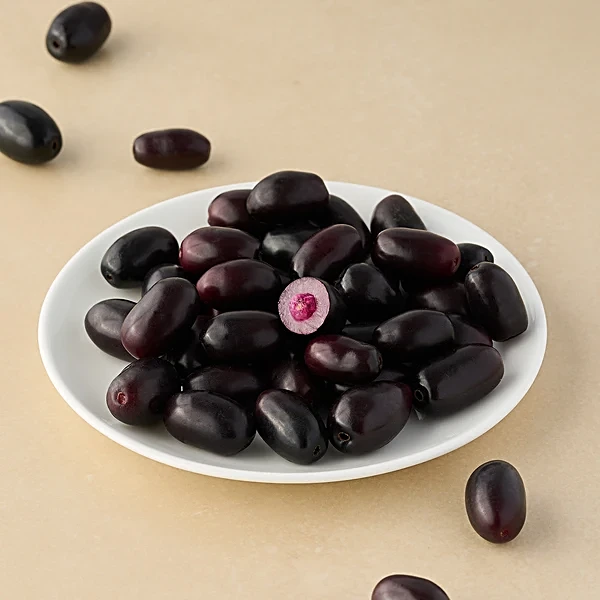
- Jamun is an indigenous minor fruit crop of commercial importance, widely cultivated and consumed in India.
- It is commonly known by various names such as black plum, Indian black cherry, and Ram jamun across different regions.
- Distribution: India (primary centre of origin), Thailand, the Philippines and Madagascar.
- Within India, Jamun grows widely across tropical and subtropical regions, including the lower Himalayas up to 1,300 metres and Kumaon hills up to 1,600 metres.
- Adaptability: It grows best in deep loamy and well-drained soils, although it is tolerant to salinity and waterlogged conditions, making it adaptable to varied environments.
- Climatic Conditions: The crop thrives in a tropical and subtropical climate, requiring dry conditions during flowering and fruit setting, while early rainfall in subtropical regions helps in proper fruit development.
- These favourable conditions ensure better size, colour and taste of the fruit, contributing to its agricultural and economic value.