Important questions for UPSC Pre/ Mains/ Interview:
|
Context
The delay in implementing the Women’s Reservation Act has renewed focus on low female workforce participation and leadership gaps across India’s economy, academia, and corporate sector.
Q1. What is the Female Labour Force Participation Rate (LFPR)?
- Female LFPR refers to the percentage of working-age women (15–64 years) who are either employed or actively seeking employment.
- It is a key indicator of how effectively a country utilises its female human capital.
- A low LFPR indicates that a large number of women remain outside the workforce, reducing overall economic productivity.
Q2. Why does women’s economic participation matter for growth and development?
- Higher participation is essential for achieving high economic growth (around 8% for Viksit Bharat 2047).
- It improves household incomes, poverty reduction, and social welfare.
- Evidence shows that women’s leadership improves economic outcomes at the constituency level.
- It enhances diversity, innovation, and decision-making quality in institutions.
- Overall, it is critical for inclusive and sustainable development.
Q3. What is India’s current position?
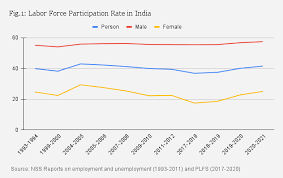
- India’s female LFPR has increased from 33.9% (2022) to about 40% (2025).
- Despite improvement, it remains below the global average (~49%).
- India lags behind emerging economies like Brazil (~53%) and Vietnam (~69%).
- This indicates a persistent gap in women’s economic participation.
Q4. Why is female LFPR low in India, particularly from a demand-side perspective?
- The issue is largely demand-side, not just supply-side.
- In a labour-abundant economy, increasing labour supply without job creation may depress wages.
- Lack of labour-intensive industries and quality jobs limits opportunities for women.
- Patriarchal norms and social barriers restrict mobility and employment choices.
- Limited access to high-productivity sectors and formal jobs.
- Underrepresentation in decision-making roles further reduces participation incentives.
Q5. What is the status of women in academia?
- Women remain underrepresented in senior academic positions.
- Professor-level representation increased slightly to ~29.5% (2021–22).
- In premier institutions:
- IITs: Around 14% female faculty, with slow improvement.
- IIMs: Range between ~19% to 31%, varying across institutes.
- Some institutions have even seen stagnation or decline, indicating structural barriers.
Q6. What is the status of women in corporate leadership and business sectors?
- Entrepreneurship: Only ~27% of proprietary enterprises are female-owned.
- Senior management: Only 13 women for every 100 men in top roles.
- Corporate boards:
- Most firms have at least one woman director, but 77% have only 1–2 women.
- Only 7% (BSE 200) and 5% (NSE 500) board chairpersons are women.
- The “one-woman director” rule is often treated as compliance, not inclusion.
- Research suggests at least 30% representation (“critical mass”) is needed for real impact.
Q7. What is the way forward?
- Promote labour-intensive industries to increase demand for female workers.
- Improve access to education, skills, and formal employment opportunities.
- Address social norms and institutional barriers restricting women’s participation.
- Strengthen representation in leadership roles across sectors.
- Ensure effective implementation of gender-related policies and reforms.
- Move from token representation to meaningful inclusion, especially in governance and corporate boards.
Conclusion
While India has improved female participation, structural and leadership gaps persist. Achieving inclusive growth requires both higher participation and meaningful representation of women across all sectors.