Important Questions for UPSC Prelims, Mains and Interview
|
Context
The Union Cabinet has approved the extension of PMGSY-III with higher outlay and extended timelines, highlighting continued focus on rural connectivity and infrastructure-led development.
Q1. What is PMGSY, and what are its objectives in improving rural connectivity and reducing regional disparities?
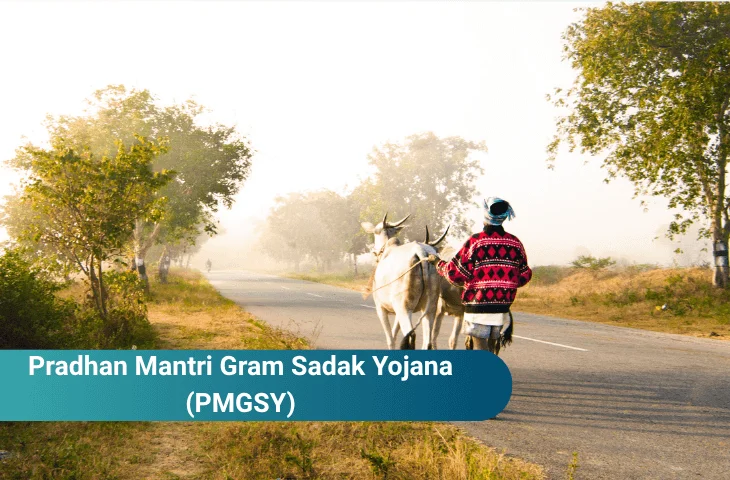
- Pradhan Mantri Gram Sadak Yojana (PMGSY) is a centrally sponsored scheme launched in 2000.
- It aims to provide all-weather road connectivity to unconnected rural habitations based on population criteria.
- The scheme focuses on improving access to markets, schools, healthcare, and essential services.
- It seeks to promote rural livelihoods, reduce transport costs, and integrate villages with the broader economy.
- Overall, it plays a key role in reducing regional imbalances and promoting inclusive development.
Q2. Why was PMGSY-III extended, and what does the enhanced outlay and revised timeline signify?
- PMGSY-III has been extended till March 2028 to ensure completion of pending road and bridge projects.
- The outlay has been increased to ₹83,977 crore, indicating sustained investment in rural infrastructure.
- It includes execution of projects sanctioned before March 2025 but not yet awarded.
- Special timelines:
- Roads and bridges in plains & roads in hills → by March 2028
- Bridges in hilly areas → by March 2029
- The extension reflects a focus on network consolidation, connectivity improvement, and economic integration.
Q3. What are the key features and implementation mechanisms of PMGSY?
- Construction of all-weather roads with uniform technical standards.
- Use of GIS-based monitoring systems and strict quality control mechanisms.
- Focus on linking villages to Gramin Agricultural Markets (GrAMs).
- Integration with schools, hospitals, and key infrastructure nodes.
- Provision for construction, upgradation, and maintenance of roads to ensure sustainability.
Q4. What are the different phases of PMGSY, and how have they evolved over time?
- PMGSY-I (2000): Focused on new connectivity to unserved habitations.
- PMGSY-II (2013): Focused on upgrading existing rural roads for better quality.
- RCPLWEA (2016): Targeted connectivity in Left Wing Extremism-affected areas.
- PMGSY-III (2019): Focuses on consolidation of rural road networks, linking villages to economic and social infrastructure.
- The evolution shows a shift from basic connectivity → quality improvement → strategic network strengthening.
Q5. What is the funding pattern of PMGSY, and how does it ensure sustainability of rural roads?
- PMGSY follows a Centre-State shared funding model.
- 60:40 ratio for general states and 90:10 for North-Eastern and Himalayan states.
- Funds are allocated for construction, upgradation, and maintenance, ensuring durability.
- This shared model promotes cooperative federalism and financial sustainability.
Q6. What are the major achievements and impacts of PMGSY on rural development?
- Construction of millions of kilometres of rural roads, connecting previously isolated villages.
- Improved school attendance and healthcare access.
- Enhanced rural incomes and livelihood opportunities.
- Strengthened agricultural supply chains and market linkages.
- Played a key role in poverty reduction and balanced regional development.
Q7. What are the expected benefits and challenges of the PMGSY-III extension?
- Expected Benefits
- Employment generation through infrastructure projects.
- Boost to rural trade and economic activity.
- Improved access to essential services and institutions.
- Reduction in rural-urban divide and promotion of inclusive growth.
- Challenges
- Ensuring timely execution of pending works.
- Maintaining quality and durability of roads.
- Addressing geographical challenges in hilly areas.
- Strengthening monitoring and coordination between Centre and States.
Conclusion
The extension of PMGSY-III reinforces the importance of rural connectivity as a driver of inclusive growth. Its success will depend on efficient implementation, quality maintenance, and sustained investment.