Context
Recently, the Supreme Court of India directed the Ministry of Health and Family Welfare to frame a No-Fault Vaccine Compensation Policy.
What is a No-Fault Vaccine Compensation Policy?
- A no-fault compensation policy means that compensation is provided to victims without requiring them to prove fault, negligence, or liability.
- For example, under the Motor Vehicles Act, 1988, if a person dies or is injured in a road accident, compensation can be given even if the victim had no fault in the accident.
- Similarly, the Supreme Court stated that in the Covid-19 vaccination context, people who suffered serious side effects or death due to vaccines should be compensated without proving negligence by the government or vaccine manufacturers.
Why did vaccine injury cases reach the Supreme Court?
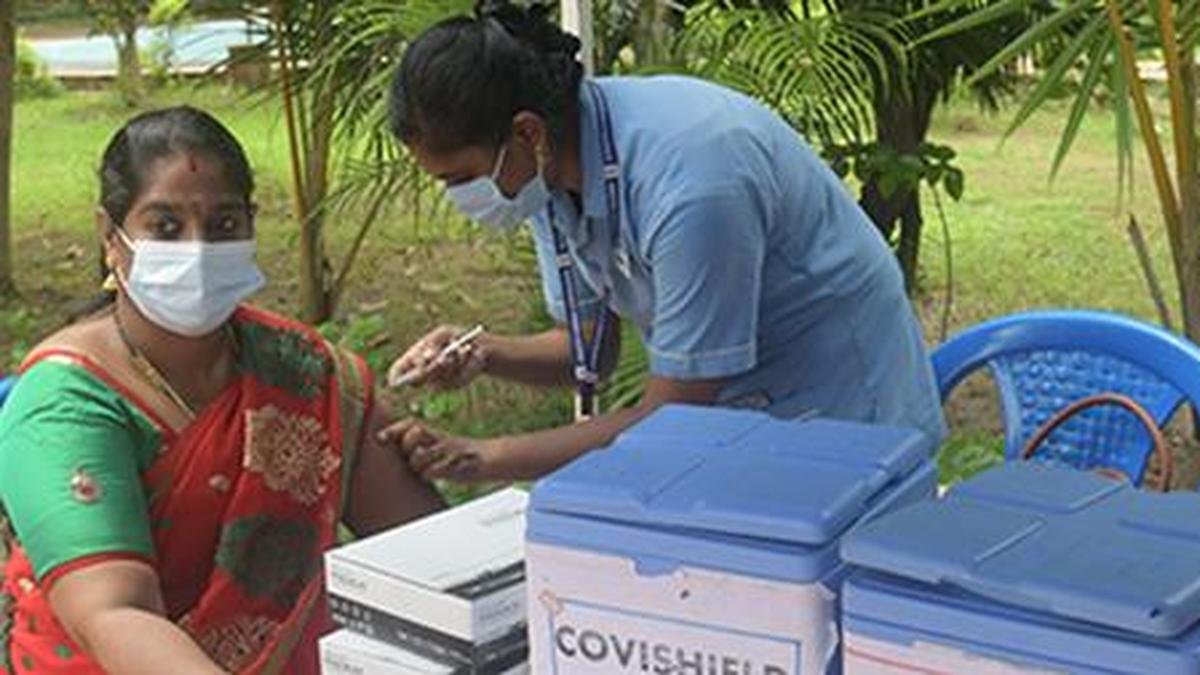
- In 2021, the Government approved Covid-19 vaccines such as Covaxin and Covishield.
- After vaccination began, some individuals experienced side effects and medical disorders, including blood clotting, and some cases reportedly led to death.
- A Public Interest Litigation (PIL) was filed in the Supreme Court by Dr. Jacob Puliyel.
- The petition raised several concerns:
- When a new vaccine is introduced, approval must be granted by the Central Drugs Standard Control Organisation (CDSO) based on the advice of the Subject Expert Committee (SEC) or an Expert Medical Board (EMB). The petitioner argued that the government gave rushed approval to the vaccines.
- It was also alleged that Adverse Events Following Immunization (AEFI) were not properly recorded and were even hidden.
- Although the government declared that vaccination was voluntary, it effectively became mandatory through administrative restrictions, because unvaccinated individuals were denied access to several services.
- When doctors administer vaccines, informed consent should be obtained, and individuals should be informed about possible risks.
- If vaccine-related death or disease occurs, there should be a clear policy and compensation mechanism.
What arguments were presented by the government?
The government presented several arguments before the Supreme Court:
- The vaccine approval process was robust and rigorous, and it was not rushed.
- AEFI monitoring followed WHO standards.
- The potential risks were properly evaluated, and vaccine-related deaths were extremely rare, about 0.001 deaths per one lakh doses.
- The vaccination programme was voluntary.
- Individual Cases: Families affected by vaccine-related deaths could approach consumer courts or civil courts and prove vaccine manufacturing defects to claim compensation.
What Were the Observations and Directions of the Supreme Court in the Case?
- Existing Legal Framework: The Court observed that India already has no-fault compensation provisions under the Motor Vehicles Act, 1988, and countries such as the United Kingdom, Australia, and Japan have vaccine compensation laws. So, similar guidelines and a compensation policy should be created in India for vaccine-related injuries or deaths.
- The Supreme Court accepted some arguments of the government (like the vaccine approval process was robust, AEFI was adequate and EMB was appropriate) but rejected others.
- The court said that individual cases should not be pursued as it increases the burden of court and would lead to inconsistent decisions. Access to justice would differ among people, violating Article 14 of the Indian Constitution. Also, requiring victims to produce scientific evidence would create a double burden on them.
- The Court emphasized that since the vaccination programme was government-led, the government has moral and legal responsibility. Also, the government cannot remain a mute spectator or passive observer to human suffering, as it relates to Article 21 of the Constitution of India.
- Earlier, in 2021, the Supreme Court directed the government under the Disaster Management Act, 2005 to provide ex-gratia compensation to families of people who died due to Covid-19. This compensation was provided by states through the State Disaster Response Fund. Condition – the death must have occurred within 30 days of a positive Covid-19 test.
- In 2026, the Supreme Court directed the Ministry of Health to:
- Create a comprehensive policy for vaccine-related deaths and injuries.
- Provide compensation to the families of victims affected by vaccine side effects.
- The Court clarified that providing compensation does not mean that the government admits fault. Rather, it reflects the government’s responsibility in a public health programme.