Important questions for UPSC Pre/ Mains/ Interview:
|
Context
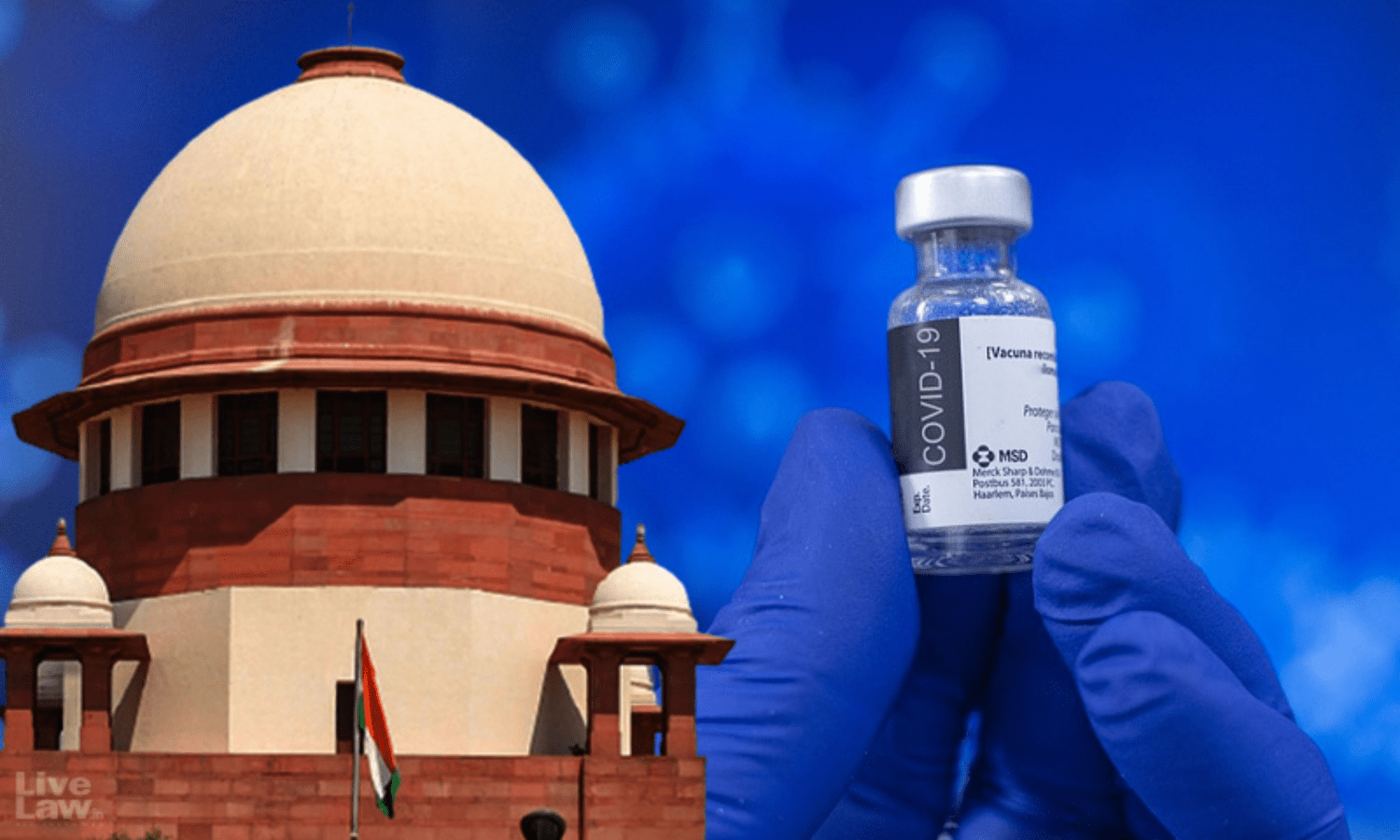
The Supreme Court has directed the Union government to establish a “no-fault” compensation policy for individuals who suffered serious side effects or died after receiving Covid-19 vaccines. The Court held that victims’ families should not be required to prove negligence in court to receive compensation.
Q1. What is a “no-fault” vaccine compensation policy?
- A no-fault compensation system allows victims to receive compensation without proving negligence or wrongdoing by the government or vaccine manufacturers.
- The focus is on providing timely financial relief to affected individuals or families.
- Such systems recognise that rare adverse reactions can occur even with safe and properly regulated vaccines.
- No-fault compensation schemes exist in several countries, including:
- United Kingdom
- Australia
- Japan
- The objective is to ensure fair and quick support for vaccine-related injuries while maintaining public confidence in immunisation programmes.
Q2. Why did vaccine injury cases reach the Supreme Court?
- The Court heard petitions filed by families who lost relatives aged 18–40 years due to rare complications after receiving Covishield and Covaxin vaccines in 2021.
- Some cases involved rare blood clotting disorders reported after vaccination.
Petitioners’ concerns included:
- Lack of informed consent: Insufficient communication about potential vaccine risks.
- Indirect coercion: Vaccination was officially voluntary but administrative restrictions on unvaccinated individuals effectively made it mandatory.
- Absence of compensation mechanisms: Families had no clear pathway for financial relief.
Q3. What arguments were presented by the government?
The Union government defended the vaccination programme on several grounds:
- Regulatory approval: Covid vaccines underwent rigorous regulatory scrutiny before deployment.
- Robust monitoring: India has an established Adverse Events Following Immunisation (AEFI) surveillance system.
- Extremely rare adverse outcomes: Vaccine-related deaths were reported at extremely low rates, around 0.001 per one lakh doses for certain clotting disorders.
- Existing legal remedies: Families could pursue compensation through civil or consumer courts by proving negligence.
Q4. Why did the Supreme Court reject the negligence-based approach?
- The Court observed that proving negligence in vaccine injury cases is extremely difficult due to complex scientific evidence.
- Families may face lengthy litigation and unequal access to legal resources.
- Multiple individual court cases could lead to inconsistent outcomes across jurisdictions.
- Such a system would place an unfair burden on victims’ families and undermine the principle of equality under Article 14 of the Constitution.
Q5. What constitutional principles did the Court rely on?
The judgment relied primarily on Article 21 of the Constitution, which guarantees the right to life and the right to health.
Key observations include:
- The State has a duty to protect citizens’ health and dignity.
- Public health programmes such as mass vaccination involve collective social responsibility.
- If individuals suffer serious harm while participating in a State-led health initiative, the government must provide institutional support and relief.
The Court clarified that compensation should not be interpreted as an admission of fault by the government.
Q6. How does this ruling relate to earlier Supreme Court decisions during the pandemic?
The Court referred to its earlier rulings on Covid-related relief:
- In Jacob Puliyel vs Union of India (2022), the Court upheld the legality of the vaccine approval process and India’s AEFI monitoring system.
- It also affirmed that vaccination cannot be forcibly imposed, as bodily integrity is protected under Article 21.
Another important case was:
- Gaurav Kumar Bansal vs Union of India (2021), where the Court directed the National Disaster Management Authority (NDMA) to provide financial relief for families of Covid-19 victims.
Q7. What compensation framework currently exists for Covid-related deaths?
Following the Supreme Court’s 2021 directive:
- The NDMA issued guidelines in September 2021 for ex gratia compensation.
- Families of Covid-19 victims receive ₹50,000 as financial assistance.
- The compensation is paid by States through the State Disaster Response Fund (SDRF).
- Simplified procedures were introduced to ensure easier access:
- Deaths within 30 days of a positive Covid test were treated as Covid-related.
- District-level grievance committees were created to resolve disputes.
Conclusion
The Supreme Court’s directive to establish a no-fault vaccine compensation policy reflects an evolving approach to public health accountability in India. By recognising the State’s responsibility in large-scale vaccination programmes, the ruling seeks to balance public health objectives with the protection of individual rights and welfare. A structured compensation framework can help maintain trust in immunisation programmes while ensuring justice for those who experience rare but serious adverse outcomes.