Context
A study shows that Spotted Hyenas in Mekelle (Ethiopia’s second-largest city) act as “eco‑warriors,” helping urban sanitation and balance by scavenging waste and animal remains.
Q1. What is the Spotted Hyena?
- Also called laughing hyena (due to the distinctive sounds it produces), it is scientifically known as Crocuta Crocuta and is the largest species in the Hyena Family.
- Although it resembles a dog in appearance, it is more closely related to cats, civets, and genets.
- It is a powerful predator and efficient scavenger.
- Conservation Status: Least Concern (IUCN)
Q2. What are the physical features of the Spotted Hyena?
The spotted hyena can be identified through several distinctive characteristics:
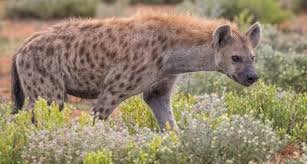
- A bear-like body structure with rounded ears.
- Spotted fur pattern across its body.
- A less prominent mane compared to other hyena species.
- Strong jaws and specialized teeth adapted for both hunting and scavenging.
- Females possess a pseudo-penis and lack an external vaginal opening, a unique trait among placental mammals.
Q3. Where is the Spotted Hyena found?
- Habitat: Spotted hyenas are highly adaptable and inhabit a wide range of environments such as savannas, grasslands, coastal areas, open and dry woodlands, mountains, semi-desert regions and tropical rainforests.
- Distribution: The species is widely distributed across sub-Saharan Africa, including countries such as Chad, Ethiopia, Namibia, South Sudan, Central African Republic, etc.
Q4. What are the key behavioural characteristics of Spotted Hyenas?
- They are mostly nocturnal, with excellent night vision that helps them hunt during the night.
- During the daytime, they usually rest near their dens.
- They live in social groups called clans, following matriarchal hierarchy led by a dominant female.
- They mark their territory by scratching ground & releasing scent secretions from anal glands.
FAQs
Q1. What is the Spotted Hyena?
The Spotted Hyena (Crocuta crocuta), also called the laughing hyena, is the largest member of the hyena family. Despite resembling dogs, it is more closely related to cats, civets, and genets.
Q2. Where is the Spotted Hyena found?
It inhabits savannas, grasslands, woodlands, semi‑deserts, coastal areas, and tropical rainforests. Distribution spans sub‑Saharan Africa, including Ethiopia, Chad, Namibia, South Sudan, and Central African Republic.
Q3. Why are Spotted Hyenas ecologically important?
They act as scavengers and predators, recycling waste and animal remains, thus maintaining urban sanitation (e.g., Mekelle, Ethiopia) and ecological balance in natural habitats.