Important Questions for UPSC Prelims, Mains and Interview
|
Context
The West Asia conflict and disruptions in the Strait of Hormuz have interrupted LNG shipments to India. In response, the government invoked the Essential Commodities Act, 1955 to regulate natural gas allocation and ensure supplies for essential sectors such as households and transportation.
Q1. Why has India prioritised natural gas allocation following disruptions in LNG supplies due to the West Asia conflict?
- Maritime tensions in West Asia have disrupted LNG shipments passing via the Strait of Hormuz.
- India relies heavily on LNG imports for industrial production and household energy needs.
- A sudden reduction in LNG supply could affect essential public services and economic activity.
- So, the government prioritised gas supply to sectors with direct impact on citizens’ daily lives.
- Protecting sectors such as transport and household cooking fuel is crucial for social stability.
- Prioritisation also ensures efficient management of limited energy resources during crises.
Q2. Why is the Strait of Hormuz considered one of the most strategically important energy chokepoints in the world?
- The Strait of Hormuz connects the Persian Gulf with the Gulf of Oman and the Arabian Sea.
- It serves as a narrow maritime corridor for global oil and LNG transportation.
- Nearly one-fifth of global petroleum trade passes through this route.
- Several major energy exporters depend on this route, including Qatar and United Arab Emirates.
- Any conflict or blockade in this region can disrupt global energy markets. Because many Asian countries rely on Gulf energy supplies, the strait holds strategic economic significance.
- Its vulnerability to geopolitical tensions makes it a critical point for global maritime security.
Q3. How does India’s dependence on imported natural gas and LPG increase its vulnerability to geopolitical disruptions?
- India’s total gas demand is approximately 190 million standard cubic metres per day (mscmd).
- Around half of this demand is met through LNG imports.
- LPG imports satisfy nearly 60% of India’s domestic LPG requirement.
- More than 80% of LPG imports pass through the Strait of Hormuz.
- This heavy dependence means disruptions in West Asia directly affect India’s energy availability.
- Supply interruptions can lead to price volatility and shortages in domestic markets.
- Such vulnerability highlights the risks of relying heavily on external energy sources located in conflict-prone regions.
Q4. What measures has the Government of India taken under emergency provisions to manage the shortage of natural gas?
- The government invoked emergency powers under the Essential Commodities Act, 1955.
- This allows authorities to control production, supply and distribution of essential resources.
- Gas allocation has been regulated to ensure critical sectors receive uninterrupted supply.
- The shortage burden has been shifted to less essential industrial sectors.
- Government agencies have been directed to monitor supply and consumption patterns.
- A centralised coordination mechanism ensures efficient distribution during the crisis.
- Public sector companies such as GAIL have been tasked with implementing allocation decisions.
Q5. How does the government’s four-tier priority system regulate the distribution of natural gas during supply disruptions?
- The Ministry of Petroleum and Natural Gas introduced a four-category allocation framework.
- Priority Category I (100% supply) includes sectors essential for public welfare like PNG for households, CNG for transport and gas required for LPG production.
- Priority Category II (70% supply) covers fertiliser plants. Gas must be used strictly for fertiliser manufacturing. Compliance verified by the Petroleum Planning and Analysis Cell.
- Priority Category III (80% supply) includes industries such as tea processing and manufacturing units connected to the national gas grid.
- Priority Category IV (80% supply) covers commercial and industrial consumers under City Gas Distribution networks.
- This system ensures essential services remain protected while industries share shortage burden.
- The framework also provides predictability and transparency in energy allocation.
Q6. What additional steps has India taken to stabilise domestic energy supplies and protect consumers during the LNG crisis?
- Refiners have been directed to increase domestic LPG production using propane & butane streams. Private refiners have committed to boost output from large refining complexes.
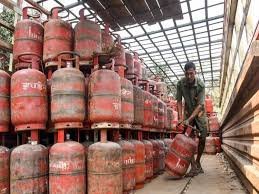
- Household LPG supply has been prioritised to protect over 33 crore domestic consumers.
- Measures to manage demand include increasing refill booking gap and monitoring distribution levels.
- Daily distribution of LPG cylinders has been maintained to avoid panic shortages.
- A committee of oil marketing companies has been established to review commercial LPG supply requests.
- India is exploring alternative LNG sources such as US & Norway, despite higher transport costs.
Q7. What long-term policy measures are required to strengthen India’s energy security and reduce vulnerability to global supply shocks?
- India must diversify energy imports by establishing long-term supply agreements with multiple countries. Expanding LNG procurement from regions such as Australia, Africa and North America can reduce reliance on West Asia.
- Creating strategic natural gas reserves can cushion temporary supply disruptions.
- Domestic gas exploration should be expanded in deepwater basins and ultra-deepwater & difficult fields.
- Strengthening maritime security cooperation can help protect key global shipping routes.
- Accelerating renewable energy deployment (solar energy, wind energy and green hydrogen) can reduce dependence on fossil fuels.
- Building resilient energy infrastructure will help India manage future geopolitical and supply chain shocks.
Conclusion
The disruption of LNG supplies due to the West Asia conflict highlights the vulnerability of global energy supply chains. While emergency allocation measures help stabilise supplies in the short term, India must pursue energy diversification, domestic production expansion, and renewable energy development to ensure long-term energy security.