Context
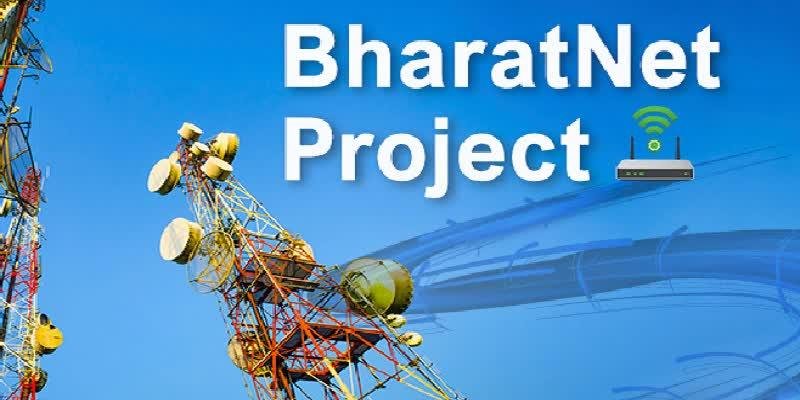
The Government of India recently announced that the BharatNet Project has expanded optical fibre connectivity and digital infrastructure to over 2.15 lakh Gram Panchayats, improving internet access in rural areas.
Q1. What is the BharatNet Project?
- BharatNet is a Government of India initiative aimed at providing high-speed broadband connectivity to all Gram Panchayats in the country.
- The project creates a nationwide optical fibre network in rural areas, allowing telecom operators and internet providers to deliver digital services in villages.
Q2. What are the objectives of the BharatNet Project?
The project aims to:
- Provide broadband connectivity to all Gram Panchayats.
- Enable telecom operators, ISPs and cable providers to expand services in rural areas.
- Support digital services such as e-governance, online education, telemedicine and digital banking.
- Reduce the digital divide between urban and rural India.
Q3. What are the phases of the BharatNet Project?
- Phase I
- Connected 1 lakh Gram Panchayats through optical fibre.
- Implemented mainly using existing telecom infrastructure.
- Completed in December 2017.
- Phase II
- Extends connectivity to an additional 1.5 lakh Gram Panchayats.
- Uses a combination of optical fibre, radio and satellite technologies.
- Phase III
- Focuses on strengthening the network through higher bandwidth capacity, integration with 5G networks and improved last-mile connectivity.
Q4. How is the BharatNet Project funded and implemented?
- Funding: The project is financed through Digital Bharat Nidhi, which replaced the earlier Universal Service Obligation Fund.
- Implementation: The project is implemented by Bharat Broadband Network Limited, a Special Purpose Vehicle responsible for building and managing the fibre network.
Conclusion
BharatNet is one of the world’s largest rural broadband projects aimed at strengthening digital connectivity across India. By linking villages with high-speed internet infrastructure, it plays a key role in promoting digital governance, economic development and inclusive access to technology.