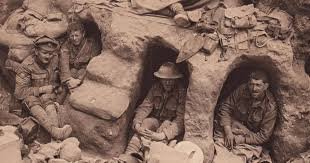
World War I, originally known as the “Great War,” was an unprecedented global conflict that lasted from 1914 to 1918. Often called the “war to end all wars,” it fundamentally reshaped the global political landscape and resulted in the deaths of millions. While the war originated in Europe, it quickly escalated into a worldwide struggle involving major powers and their colonial empires.
Root Causes of the Great War
The outbreak of World War I was not the result of a single event but a culmination of complex, intertwined factors:
- Imperialism and Colonialism:
- European powers competed fiercely for colonies, resources, and economic dominance.
- Germany’s industrial and military rise by 1900 challenged Britain’s naval and economic supremacy.
- Japan’s victory over Russia in 1905 undermined European prestige and highlighted rising Asian power.
- Nationalism:
- Various ethnic groups (such as Poles, Serbs, and Czechs) within the Austro-Hungarian and Ottoman empires sought self-determination and independent nation-states.
- The “sick man of Europe” (Ottoman Empire) left a power vacuum in the Balkans, fueling regional instability and the Balkan Wars of 1912–1913.
- Mutual Defense Alliances:
- Europe was divided into two major camps: the Triple Entente (Britain, France, and Russia) and the Triple Alliance (Germany, Austria-Hungary, and Italy).
- These treaties ensured that a localized conflict would rapidly transform into a continent-wide war as nations upheld their commitments.
- Immediate Trigger:
- The assassination of Archduke Franz Ferdinand of Austria by a Bosnian Serb nationalist on June 28, 1914, served as the final spark for the conflict.
Chronology of Key Events (1905–1918)
| Period/Year | Significant Event | Impact |
| 1905–1911 | Moroccan & Agadir Crises | Strengthened the Anglo-French alliance and isolated Germany diplomatically. |
| 1908 | Bosnia Crisis | Austria-Hungary’s annexation of Bosnia-Herzegovina heightened tensions with Serbia and Russia. |
| 1914 | The Opening Campaigns | Germany’s Schlieffen Plan failed to defeat France quickly, leading to a stalemate and trench warfare on the Western Front. |
| 1915–1917 | Stalemate & Attrition | Characterized by massive casualties in battles like Verdun, the Somme, and Gallipoli with minimal territorial gains. |
| 1917 | The Turning Point | The United States entered the war on the Allied side, while Russia withdrew following the Bolshevik Revolution. |
| Nov 11, 1918 | The Armistice | Germany signed the armistice, officially ending the fighting. |
Consequences of the War
1. Political and Territorial Changes
- Collapse of Four Empires: The Russian, German, Austro-Hungarian, and Ottoman empires were dismantled.
- New Nation-States: Countries such as Poland, Czechoslovakia, Yugoslavia, Finland, Estonia, Latvia, and Lithuania were created, largely along ethnic lines.
- Mandate System: Britain and France gained control over former Ottoman territories (Palestine, Iraq, Syria, Lebanon) through League of Nations mandates.
2. Economic and Social Impact
- Financial Ruin: Participating nations faced massive debt and post-war inflation; Britain and Germany spent roughly 60% of their GDP on the war.
- Societal Shifts: High casualty rates created millions of orphans and widows.
- Women’s Rights: Women entered the workforce to replace men in factories, which eventually led to many countries granting them the right to vote.
3. International Order
- Rise of New Powers: The war weakened traditional European powers and established the United States and the Soviet Union as dominant global entities.
- League of Nations: Established to prevent future conflicts and resolve international disputes through diplomacy.
Major Post-War Treaties
- Treaty of Versailles (1919): Imposed harsh terms on Germany, including the loss of all colonies, a reduction of the army to 100,000 troops, and the payment of heavy war reparations.
- Treaty of Saint-Germain: Formally broke up the Austro-Hungarian Empire.
- Treaty of Lausanne (1923): Finalized the detachment of Middle Eastern territories from the Ottoman Empire while allowing Turkey to keep Constantinople.
India’s Role in World War I
As a British colony, India made massive contributions to the Allied effort:
- Military: Over a million Indian soldiers fought in various theaters, including Gallipoli and Palestine.
- Commemoration: The India Gate in Delhi was built in 1931 to honor the Indian soldiers who died in the war.
- Political Impact: The war intensified demands for Indian independence and led to the Montagu-Chelmsford Reforms of 1919, though these were widely seen as inadequate.
Frequently Asked Questions (FAQs)
WHEN DID WORLD WAR I BEGIN AND END?
The war began on July 28, 1914, and ended with an armistice on November 11, 1918.
WHICH EVENT IS CONSIDERED THE IMMEDIATE CAUSE OF THE WAR?
The assassination of Archduke Franz Ferdinand of Austria-Hungary on June 28, 1914.
WHICH COUNTRIES FORMED THE TRIPLE ENTENTE?
The Triple Entente consisted of Britain, France, and Russia.
WHAT WAS THE SCHLIEFFEN PLAN?
A German military strategy intended to swiftly defeat France in the West before focusing all forces on Russia in the East.
WHY DID RUSSIA WITHDRAW FROM THE WAR IN 1917?
The Bolshevik Revolution led by Vladimir Lenin occurred, and the new government deemed the war an imperialist conflict.
WHAT WERE THE “TEN PRINCIPLES” OF THE TREATY OF VERSAILLES?
The treaty focused on territorial losses for Germany, military restrictions, and massive financial reparations.
WHICH NATION-STATES EMERGED FROM THE COLLAPSE OF THE AUSTRO-HUNGARIAN EMPIRE?
New states included Austria, Hungary, Czechoslovakia, and Yugoslavia.
HOW DID WORLD WAR I IMPACT WOMEN IN SOCIETY?
Women took on male-dominated roles in factories and offices, which post-war led to increased social rights and the suffrage movement.
WHAT IS THE SIGNIFICANCE OF THE INDIA GATE?
It was constructed to commemorate the thousands of Indian soldiers who lost their lives fighting for the British Empire during the war.
WAS THE LEAGUE OF NATIONS SUCCESSFUL IN ITS MISSION?
The League had mixed success; while it acted as a precursor to the UN, it ultimately failed to prevent the outbreak of World War II.