Context
As the tensions continue to rise in the Middle East, Tehran (capital of Iran) suffered structural damage including the Golestan Palace, which is recognized as a UNESCO World Heritage Site.
About Golestan Palace
- The word “Golestan” comes from Persian – “Gol” meaning flower or rose and “stan” meaning place or garden. So, Golestan literally means “Rose Garden” or “Flower Garden,” and the palace is sometimes referred to as the “Rose Garden Palace.”
- It is a historic royal complex located in Tehran which was built as a citadel during the Safavid period (16th century).
- It later became a seat of government under the Qajar Dynasty when they came to power in 1779 and declared Tehran as the capital of Iran.
- After the Qajars, the palace continued to hold significance during the Pahlavi era and over time, the site evolved into a large royal complex consisting of palaces, gardens, and cultural collections.
- Architectural Features:
- It combines Persian architectural style with European influences.
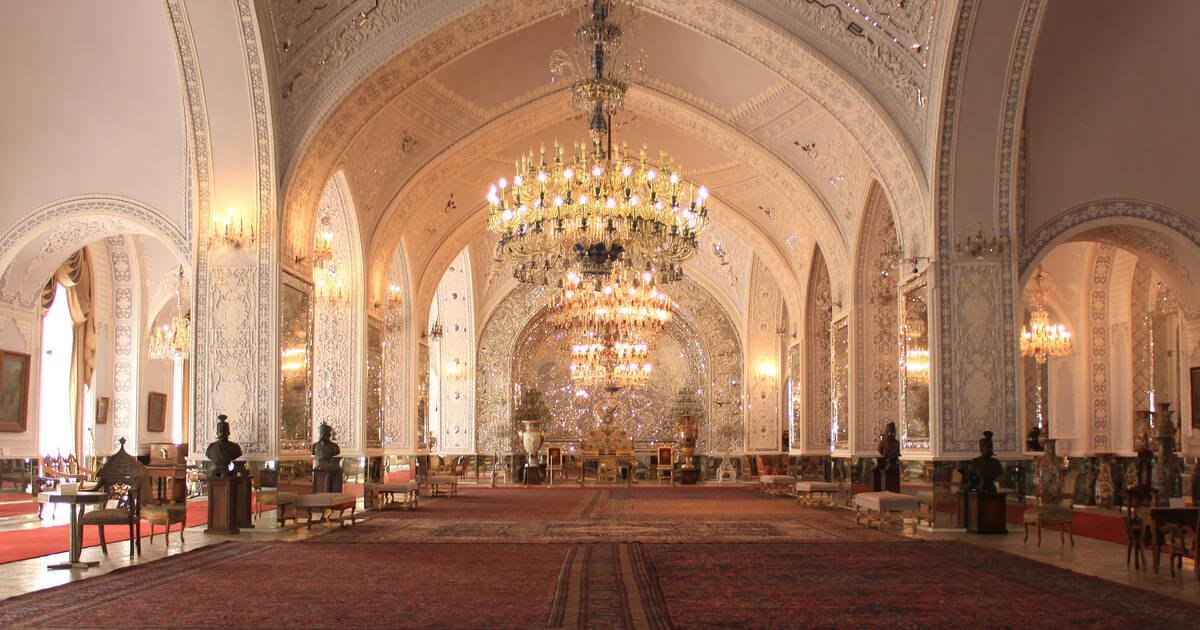
- It is known for its colourful tile work (yellow, turquoise, cobalt blue, pink and white), Persian artistic traditions, and ceremonial halls (Mirror Hall, Brilliant Hall, Ivory Hall, Salam Hall and Reception Hall).
- The designs include floral patterns, geometric motifs and persian calligraphy.
- These decorations reflect the importance of symmetry, precision, and storytelling in Persian art.
- Thus, Golestan Palace represents a unique combination of Persian history, architecture, and royal culture preserved through centuries.
FAQs
Q1. What is Golestan Palace and where is it located?
Golestan Palace, meaning “Rose Garden Palace” in Persian, is a historic royal complex located in Tehran, Iran. It is recognized as a UNESCO World Heritage Site for its cultural and architectural significance.
Q2. When was Golestan Palace built and by whom?
The palace was originally constructed as a citadel during the Safavid period (16th century). It later became the seat of government under the Qajar Dynasty in 1779.
Q3. What role did Golestan Palace play in Iranian history?
Golestan Palace served as a royal residence and ceremonial complex during the Qajar era. It continued to hold importance during the Pahlavi dynasty, evolving into a cultural and political landmark.
Q4. What are the key architectural features of Golestan Palace?
The palace blends Persian architectural traditions with European influences. It is famous for its colourful tile work (yellow, turquoise, cobalt blue, pink, and white), floral and geometric motifs, Persian calligraphy, and grand ceremonial halls like the Mirror Hall, Brilliant Hall, Ivory Hall, Salam Hall, and Reception Hall.
Q5. Why is Golestan Palace culturally significant?
Golestan Palace reflects centuries of Persian art, symmetry, and storytelling traditions. Its decorations and halls symbolize the fusion of Iranian heritage with modern influences, making it a cultural treasure.