Context
Recently, researchers discovered two previously unknown species of moniligastrid earthworms.
These new species have been scientifically named Moniligaster girishi and Drawida reynoldsi.
About Moniligaster girishi
- Distribution: This species is endemic to the Western Ghats.
- Taxonomic Family: It belongs to the Moniligastridae family, which is a group of earthworms commonly found in tropical regions.
- Naming: The species was named in honour of P. Girish Kumar, a scientist associated with the Zoological Survey of India at its Western Ghats Regional Centre in Kozhikode.
- Habitat: Researchers collected this species from tropical wet evergreen forests, which are dense forests receiving heavy rainfall and maintaining high humidity.
- Characteristics of Moniligaster girishi
- Species Group: It belongs to the gravelyi species-group within the Moniligaster genus.
- Reproductive Structure: A key identifying feature is the presence of a single, undivided spermathecal atrial gland on each side of the front part of the body.
- Prostate Structure: The structure of its prostate gland and surrounding capsule is distinctive.
- Capsule Shape: The capsule appears smooth and tubular at one end, but gradually flattens into a strap-like shape at the other end.
About Drawida reynoldsi
- Habitat: This earthworm species was collected from montane grasslands, which are high-altitude grass-dominated ecosystems.
- Naming: It was named in honour of John Warren Reynolds, a well-known Canadian scientist who made significant contributions to earthworm taxonomy.
- Species Group: This species belongs to the robusta species-group.
- Distinguishing Features: Members of this group typically have glandular prostates and bilobed spermathecal atria.
Understanding Earthworms
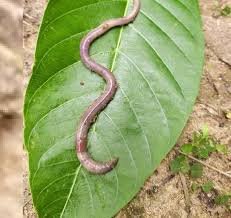
- Earthworms are terrestrial invertebrate animals that live in soil.
- Scientific Classification: Earthworms belong to class – Oligochaeta and phylum – Annelida, particularly members of the genus Lumbricus.
- They are generally harmless organisms and are extremely beneficial to soil ecosystems.
- Ecological Importance of Earthworms: Earthworms play a vital role in maintaining soil health and agricultural productivity.
- Decomposition of Organic Matter: They break down dead plant material and organic waste. This process converts organic matter into nutrient-rich humus, which supports plant growth.
- Production of Castings: Earthworms release waste material called castings. These castings contain high levels of nutrients such as nitrogen and phosphorus that plants can absorb.
- Soil Aeration and Drainage: While moving through the soil, earthworms create tiny tunnels and channels. These tunnels improve soil aeration and water drainage, making the soil healthier for plant roots.
FAQs
Q1. What new earthworm species were recently discovered in India?
Researchers identified two previously unknown species of moniligastrid earthworms: Moniligaster girishi, found in the Western Ghats, and Drawida reynoldsi, collected from montane grasslands.
Q2. Why is Moniligaster girishi significant?
Moniligaster girishi belongs to the Moniligastridae family and is endemic to the Western Ghats. It was named after P. Girish Kumar of the Zoological Survey of India. Its unique reproductive and prostate structures distinguish it within the gravelyi species‑group.
Q3. What makes Drawida reynoldsi unique?
Drawida reynoldsi, named in honour of Canadian scientist John Warren Reynolds, belongs to the robusta species‑group. It is characterized by glandular prostates and bilobed spermathecal atria, and thrives in high‑altitude montane grasslands.
Q4. Why are earthworms important for ecosystems and agriculture?
Earthworms improve soil health by decomposing organic matter into nutrient‑rich humus, producing castings rich in nitrogen and phosphorus, and creating tunnels that enhance soil aeration and drainage. They are vital for sustainable farming.
Q5. How do these discoveries contribute to science and conservation?
Identifying new species expands our understanding of biodiversity in India’s Western Ghats and montane ecosystems. It also highlights the ecological importance of earthworms in maintaining soil fertility and supports conservation of lesser‑known invertebrates.