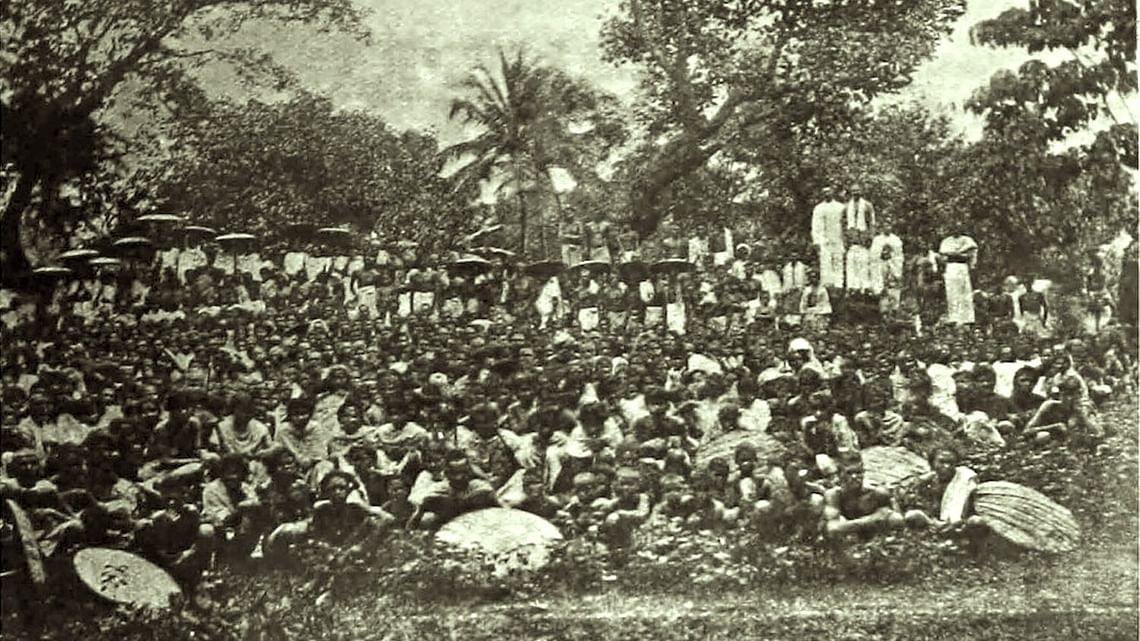
The Moplah Rebellion, also referred to as the Mappila Rebellion, was a significant uprising that erupted in the Malabar region of Kerala in 1921. It was a complex movement that blended agrarian discontent with religious fervor and anti-colonial sentiments. While it began as a peasant revolt against oppressive land tenure systems, it was deeply influenced by the contemporary Khilafat and Non-Cooperation movements.
The rebellion is a pivotal chapter in British Indian history, noted for its shift from a secular anti-colonial struggle to a violent communal conflict, eventually leading to a brutal suppression by British authorities.
1.Historical Background of the Rebellion
The Moplah community, consisting primarily of Muslim tenants in Malabar, harbored long-standing grievances against local landlords—the Jenmis—who were mostly Hindu upper-caste Namboothiri Brahmins and Nairs.
- Hierarchical Land System: Jenmis owned vast hereditary tracts of land and leased them to Moplah tenants in exchange for a high share of the produce.
- Mysorean Interlude: During the late 1700s, the invasion by Hyder Ali and Tipu Sultan caused many Hindu landlords to flee, allowing Moplah tenants to gain greater control over their cultivated fields.
- British Intervention: Following Tipu Sultan’s defeat in the 4th Anglo-Mysore War, the British seized Malabar. They assisted the Jenmis in returning and reclaiming their lands.
- Legal Dispossession: British legislation recognized the Jenmis’ lands as absolute private property, allowing them to dramatically raise rents and evict tenants at will. This sparked frequent riots and disputes between 1836 and 1896.
2. Primary Causes of the 1921 Uprising
The rebellion was the result of a “perfect storm” of socioeconomic, religious, and political triggers.
- Agrarian Discontent: The British land tenure system imposed harsh conditions, with rents often consuming 75–80% of the net produce.
- Economic Insecurity: Tenants faced constant threats of eviction without compensation, leading to extreme poverty and frustration.
- Religious and Political Triggers: The Khilafat Movement (to protect the Ottoman Caliphate) resonated deeply with the Mappilas.
- Non-Cooperation Movement: Mahatma Gandhi’s call for Non-Cooperation in 1920 galvanized anti-British sentiments and provided a platform for the Moplahs to express their grievances against colonial rule.
3. Major Events and the “Wagon Tragedy”
- Outbreak: The rebellion began on August 20, 1921, in Tirurangadi following a violent clash between Moplahs and the British police.
- Spread: Violence quickly spread through the Eranad and Valluvanad regions. Insurgents targeted government offices, looted property, and attacked the homes of Hindu landlords.
- British Suppression: The administration deployed the Malabar Special Force and imposed martial law to crush the revolt. By early 1922, the movement was largely suppressed.
- The Wagon Tragedy: On November 10, 1921, approximately 100 Muslim detainees were transported in a closed railroad wagon from Tirur to Bellary. 70 prisoners died of suffocation, an event that remains one of the most tragic episodes of the rebellion.
4. Prominent Leaders of the Revolt
Several religious and political figures emerged to lead the Moplah insurgence against British and landlord authority:
- Variyamkunnath Kunjahammed Haji: He established a parallel Khilafat government in the Nilambur area. He notably attempted to maintain a secular character by instructing his followers not to assault or loot Hindus.
- Ali Musaliar: A prominent spiritual leader and Khilafat supporter who was eventually captured and executed by the British.
- Sayyid Alavi Tangal: A religious leader who provided the ideological inspiration for the Moplahs to fight against colonial and landlord oppression.
5. Impacts and Historical Significance
The rebellion left a lasting impact on the communal and political landscape of India.
- Communal Rift: The movement created deep-seated communal tension between Hindu landlords and Muslim peasants in the region.
- Nationalist Linkage: It demonstrated the early power of linking local grievances with national movements like the Khilafat and Non-Cooperation struggles.
- Gandhi’s Distance: Due to the turn toward extreme violence, Mahatma Gandhi eventually distanced himself and the movement from the Moplah rebellion, as it violated the core principle of Ahimsa (non-violence).
FAQs: Moplah Rebellion
WHAT WAS THE “WAGON TRAGEDY”?
It was a tragic incident in 1921 where 70 out of 100 Moplah prisoners suffocated to death while being transported in a closed railway freight wagon by the British.
WAS THE REBELLION SECULAR OR RELIGIOUS?
It began as a secular peasant uprising against land exploitation, but later took on religious overtones as it became intertwined with the Khilafat movement and communal grievances.
WHO WAS THE MAIN LEADER OF THE PARALLEL KHILAFAT GOVERNMENT?
Variyamkunnath Kunjahammed Haji established a parallel government and was known for trying to protect the secular nature of the revolt initially.
HOW DID THE BRITISH RESPOND TO THE REVOLT?
They imposed martial law and utilized the Malabar Special Force to brutally suppress the insurgents by early 1922.