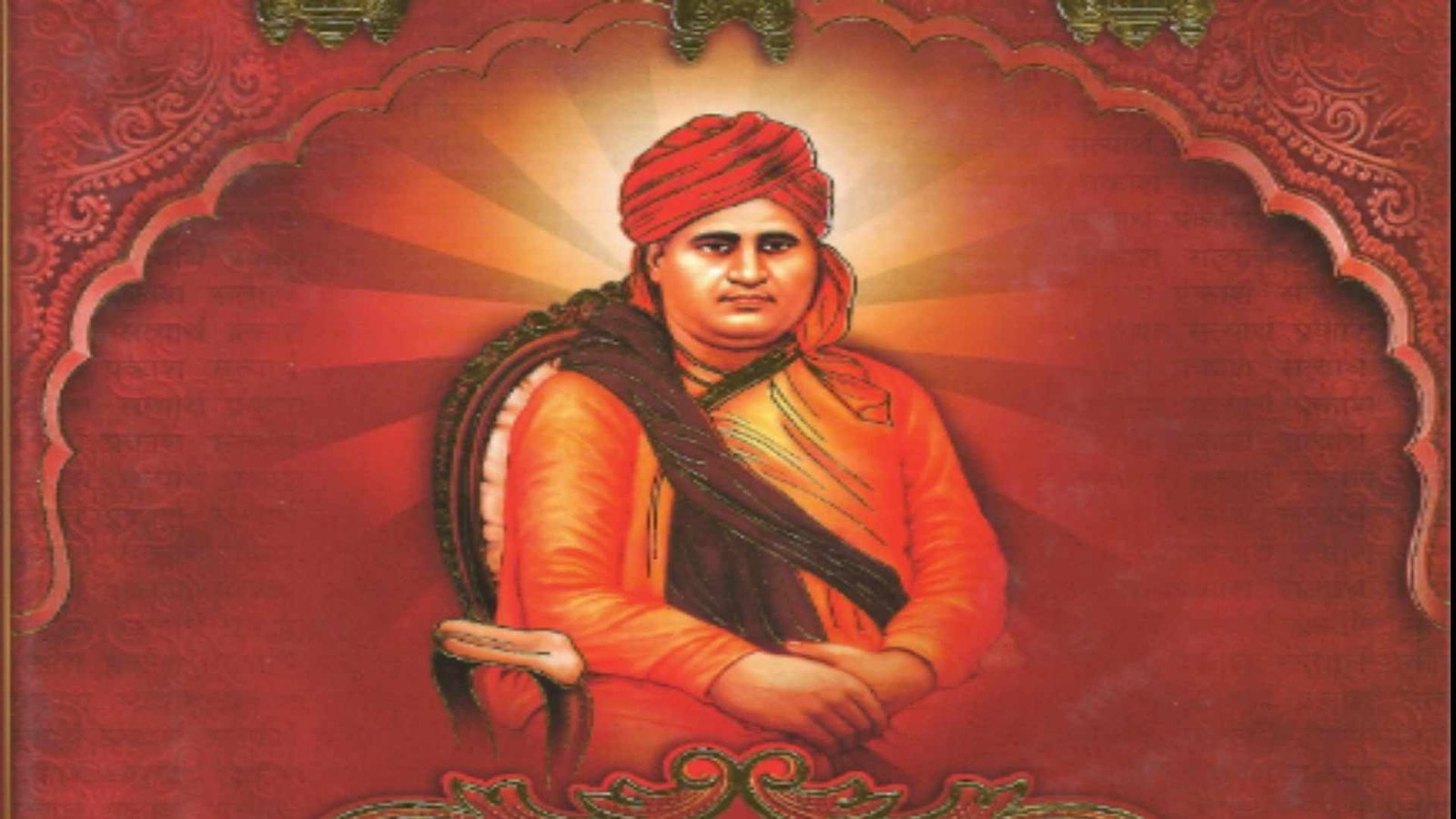
The Arya Samaj is a prominent Hindu reform movement founded in 1875 by Swami Dayanand Saraswati. It emerged as a powerful socio-religious force aimed at reviving Vedic teachings and purging Hindu society of superstitions, social injustices, and religious orthodoxy. By advocating for a return to the original source of knowledge—the Vedas—the movement played a transformative role in shaping modern Indian education, religion, and social ethics.
1. Origin and Mission of Arya Samaj
Swami Dayanand Saraswati founded the Arya Samaj on April 10, 1875, in Bombay (now Mumbai). He believed the decline of Hindu society was caused by the abandonment of Vedic principles in favor of idol worship and rigid caste discrimination.
- Revival of Vedic Dharma: The movement sought to return to original Vedic practices centered on monotheism and morality.
- Eradication of Social Evils: Arya Samaj campaigned against untouchability, child marriage, and caste-based discrimination.
- Promotion of Education: It prioritized education as a critical tool for individual empowerment and social transformation.
- Advocacy for Hindi: The Samaj significantly promoted Hindi as a national language and a medium for mass communication.
2. The Ten Principles of Arya Samaj
The philosophy of the movement is grounded in ten foundational principles that guide the conduct of its followers.
- God as the Primary Cause: God is the ultimate source of all true knowledge.
- Nature of God: God is formless, omniscient, just, merciful, and eternal; He alone is worthy of worship.
- Supremacy of the Vedas: The Vedas are the books of true knowledge, and it is the duty of all Aryas to study and propagate them.
- Adherence to Truth: One should always be ready to accept truth and renounce untruth.
- Dharma-centric Action: All actions must be performed according to Dharma, after considering right and wrong.
- Benevolence to the World: The primary objective of the Samaj is to do good to the world by improving physical, spiritual, and social conditions.
- Conduct Guided by Love: Interaction with others should be governed by love, righteousness, and justice.
- Eradication of Ignorance: One should aim to dispel ignorance and promote knowledge.
- Altruism: One should not be content with personal welfare alone but should look for one’s welfare in the welfare of others.
- Social Responsibility vs. Liberty: Individuals should follow social rules for the well-being of all, while maintaining liberty in matters that affect only themselves.
3. Notable Leaders and Contributors
Beyond its founder, several key figures expanded the movement’s reach.
- Swami Virajanand Dandeesha: The blind spiritual mentor of Dayanand Saraswati who inspired him to establish a movement based on pure Vedic teachings.
- Swami Shraddhanand: A major leader who founded Gurukul Kangri University and was active in the Indian independence movement until his assassination in 1926.
- Pandit Lekh Ram: Known as the “Arya Musafir,” he was a prominent preacher who defended the Vedas through public debates.
4. Significant Contributions to Society
Educational Reforms
- DAV Institutions: The Dayanand Anglo-Vedic (DAV) College Trust was established in 1886 in Lahore to blend Vedic values with modern science.
- Gurukul System: Gurukul Kangri University was established in 1902 to provide an alternative to the British education system.
- Women’s Education: The Samaj was a pioneer in establishing schools specifically for girls to enhance their social status.
Religious and Political Reforms
- Go Back to the Vedas: This slogan summarized the call to reject Puranic superstitions and idol worship.
- Shuddhi Movement: A controversial process aimed at reconverting individuals back to Hinduism who had previously converted to other faiths.
- Concept of Swaraj: Swami Dayanand was the first to use the term “Swaraj” (self-rule) in 1876, asserting that a “good government is no substitute for self-government”.
5. Controversies and the 1893 Split
The movement faced internal and external challenges that eventually led to a division.
- Communal Tensions: Efforts like the Cow Protection Association (1882) sometimes exacerbated religious divides between Hindus and Muslims.
- The 1893 Split: Disagreements centered on dietary habits and education:
- Mahatma Group (Gurukul Faction): Supported strict vegetarianism and traditional Sanskrit-based Vedic education.
- Cultured Party (College Faction): Favored a more liberal diet and modern English-medium education alongside Vedic studies.
FAQs: Arya Samaj
WHO FOUNDED ARYA SAMAJ AND WHEN?
Swami Dayanand Saraswati founded the Arya Samaj on April 10, 1875.
WHAT IS THE MAIN SLOGAN OF ARYA SAMAJ?
The most famous call of the movement is “Go back to the Vedas“.
WHAT ARE THE TEN PRINCIPLES OF ARYA SAMAJ?
They are ethical guidelines emphasizing monotheism, the authority of the Vedas, the pursuit of truth, and service to humanity.
WHAT IS THE SHUDDHI MOVEMENT?
It was a campaign to reconvert individuals back to Hinduism who had converted to other religions.
HOW DID ARYA SAMAJ CONTRIBUTE TO EDUCATION?
It established the DAV (Dayanand Anglo-Vedic) schools and the Gurukul system to provide a blend of Vedic and modern education.
WHO WAS THE SPIRITUAL MENTOR OF SWAMI DAYANAND?
His mentor was the blind scholar Swami Virajanand Dandeesha.
WHAT WAS THE “1893 SPLIT” ABOUT?
The movement split into two factions over disagreements regarding vegetarianism and the medium of education (Sanskrit vs. English).
DID ARYA SAMAJ SUPPORT THE CASTE SYSTEM?
No, the movement aimed to eliminate caste discrimination and untouchability.
WHO FOUNDED GURUKUL KANGRI UNIVERSITY?
It was founded by Swami Shraddhanand in 1902.
WHAT IS THE SIGNIFICANCE OF SATYARTH PRAKASH?
It is a major book written by Swami Dayanand Saraswati that outlines the philosophy of Arya Samaj and advocates for religious and nationalistic reform.