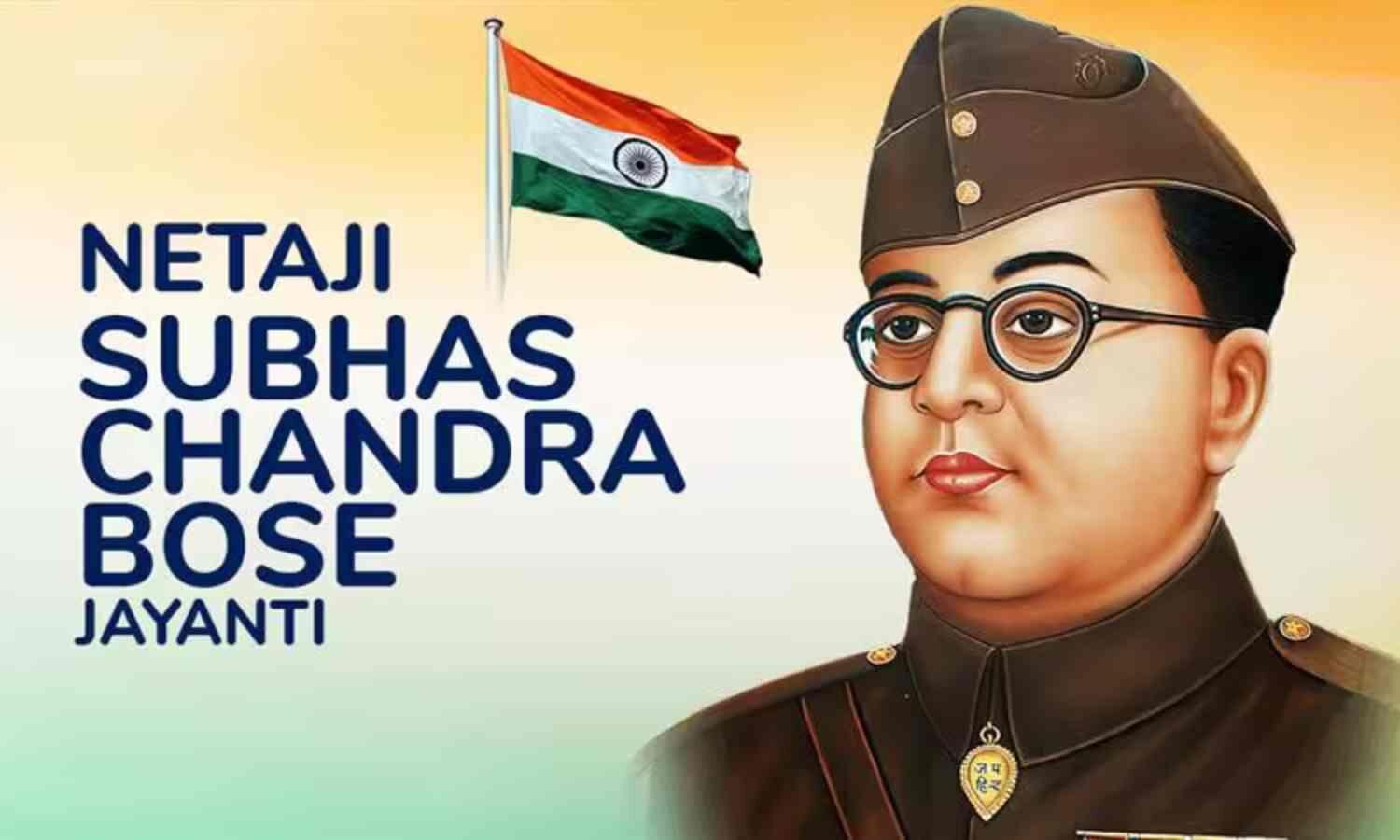
Netaji Subhash Chandra Bose Jayanti, officially celebrated as Parakram Diwas (Day of Valor), is observed annually on January 23rd. This day honors the birth anniversary of one of India’s most iconic freedom fighters, whose defiant patriotism and extraordinary leadership made him a colossal figure in the struggle against British colonial rule.
In 2026, the nation marks the 129th birth anniversary of Netaji. The Government of India designated this day as Parakram Diwas to inspire the youth of the country to exhibit courage in the face of adversity and to foster a deep sense of national pride, mirroring the selfless service and indomitable spirit of Netaji.
1. Netaji Subhash Chandra Bose: A Biographical Sketch
Subhash Chandra Bose was a visionary leader whose life was defined by a singular focus: the absolute independence of India.
1 Birth and Early Life: Born on January 23, 1897, in Cuttack, Odisha, Bose was a brilliant student who was deeply influenced by the spiritual teachings of Swami Vivekananda.
2 Civil Services Resignation: In 1920, he passed the prestigious Indian Civil Services (ICS) examination in England, securing the fourth rank. However, moved by the nationalist unrest following the Jallianwala Bagh massacre, he resigned in April 1921, famously stating that “no secondary loyalty to the British Crown” could supersede his loyalty to India.
3 Early Activism: He began his political journey in 1921 under the mentorship of Chittaranjan Das, starting the newspaper Swaraj and taking charge of the publicity for the Bengal Provincial Congress Committee.
2. Political Career and Ideological Shift
Bose’s political career within the Indian National Congress (INC) was marked by a steady rise and eventual friction over the methods of achieving independence.
Rise in Congress: He served as the President of the All India Youth Congress (1923) and was a key ally of Jawaharlal Nehru. Both leaders represented the “left-wing” or radical faction of the Congress that demanded Purna Swaraj (Complete Independence) instead of Dominion Status.
Presidential Tenure: Haripura Session (1938): Bose was elected President and laid the groundwork for the National Planning Committee.
Tripuri Session (1939): He was re-elected after defeating Pattabhi Sitaramayya, the candidate backed by Mahatma Gandhi.
The Forward Bloc: Due to mounting ideological differences with Gandhi regarding the “non-violence” strategy and the start of World War II, Bose resigned from the INC. On May 3, 1939, he founded the All India Forward Bloc to unite all anti-British and socialist forces.
3. The Indian National Army (INA) and Armed Struggle
Bose believed that “freedom is not given, it is taken.” During World War II, he executed a daring escape from house arrest in Calcutta to seek international support against the British.
1 The Great Escape: Travelling through Afghanistan and the Soviet Union, he reached Germany and later Japan-controlled Singapore in 1943.
2 Formation of Azad Hind: On October 21, 1943, he proclaimed the formation of the Provisional Government of Free India (Azad Hind) in Singapore.
3 Leadership of INA: He took charge of the Indian National Army (Azad Hind Fauj), which was originally conceived by Rash Behari Bose and Captain Mohan Singh.
4 Military Regiments: The INA was a secular and inclusive force, featuring the famous Rani Jhansi Regiment (one of the first all-women combat units in the world).
5 Iconic Slogans: His calls of “Delhi Chalo” and “Jai Hind” resonated across the subcontinent, while his promise—“Tum Mujhe Khoon Do, Main Tumhe Azadi Dunga” (Give me blood, and I shall give you freedom)—became the rallying cry for the armed struggle.
4. Significance and Historical Impact
The impact of Netaji and the INA was instrumental in the final stages of the freedom movement.
1 Military Pressure: The INA’s campaign in Imphal and Kohima, though militarily unsuccessful, sent shockwaves through the British Indian Army.
2 The INA Trials: The post-war trials of INA officers (Sahgal, Dhillon, and Shah Nawaz Khan) at the Red Fort triggered widespread naval mutinies and civil unrest, making the British realize that they could no longer rely on the loyalty of Indian soldiers.
3 Legacy of Valor: Netaji’s life exemplifies the highest order of perseverance, sacrifice, and administrative brilliance.
FAQs: Netaji Subhash Chandra Bose & Parakram Diwas
WHY IS JANUARY 23 CELEBRATED AS PARAKRAM DIWAS?
The Government of India designated Netaji’s birthday as Parakram Diwas (Day of Valor) in 2021 to honor his selfless service and inspire citizens to act with courage.
WHO GAVE SUBHASH CHANDRA BOSE THE TITLE “NETAJI”?
The title “Netaji” (Respected Leader) was first used by Indian soldiers of the Azad Hind Fauj and German officials in the early 1940s.
WHAT WAS THE “HARIPURA SESSION” SIGNIFICANCE?
At the Haripura Session (1938), Bose was elected INC President and emphasized the need for a National Planning Committee, a precursor to modern India’s planning infrastructure.
WHICH POLITICAL PARTY DID BOSE FOUND AFTER LEAVING THE CONGRESS?
He founded the All India Forward Bloc on May 3, 1939, aimed at consolidating the political left.
WHAT WAS THE RANI JHANSI REGIMENT?
It was the all-women infantry regiment of the Indian National Army, named after the legendary Rani Lakshmibai of Jhansi.
WHERE DID BOSE FIRST PROCLAIM THE PROVISIONAL GOVERNMENT OF FREE INDIA?
The proclamation was made in Singapore on October 21, 1943.
WHAT IS THE MEANING OF THE SLOGAN “JAI HIND”?
Coined by Zain-ul-Abideen Hasan and popularized by Netaji, “Jai Hind” translates to “Victory to India” and remains a standard national greeting.
DID NETAJI WIN THE BHARAT RATNA?
He was posthumously awarded the Bharat Ratna in 1992, but it was later withdrawn following legal controversy regarding the lack of official proof of his death.
WHO WERE THE THREE PROMINENT OFFICERS IN THE RED FORT TRIALS?
The most famous trial involved Prem Kumar Sahgal, Gurbaksh Singh Dhillon, and Shah Nawaz Khan, representing Hindu, Sikh, and Muslim communities respectively.
HOW DID NETAJI DIE?
According to official records, Netaji died on August 18, 1945, from third-degree burns following a plane crash in Taihoku (Taiwan), though several alternative theories persist.