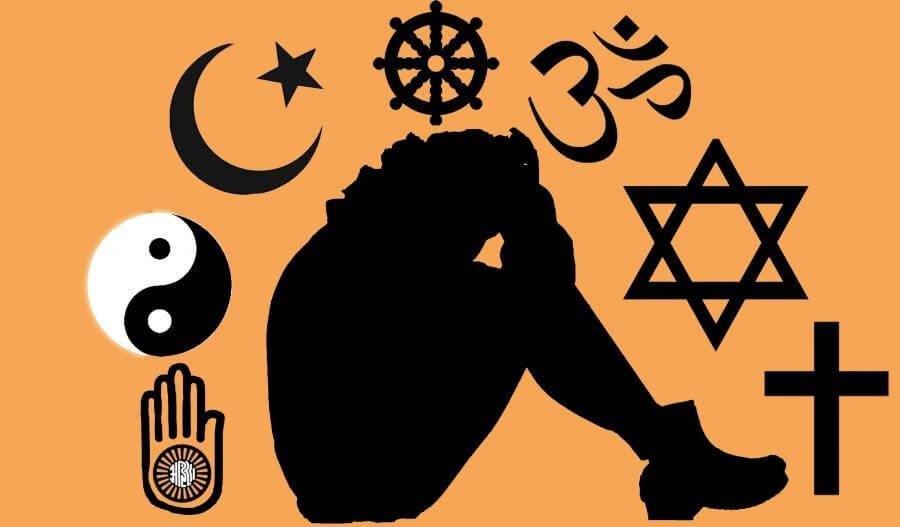
Secularism in India is a fundamental tenet that defines the relationship between the state and the diverse religious fabric of the nation. It refers to the ideology that emphasizes the separation of religion from the political, economic, social, and cultural aspects of life. Unlike the rigid Western model, the Indian version is a “positive” concept, characterized by the principle of Sarva Dharma Sambhava, equal respect for all religions.
As a core component of the Basic Structure of the Constitution, secularism ensures that the government remains neutral and treats all citizens equally, regardless of their faith, while maintaining a “principled distance” to allow for social reform.
Understanding the Dual Meaning of Indian Secularism
Indian secularism is interpreted through two primary lenses that distinguish it from global counterparts:
- DharmNirpekshta: The separation of religion from the state to ensure that no specific religion influences public policy or governance.
- Sarva Dharma Sambhava: The active promotion of equal respect for all religious beliefs by the state.
Constitutional Framework of Secularism in India
Although the word “Secular” was not originally in the text of the 1950 Constitution, the document was inherently secular. The 42nd Constitutional Amendment Act (1976) formally inserted the word into the Preamble. Several other articles in Part III (Fundamental Rights), Part IV (DPSP), and Part IV-A (Fundamental Duties) uphold this value:
- Article 14: Ensures equality before the law and equal protection of the laws for all persons.
- Article 16 (1): Guarantees equality of opportunity in public employment and prohibits discrimination based on religion or race.
- Article 25: Grants Freedom of Conscience and the right to freely profess, practice, and propagate religion.
- Article 26: Empowers religious denominations to manage their own religious affairs and maintain charitable institutions.
- Article 27: Prohibits the state from compelling any citizen to pay taxes for the promotion of any particular religion.
- Article 28: Regulates religious instruction in educational institutions.
- Articles 29 and 30: Protect the cultural and educational rights of religious and linguistic minorities.
- Article 51A: Obliges citizens to promote harmony and the spirit of common brotherhood across religious lines.
Indian vs. Western Secularism: A Comparative Analysis
The Indian model is unique because it allows the state to engage with religion for the sake of social justice, whereas the Western model (specifically the American/French models) dictates a total “wall of separation.”
| Feature | Western Secularism | Indian Secularism |
| Separation | Connotes a complete separation between religion and the state. | Employs a positive concept; the state gives equal respect to all faiths. |
| State Funding | The state cannot provide financial support to religious schools. | The state permits partial financial support for religious schools and infrastructure. |
| Social Reform | The state generally does not interfere in religious reforms. | The state actively supports religious reform (e.g., banning untouchability or child marriage). |
| Nature of Rights | Primarily focuses on the rights of the individual. | Balances individual religious freedom with the rights of minority communities. |
Factors Threatening India’s Secular Fabric
Despite constitutional safeguards, several modern challenges pose a risk to the secular identity of the country:
- Political Interference: The selection of election candidates based on religious demographics and the solicitation of votes using religious sentiments remains a significant hurdle.
- Communalism and Violence: Historical events such as the 1984 anti-Sikh riots, the 1992-93 Mumbai riots, the 2002 Godhra riots, and the 2020 Delhi riots highlight the recurring threat of communal tension.
- Socio-Economic Exclusion: Minority communities often face insecurity. For instance, the Sachar Committee pointed out a stark disparity: while Muslims constitute 14% of the population, they represent only 2.5% of the Indian bureaucracy.
- Radicalization and Intolerance: The rise of religious extremism and the influence of global radical groups on youth pose internal security threats and damage social harmony.
The Role of the Judiciary
The Supreme Court has been instrumental in protecting secularism through landmark judgments:
- Kesavananda Bharati v. State of Kerala (1973): Established that secularism is a part of the Basic Structure of the Constitution and cannot be abolished by Parliament.
- R. Bommai v. Union of India (1994): Reaffirmed that secularism means the equal treatment of all religions and that any state government pursuing anti-secular politics can be dismissed under Article 356.
Measures to Strengthen the Secular State
To transition from a constitutional ideal to a lived reality, the following measures are essential:
- Educational Reforms: Using education as a tool to eliminate prejudice and foster mutual respect between communities from a young age.
- Social and Legal Reforms: Organizing movements for reforms like the Uniform Civil Code (UCC) while ensuring the participation of minorities in the national mainstream.
- Secular Politics: Moving away from “vote bank” politics and ensuring that political parties do not use religious identity as a tool for mobilization.
- Combating Extremism: Implementing strong legal measures to curb hate speech and religious extremism while protecting minority communities from violence.
FAQs on Indian Secularism
WHAT IS THE POSITIVE CONCEPT OF SECULARISM IN INDIA?
It means that the state does not just separate itself from religion but gives equal respect and protection to all religions through the principle of “Sarva Dharma Samabhava.”
WHEN WAS THE WORD SECULAR ADDED TO THE INDIAN CONSTITUTION?
The word “Secular” was added to the Preamble by the 42nd Constitutional Amendment Act in 1976.
HOW DOES ARTICLE 27 PROTECT CITIZENS?
Article 27 prevents the state from using public tax money to promote or maintain any specific religion or religious institution.
WHAT IS THE “PRINCIPLED DISTANCE” IN THE CONTEXT OF INDIAN SECULARISM?
It is a concept where the state maintains a distance from religion but can intervene to bring about social reforms, such as the abolition of Sati or Untouchability.
CAN THE INDIAN STATE FUND RELIGIOUS SCHOOLS?
Yes, unlike the Western model, the Indian Constitution allows for partial financial assistance to educational institutions run by religious communities under certain conditions.
WHICH ARTICLE DEALS WITH THE CULTURAL AND EDUCATIONAL RIGHTS OF MINORITIES?
Articles 29 and 30 of the Indian Constitution provide for the protection of interests and the right of minorities to establish and administer educational institutions.
WHAT DID THE SUPREME COURT RULE IN THE S.R. BOMMAI CASE?
The court ruled that secularism is a basic feature of the Constitution and that the state must be neutral toward all religions.
WHAT IS THE MAIN CRITICISM REGARDING “MINORITISM”?
Critics argue that the Indian model focuses excessively on the rights of minorities, which some claim leads to “appeasement” or a lack of a common identity.
HOW DOES THE SACHAR COMMITTEE REPORT RELATE TO SECULARISM?
The report highlighted the socio-economic backwardness of the Muslim community, suggesting that secularism must also translate into equitable representation in employment and education.
WHAT IS THE ROLE OF ARTICLE 51A IN PROMOTING SECULARISM?
It lists the Fundamental Duty of every citizen to promote harmony and the spirit of common brotherhood amongst all the people of India transcending religious diversities.