Context
A fraud network in Rajasthan diverted funds from welfare schemes, renewing focus on Direct Benefit Transfer (DBT) and PM-KISAN.
What is Direct Benefit Transfer (DBT)?
- Launched on 1 January 2013, DBT is a governance reform to transfer government benefits directly into beneficiaries’ bank accounts, removing intermediaries.
- Objectives
- Faster delivery
- Transparency
- Reduced corruption
- Elimination of leakages and duplicates (Improved financial inclusion)
- DBT operates mainly through the JAM Trinity (Jan Dhan – Universal Bank Accounts, Aadhar – Identity Authentication for targeting and Mobile – Transaction alerts and communication) Together, JAM enables real-time, direct, verifiable transfers.
How DBT Works (Implementation Mechanism)
- DBT is implemented via the Public Financial Management System (PFMS) under the Controller General of Accounts.
- Core elements
- Beneficiary account validation
- Integrated payment & reconciliation
- Settlement through Reserve Bank of India
- Aadhaar Payment Bridge managed by National Payments Corporation of India
- Participation of public, private, RRBs and cooperative banks
- PFMS acts as a central digital monitoring platform to track benefit delivery.
- Current status
- Covers 300+ schemes across 53 Ministries
- Aadhaar not mandatory (as per Supreme Court of India), but preferred for accurate targeting
- Impact (Data)
- Transfers increased 90 times in a decade – from ₹7,368 crore (2013–14) to ~₹6.83 lakh crore (2024–25)
- About ₹44 lakh crore transferred directly during 2014–2025
- At ₹1 lakh/minute, manual distribution would take ~833 years
What is PM-KISAN?
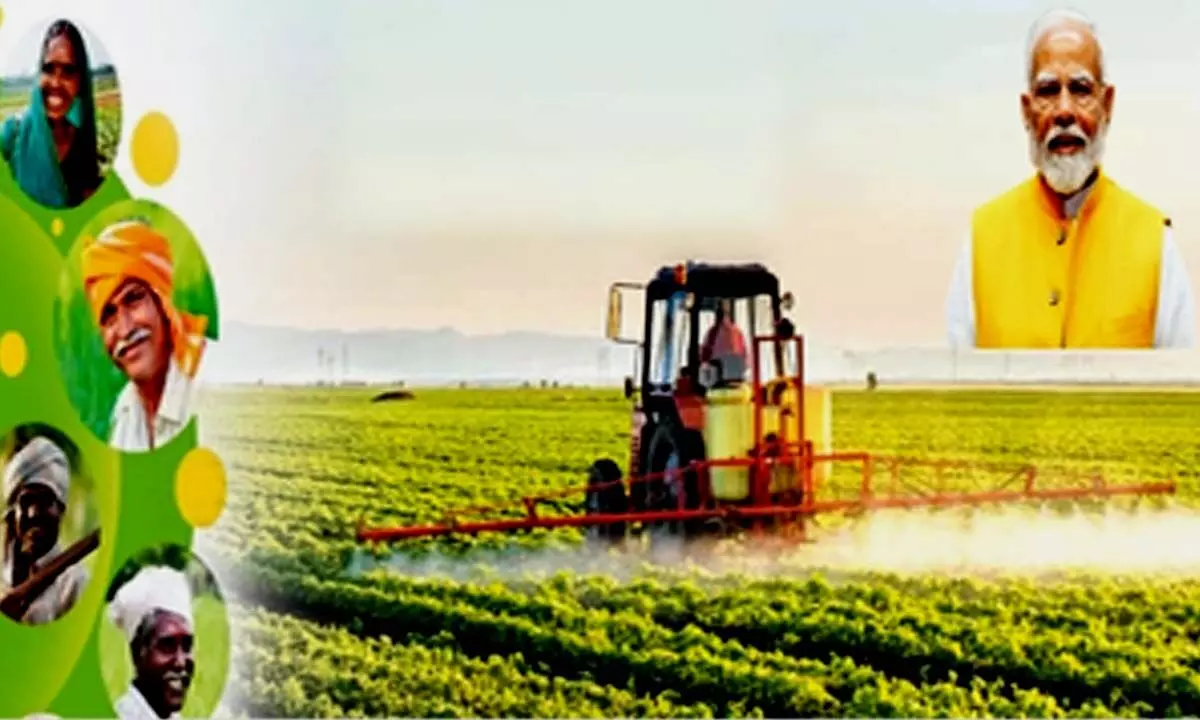
- A Central Sector Scheme launched on 24 February 2019 by the Ministry of Agriculture & Farmers Welfare to provide income support for farmers.
- Objective: Support crop input needs and stabilize farm incomes.
- Key Features
- ₹6,000/year per farmer family
- Paid in three equal instalments
- 100% Central funding
- Direct credit via DBT
- Eligibility: All landholding farmers (earlier limited to small & marginal)
- Family definition: Husband, Wife and Minor children. Beneficiary identification is done by States/UTs.
- Who are Excluded?
- Institutional landholders
- Constitutional post holders (present/former)
- Ministers, MPs, MLAs, Mayors, Zila Parishad Chairpersons
- Serving/retired govt & PSU employees
- Pensioners receiving ₹10,000+ / month (except Group D)
- Income-tax payers
- Professionals (doctors, engineers, lawyers, CAs, architects)
Challenges and Way Forward
| Challenges | Way Forward |
| 1. Cyber fraud and fund diversion through digital platforms | Strengthen cyber security systems and introduce real-time transaction monitoring to detect suspicious transfers early |
| 2. Fake or incorrect beneficiary data leading to leakages and exclusions | Conduct regular database cleaning, field verification, and periodic audits to ensure accuracy |
| 3. Excessive dependence on Aadhaar authentication | Adopt multi-factor verification (bank validation, mobile OTP, local verification) to reduce reliance on a single ID |
| 4. Low digital literacy in rural areas | Expand digital awareness programmes and provide doorstep banking and facilitation support |
| 5. Exclusion due to documentation errors | Improve grievance redressal mechanisms and provide field-level assistance for document correction and enrolment |
| 6. Weak Centre–State coordination affecting payment flow and monitoring | Strengthen integration between States and Public Financial Management System and conduct regular joint audits |
Conclusion
DBT and PM-KISAN mark a decisive shift toward transparent, tech-enabled welfare delivery. While JAM has transformed governance, rising cyber risks require tighter safeguards. Technology must be backed by accountability, audits, and local support to protect public funds and ensure inclusive development.
FAQs
Q1. What is Direct Benefit Transfer (DBT)?
It is a governance reform launched in 2013 to transfer welfare benefits directly into beneficiaries’ bank accounts, eliminating intermediaries and leakages.
Q2. How does Direct Benefit Transfer (DBT) work?
Implemented via the Public Financial Management System (PFMS), with Aadhaar Payment Bridge, RBI settlement, and JAM trinity (Jan Dhan, Aadhaar, Mobile) enabling real-time transfers.
Q3. What is Direct Benefit Transfer’s (DBT) scale today?
Covers 300+ schemes across 53 ministries, with transfers rising from ₹7,368 crore (2013–14) to ~₹6.83 lakh crore (2024–25).
Q4. What are the main benefits of Direct Benefit Transfer (DBT)?
Faster delivery, transparency, reduced corruption, improved financial inclusion, and elimination of duplicates.
Q5. What is PM-KISAN?
A central sector scheme launched in 2019 to provide income support of ₹6,000/year to farmer families via DBT.
Q6. Who is eligible for the PM-KISAN Scheme?
All landholding farmers, with family defined as husband, wife, and minor children.
Q7. Who is excluded from the PM-KISAN Scheme?
Institutional landholders, constitutional post holders, MPs/MLAs, government employees, pensioners earning ₹10,000+, income-tax payers, and professionals like doctors, engineers, lawyers.
Q8. How is the payment structured under the PM-KISAN Scheme?
Three equal installments annually, 100% funded by the Centre, credited directly to farmers’ accounts.
Q9. What challenges remain in implementation of Direct Benefit Transfer (DBT) and PM-KISAN?
Cyber fraud, fake beneficiary data, Aadhaar dependence, low rural digital literacy, and weak Centre–State coordination.
Q10. What is the way forward for implementation of Direct Benefit Transfer (DBT) and PM-KISAN?
Strengthen cyber security, clean beneficiary databases, adopt multi-factor verification, expand digital literacy, improve grievance redressal, and fast-track coordination with States.