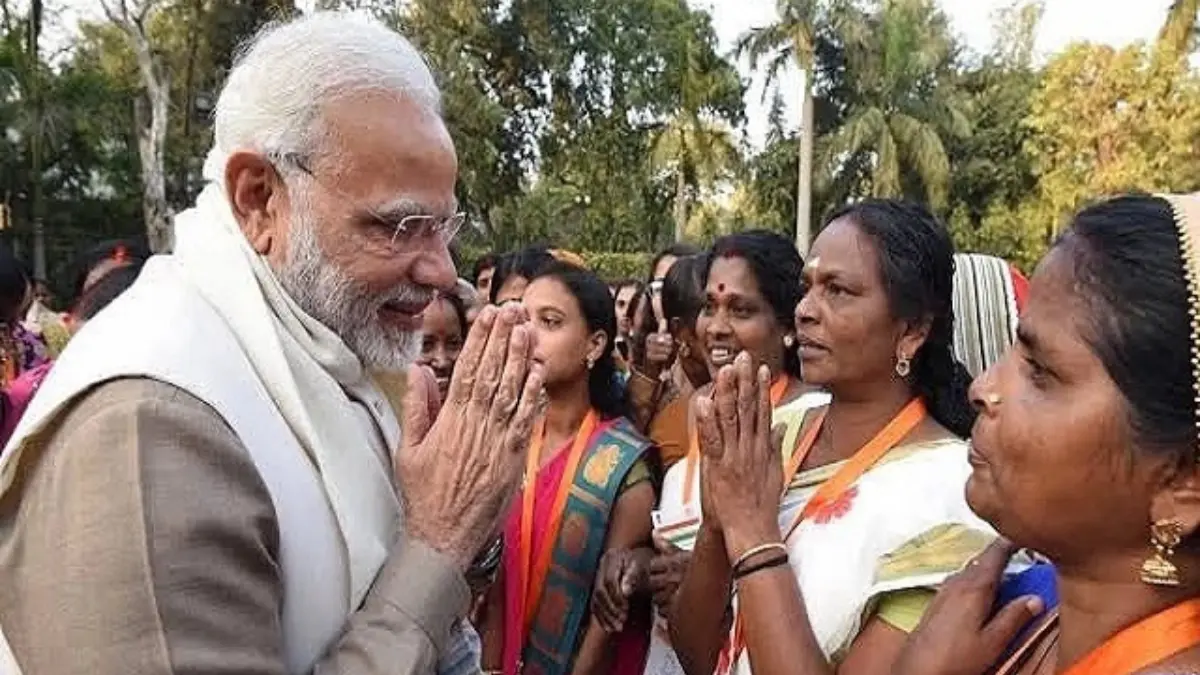
The 106th Constitutional Amendment Act, 2023, represents a landmark shift in India’s democratic evolution. Popularly known as the Nari Shakti Vandan Adhiniyam, this legislation seeks to dismantle the long-standing patriarchal barriers in the highest legislative bodies of the country. By providing for one-third (33%) reservation for women in the Lok Sabha and State Legislative Assemblies, the Act aims to move beyond tokenism toward substantive gender parity in political decision-making.
Historical Evolution: The Decades-Long Journey
The path to the Women’s Reservation Bill has been one of persistent struggle and frequent legislative hurdles. Before finally being enacted as the 106th Amendment, the bill faced a tumultuous history:
- Initial Introduction (1996): The bill was first introduced in the Lok Sabha in 1996 under the HD Deve Gowda government.
- Subsequent Attempts (1998, 1999): It was reintroduced multiple times but lapsed due to the dissolution of the Lok Sabha on three separate occasions.
- The 2008 Breakthrough: The bill was introduced in the Rajya Sabha and successfully passed in 2008. However, it again lapsed in the Lok Sabha following the dissolution of the house.
- The 2023 Milestone: Reintroduced as the Nari Shakti Vandan Adhiniyam, the bill received overwhelming bipartisan support in both the Lok Sabha and Rajya Sabha, leading to the President’s assent and its enactment as the 106th Amendment.
Key Provisions of the 106th Amendment Act
The Amendment has introduced new articles and modified existing frameworks to ensure a robust reservation structure. The key constitutional changes include:
1. Legislative Reservation (Article 239AA, 330A, 332A)
The Act mandates that nearly one-third of all seats shall be reserved for women in:
- Article 239AA: The Legislative Assembly of the National Capital Territory of Delhi.
- Article 330A: The Lok Sabha (House of the People). This includes a sub-reservation for women belonging to Scheduled Castes (SC) and Scheduled Tribes (ST) within the seats already reserved for those categories.
- Article 332A: All State Legislative Assemblies, including the sub-reservation for SC/ST women.
2. The Implementation Mechanism (Article 334A)
the 106th Amendment has specific conditions for its “coming into force”:
- The Census Trigger: The reservation will only be implemented after a fresh decennial census is conducted following the commencement of the Act.
- The Delimitation Requirement: Post-census, a delimitation exercise (readjustment of constituencies) must be carried out to identify the specific seats to be reserved.
- Sunset Clause: The reservation is initially set for a period of 15 years from the date of its commencement.
- Rotation of Seats: Reserved seats for women shall be rotated after every subsequent delimitation exercise, as determined by Parliament.
Concerns and Challenges
While the Act is celebrated as a progressive step, several legal and sociological concerns have been raised by experts and policymakers:
- Delayed Implementation: Critics point out that the link to the census and delimitation means the reservation may not be realized until at least 2029 or beyond, creating an “implementation gap.”
- Voter Choice vs. Reservation: Some argue that mandating reserved seats restricts the freedom of voters to choose from the widest possible pool of candidates and may impact merit-based competition.
- The “Sarpanch Pati” Risk: There is a fear of Proxy Representation. Similar to trends seen in Panchayati Raj Institutions, there is a risk that male relatives may exercise real power while the elected woman remains a nominal head.
- Lack of Internal Party Democracy: The Act does not mandate internal quotas within political parties for ticket distribution, which some believe is the root cause of low female representation.
- Exclusion of Upper Houses: The Act notably excludes the Rajya Sabha and State Legislative Councils, limiting women’s participation primarily to directly elected lower houses.
- Non-Homogeneity: Women in India are not a monolithic group; concerns exist that the benefits may be cornered by women from privileged socio-economic backgrounds, neglecting the most marginalized.
Comparison: 106th Amendment at a Glance
| Feature | Details |
| Official Name | Constitution (One Hundred and Sixth Amendment) Act, 2023 |
| Popular Name | Nari Shakti Vandan Adhiniyam |
| Percentage of Reservation | 33% (One-third of total seats) |
| Applicability | Lok Sabha, State Assemblies, Delhi Assembly |
| Sub-reservation | Included for SC/ST women within existing quotas |
| Duration | 15 Years (extendable by Parliament) |
FAQs: 106th Constitutional Amendment
What is the main objective of the 106th Amendment Act?
The primary goal is to reserve one-third of seats for women in the Lok Sabha and State Legislative Assemblies to ensure gender parity in political representation.
When will the women reservation be implemented?
It will be implemented only after the first decennial census conducted after 2023 and the subsequent delimitation of constituencies.
Does this Act apply to the Rajya Sabha?
No, the 106th Amendment does not provide reservation in the Rajya Sabha or State Legislative Councils.
What is the ‘Sunset Clause’ in this Act?
The reservation is temporary and will expire 15 years after it is implemented, though Parliament has the power to extend it.
How are the reserved seats selected?
The seats will be reserved through a process of rotation, determined by the Parliament after each delimitation exercise.
Is there a quota within the quota?
Yes, the Act provides that one-third of seats reserved for SCs and STs shall be reserved for women belonging to those categories.
Who introduced the Nari Shakti Vandan Adhiniyam?
The bill was introduced by the Union Government in September 2023 during a special session of Parliament.
Which Article governs the reservation in the Delhi Assembly?
Article 239AA was amended to include specific provisions for women’s reservation in the Delhi Legislative Assembly.