| Important questions for UPSC Pre/ Mains/ Interview:
1. What was the constitutional issue before the Court? 2. What is the International Emergency Economic Powers Act (IEEPA)? 3. How did Trump use tariffs as a strategic instrument? 4. What was the economic impact of IEEPA-based tariffs? 5. Who challenged the tariffs? 6. What alternative statutory tariff tools exist? 7. What does the ruling mean for U.S. constitutional governance? 8. What are the implications for global trade? 9. What are the implications for India? 10.What broader governance challenges emerge? 11.What safeguards are necessary moving forward? |
Context
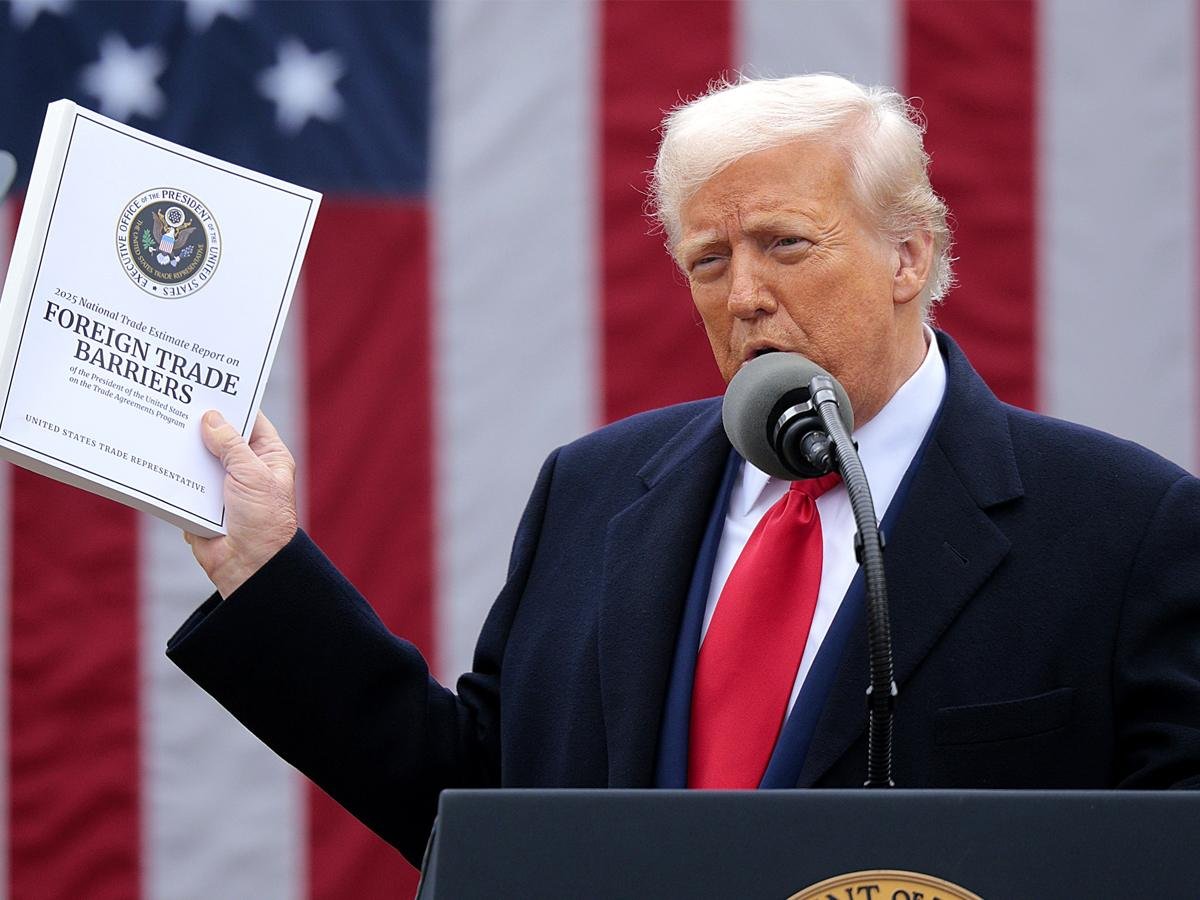
The US Supreme Court, in a 6-3 ruling, struck down former President Donald Trump’s sweeping tariffs imposed under the International Emergency Economic Powers Act (IEEPA). The decision reopens debate on executive overreach, Congressional authority over taxation, and the future trajectory of U.S. trade policy, with ripple effects for major trading partners including India.
Q1. What was the constitutional issue before the Court?
- The US Constitution grants Congress authority to levy taxes and tariffs.
- The President invoked IEEPA to impose tariffs without Congressional approval.
- The Court held that emergency powers cannot substitute legislative trade authority.
- Reinforced separation of powers
- This ruling reasserted Congressional primacy in taxation.
Q2. What is the International Emergency Economic Powers Act (IEEPA)?
- Enacted in 1977 under President Jimmy Carter.
- Designed to address national emergencies.
- Historically used to:
- Freeze foreign assets.
- Impose financial sanctions.
- Does not explicitly authorise tariff imposition.
- Trump became the first President to use IEEPA to impose broad tariffs.
Q3. How did Trump use tariffs as a strategic instrument?
- What was the trade strategy?
- Tariffs used as:
- Revenue-generating tool.
- Leverage in trade negotiations.
- Tariffs used as:
- Pressure mechanism in geopolitical disputes.
- What were the “Liberation Day” tariffs?
- Announced April 2, 2025.
- Imposed reciprocal tariffs on multiple trading partners.
- Justified under “national emergency” related to trade deficits, migration, and fentanyl flows.
Q4. What was the economic impact of IEEPA-based tariffs?
- Estimated $175 billion collected under IEEPA tariffs.
- FY 2025 net customs duties: $195 billion (record high).
- $300 billion annual estimate if retained.
- Increased global market volatility.
- Potential refund liabilities post-judgment.
Q5. Who challenged the tariffs?
- Small importing
- 12 U.S. states including Arizona, Colorado, and New York.
- Federal courts ruled against the administration.
- The Supreme Court affirmed limits on executive authority.
Q6. What alternative statutory tariff tools exist?
After the ruling, attention shifted to other legal provisions:
- What is Section 122 of the Trade Act, 1974?
- Allows up to 15% tariff to address balance-of-payments deficits.
- Valid for 150 days (extendable by Congress).
- Never previously used.
- Trump signalled a possible 10% global tariff under this route.
- What is Section 301 of the Trade Act, 1974?
- Investigation-based
- Triggered by “unfair trade practices.”
- Requires USTR determination.
- Used previously against India regarding Digital Services Tax (2020).
- Targeted, not sweeping.
- What is Section 232 of the Trade Expansion Act, 1962?
- Permits tariffs on national security grounds.
- Sector-specific (e.g., steel, aluminium, automobiles).
- India currently faces 232 tariffs on:
- Steel
- Aluminium
- Automobiles
- Copper derivatives
Some sectoral relief may arise through bilateral negotiations.
Q7. What does the ruling mean for U.S. constitutional governance?
- Reinforces judicial review.
- Curtails expansive executive interpretation of emergency powers.
- Strengthens Congressional control over trade taxation.
- Clarifies limits of IEEPA scope.
Q8. What are the implications for global trade?
- Short-term effects:
- Market uncertainty during legal transition.
- Potential restructuring of tariff regimes.
- Medium-term effects:
- Shift toward rules-based trade instruments.
- Greater reliance on sector-specific provisions.
- Renewed WTO-related discussions.
Q9. What are the implications for India?
- What relief opportunities exist?
- Possible removal of certain tariffs (aircraft parts).
- Preferential TRQs for automotive components.
- Scope for pharmaceutical negotiations.
- What risks remain?
- Continued exposure to Section 232
- Risk of alternative protectionist mechanisms.
- Need for strategic trade diplomacy.
- India must balance:
- S. market dependence.
- Global supply chain
- Geopolitical alignment amid U.S.–China tensions.
Q10. What broader governance challenges emerge?
- Executive–legislative conflict in trade policymaking.
- Risk of renewed protectionism through alternative statutes.
- Interlinkage between trade, national security, and domestic politics.
- Global uncertainty in supply chains.
Q11. What safeguards are necessary moving forward?
- Stronger Congressional oversight.
- Clear statutory interpretation of emergency powers.
- WTO-consistent tariff
- Transparent national security
- Predictable trade diplomacy.
Conclusion
The Supreme Court’s decision marks a constitutional recalibration of executive power in trade policymaking. By ruling that emergency statutes cannot be stretched into general tariff authority, the Court reinforced legislative supremacy and judicial oversight. While it may reduce immediate tariff unpredictability, the strategic use of trade as a geopolitical tool remains embedded in global politics, requiring sustained diplomatic and institutional vigilance.