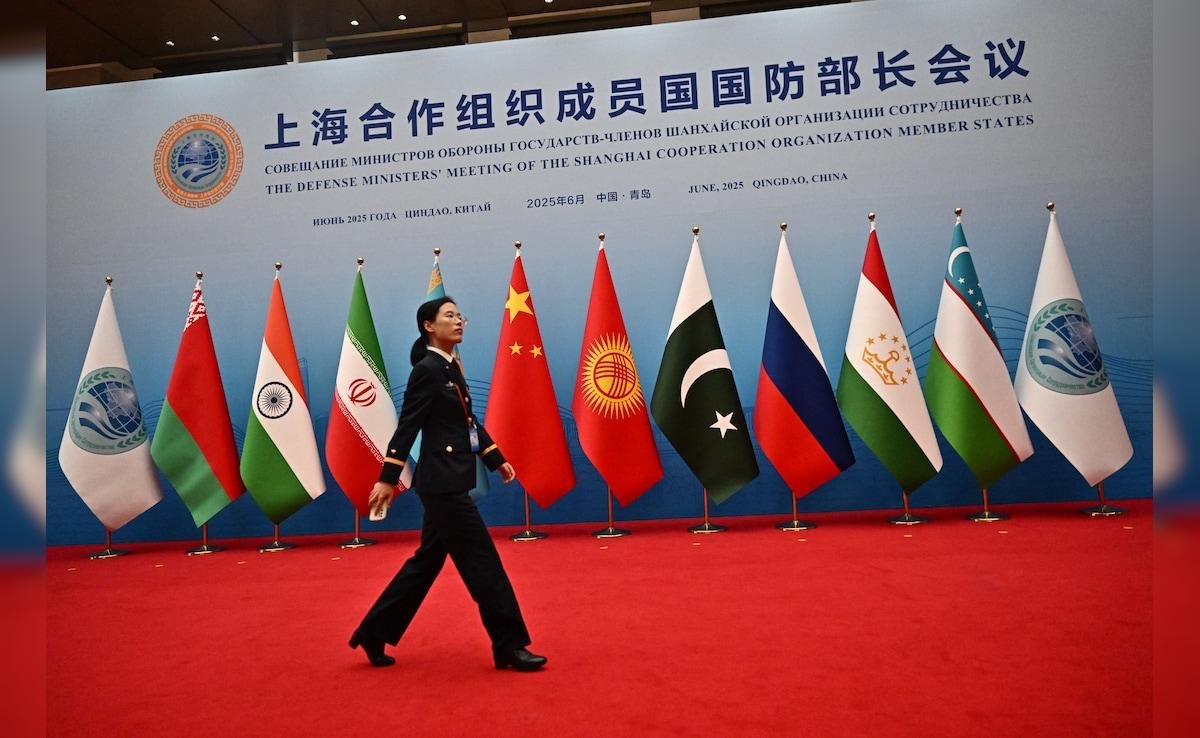
The Shanghai Cooperation Organisation (SCO) stands as a cornerstone of Eurasian geopolitics, serving as a permanent intergovernmental alliance focused on security, economic stability, and cultural exchange. Often described as the “Alliance of the East,” the SCO has evolved from a small regional group into a massive transcontinental partnership representing nearly 40% of the global population and 25% of global GDP.
Following the landmark 25th SCO Summit 2025 in Tianjin, China, the organization has entered a new era of expansion and institutional depth, solidifying its position as a counterweight to traditional Western-centric blocs.
Overview of the Shanghai Cooperation Organisation
Established on June 15, 2001, in Shanghai, China, the SCO replaced the “Shanghai Five” (1996). It is governed by the SCO Charter, adopted in 2002 and effective since September 2003, which serves as the organization’s constitutional bedrock.
The “Shanghai Spirit”
At the heart of the SCO is the “Shanghai Spirit,” a guiding philosophy defined by:
- Mutual Trust and benefit.
- Equality among member states.
- Respect for Cultural Diversity.
- The pursuit of Common Development.
Institutional Headquarters
The SCO operates through two permanent bodies:
- SCO Secretariat: Located in Beijing, China, it handles the administrative and executive functions.
- RATS (Regional Anti-Terrorist Structure): Headquartered in Tashkent, Uzbekistan, it coordinates the fight against the “Three Evils”—terrorism, separatism, and extremism.
The 10 Member States and the 2025 Expansion
The SCO has transitioned from its original six founding members to a 10-member powerhouse as of 2026.
| Category | Countries |
| Founding Members (2001) | China, Russia, Kazakhstan, Kyrgyzstan, Tajikistan, Uzbekistan |
| South Asian Expansion (2017) | India and Pakistan |
| Middle Eastern/Eurasian Growth | Iran (Joined 2023), Belarus (Joined 2024) |
| SCO Partners | 17 nations (including Laos, the latest addition in 2025) |
Note on Structural Reform: During the 2025 Summit, the categories of “Observer States” and “Dialogue Partners” were merged into a single streamlined category known as “SCO Partners” to simplify engagement.
Organizational Structure: How the SCO Functions
The SCO is not an ad-hoc grouping; it possesses a sophisticated, hierarchical decision-making framework:
1. Council of Heads of State (CHS)
The supreme decision-making body. It meets once a year to determine the strategic priorities of the organization and resolve major international issues.
2. Council of Heads of Government (CHG)
The second-highest council. It meets annually to discuss multilateral cooperation, focusing specifically on economic and budgetary matters.
3. Regional Anti-Terrorist Structure (RATS)
This is the most active functional wing of the SCO. It maintains a database of terrorists and coordinates joint military exercises, such as the “Peace Mission.”
4. Supporting Bodies
- Council of Foreign Ministers: Coordinates foreign policy and prepares for the CHS.
- SCO Business Council & Interbank Consortium: Promotes private sector engagement and financial integration among members.
Strategic Significance: Security and Economy
The SCO’s importance lies in its ability to fill security vacuums in Eurasia and act as a bridge between resource-rich Central Asia and energy-hungry South and East Asia.
- Regional Security: It is a vital platform for intelligence sharing to counter drug trafficking and instability, particularly regarding the situation in Afghanistan.
- Geopolitical Balance: It advocates for a multipolar world order, often challenging unilateralism and pushing for United Nations reforms.
- Energy and Connectivity: The bloc links major energy producers (Russia, Iran, Kazakhstan) with the world’s largest consumers (India, China).
India and the SCO: Opportunities and Friction
India’s membership in the SCO is a delicate balancing act. While it provides a “Eurasian footprint,” it also presents significant diplomatic hurdles.
Why the SCO Matters to India
- Energy Security: Critical for long-term oil, gas, and mineral partnerships with Central Asian states.
- Counter-Terrorism: Through RATS, India gains access to regional intelligence on terror networks.
- Connectivity: Provides a diplomatic push for the International North-South Transport Corridor (INSTC) and the Chabahar Port project.
- Strategic Engagement: It allows India to engage with China and Russia on a neutral, multilateral platform.
The Challenges India Faces
- China’s Dominance: Many SCO connectivity projects are linked to the Belt and Road Initiative (BRI), which India opposes due to sovereignty concerns in PoK.
- The Pakistan Factor: Pakistan frequently attempts to bring bilateral issues to the SCO, complicating India’s counter-terror narrative.
- The West-East Tug-of-War: India’s participation in the QUAD and close ties with the US sometimes create friction within the largely “anti-Western” narrative driven by Russia and China.
The 25th SCO Summit 2025: Key Outcomes
Held in Tianjin, China (Aug 31 – Sept 1, 2025), this summit was a turning point for the organization:
- Tianjin Declaration: A strong unified stance against terrorism, explicitly mentioning recent attacks like the one in Pahalgam.
- Development Strategy 2035: A blueprint for reducing trade barriers and strengthening regional value chains over the next decade.
- SCO Development Bank: A new proposal (backed by China) to fund regional infrastructure projects.
- India’s Vision: Prime Minister Narendra Modi’s “Security, Connectivity, and Opportunity” mantra was a focal point, emphasizing India’s role as a “Vishwa Mitra” (Friend of the World).
FAQs: Shanghai Cooperation Organisation
Where is the headquarters of the SCO?
The administrative Secretariat is in Beijing, China, while the RATS headquarters is in Tashkent, Uzbekistan.Who is the newest member of the SCO?
Belarus became the 10th full member in 2024. In 2025, Laos became the newest “SCO Partner.”
What is the “Shanghai Spirit”?
It is the SCO’s core philosophy based on mutual trust, equality, respect for cultural diversity, and common development.
Are India and Pakistan founding members?
No. India and Pakistan joined as full members in 2017 at the Astana Summit.
What is RATS in the context of the SCO?
RATS (Regional Anti-Terrorist Structure) is a permanent body that coordinates member states’ efforts against terrorism, separatism, and extremism.
What are the official languages of the SCO?
The official working languages are Russian and Chinese.
Does the SCO have a military component?
While not a military alliance like NATO, member states conduct periodic joint counter-terrorism exercises known as “Peace Missions.”
Why does India oppose the BRI within the SCO?
India opposes China’s Belt and Road Initiative because the China-Pakistan Economic Corridor (CPEC) , a flagship BRI project, passes through Pakistan-occupied Kashmir (PoK), violating India’s territorial integrity.
What was the major structural change at the 2025 Summit?
The SCO merged “Observer States” and “Dialogue Partners” into a single unified category called “SCO Partners.”
What is India’s “SECURE” vision for the SCO?
India’s vision for the SCO stands for Security, Economic cooperation, Connectivity, Unity, Respect for sovereignty, and Environmental protection.