| Important questions for UPSC Pre/ Mains/ Interview:
1. What is tidal flooding? 2. What causes tidal flooding? 3. Why is tidal flooding significant along the Kerala coast? 4. What does declaring tidal flooding a state-specific disaster mean? 5. What is the State Disaster Response Fund (SDRF)? 6. What other state-specific disasters has Kerala recognised? 7. What administrative and governance dimensions are involved? 8. How does tidal flooding relate to climate change? 9. What are the economic and social impacts? 10.What are the benefits of the state-specific disaster classification? 11.What concerns and challenges remain? 12.What safeguards and long-term strategies are necessary? |
Context
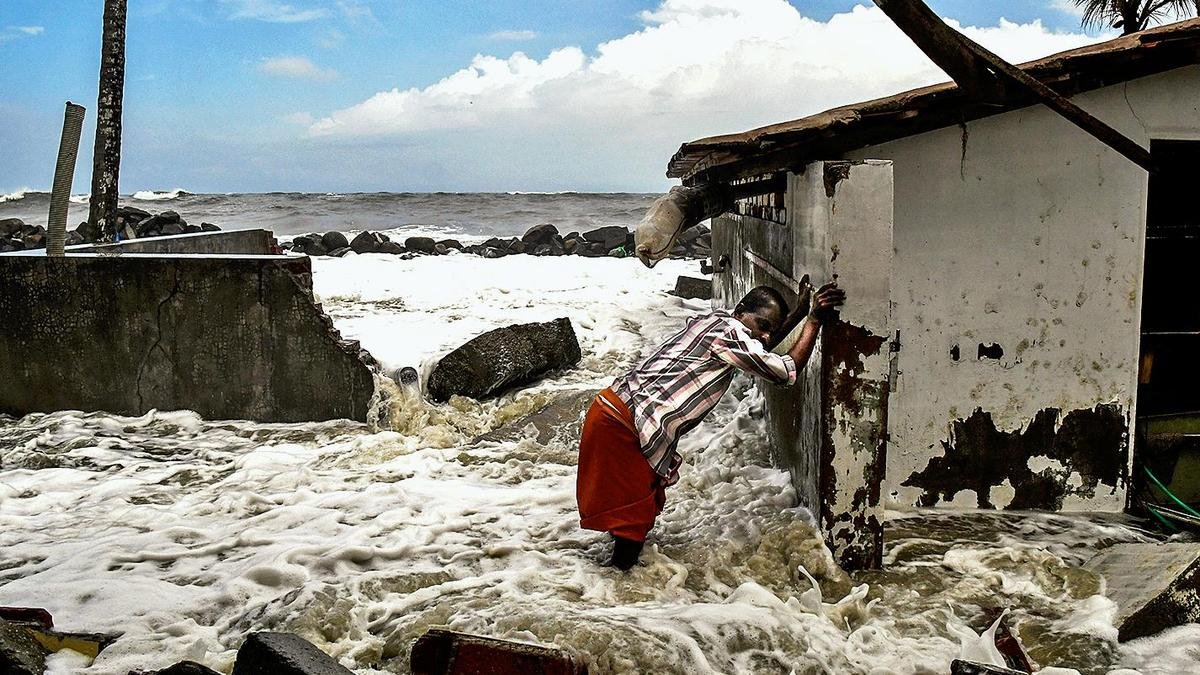
The Kerala government has declared tidal flooding as a State-specific disaster, making victims eligible for financial assistance under the State Disaster Response Fund (SDRF). This marks the first instance in India where tidal flooding has received formal disaster classification at the state level.
Q1. What is tidal flooding?
- Temporary flooding of low-lying coastal areas.
- Also called:
- Sunny day flooding
- King tide flooding
- Nuisance flooding
- Occurs without cyclones or heavy rainfall.
- Driven by periodic high-tide events.
Q2. What causes tidal flooding?
- High astronomical tides during full and new moon cycles.
- Gravitational alignment of Sun, Moon, and Earth.
- Offshore winds pushing seawater toward coast.
- Storm systems intensifying tidal impact.
- Rising sea levels due to climate change.
Unlike cyclone storm surges, tidal flooding:
- Occurs predictably.
- Happens twice daily with tidal cycles.
- Intensifies during spring tides.
Q3. Why is tidal flooding significant along the Kerala coast?
- Kerala has a long Arabian Sea coastline.
- Numerous low-lying coastal settlements.
- Backwater systems increase vulnerability.
- Sea level temporarily rises above threshold levels.
- Urban infrastructure exposed to frequent inundation.
This makes tidal flooding a recurring and economically disruptive phenomenon.
Q4. What does declaring tidal flooding a state-specific disaster mean?
- Enables compensation under State Disaster Response Fund.
- Allows structured disaster management response.
- Recognises recurring coastal vulnerability.
- Formalises relief for affected households.
This is the first such classification by any Indian state.
Q5. What is the State Disaster Response Fund (SDRF)?
- A state-level disaster relief mechanism.
- Funded jointly by Centre and State.
- Covers notified disasters under Disaster Management norms.
- Provides compensation for:
- House damage
- Crop loss
- Livelihood disruption
State-specific disasters can be added based on local risk profiles.
Q6. What other state-specific disasters has Kerala recognised?
- Coastal erosion.
- Strong winds.
- Soil piping.
- Heatwave and sunstroke.
- Human–wildlife conflict.
This indicates Kerala’s adaptive disaster management approach.
Q7. What administrative and governance dimensions are involved?
- Requires updating state disaster classification norms.
- Coordination between revenue, fisheries, and local bodies.
- Integration into State Disaster Management Plan.
- Possible demand for Central recognition in future.
Q8. How does tidal flooding relate to climate change?
- Rising global sea levels intensify tidal reach.
- Increased frequency of king tides.
- Greater saltwater intrusion into freshwater systems.
- Amplified coastal vulnerability.
Thus, tidal flooding is both a climatic and hydrological issue.
Q9. What are the economic and social impacts?
- Damage to coastal housing.
- Saltwater intrusion into agriculture.
- Disruption of fisheries livelihoods.
- Damage to roads and drainage infrastructure.
- Increased public health risks.
Repeated exposure creates cumulative economic burden.
Q10. What are the benefits of the state-specific disaster classification?
- Timely compensation for victims.
- Institutional recognition of chronic risk.
- Improved coastal adaptation planning.
- Strengthened local governance preparedness.
- Data-driven disaster mapping.
Q11. What concerns and challenges remain?
- SDRF funds may face strain if events increase.
- Limited long-term coastal adaptation infrastructure.
- Need for better tidal forecasting systems.
- Urban planning gaps in coastal zones.
- Risk of normalising recurrent flooding without mitigation.
Q12. What safeguards and long-term strategies are necessary?
- Coastal zoning and setback regulations.
- Nature-based solutions like mangrove restoration.
- Early warning systems for high tides.
- Climate-resilient infrastructure design.
- Integration with National Disaster Management frameworks.
Conclusion
Kerala’s recognition of tidal flooding as a state-specific disaster reflects evolving climate realities and coastal vulnerability. While compensation support enhances relief, long-term resilience requires integrated coastal management, adaptive urban planning, and climate-responsive governance. The move signals a shift toward proactive disaster categorisation in India’s climate adaptation framework.