Context
- India has moved from small pilot drone experiments to a full-fledged regulated drone ecosystem. Today, the country has 38,500+ registered drones, each issued a Unique Identification Number (UIN).
- This rapid expansion is transforming Public service delivery, Infrastructure management, Agriculture and livelihoods, Disaster response and National security.
Types of Drones
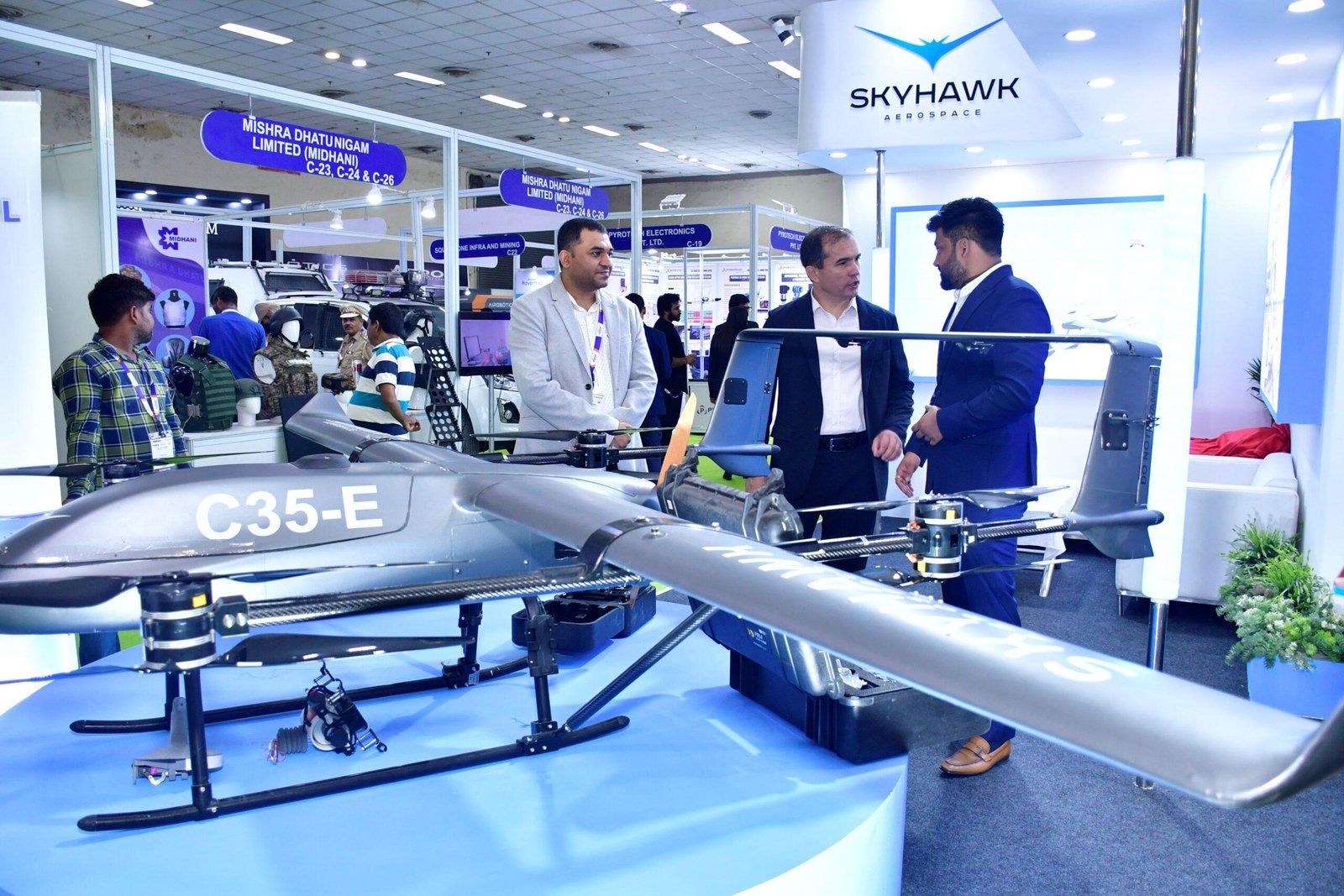
- Surveillance & Reconnaissance (ISR Drones): Used for intelligence gathering and monitoring. India currently has TAPAS-BH-201, Rustom and Heron.
- Armed / Combat Drones (UCAVs): Capable of precision strikes (like launching missiles or dropping bombs). Eg: DRDOs Ghatak and Heron TP.
- Loitering Munitions: These hover over target areas and attack once a target is identified. Example: Nagastra, Warmate.
- Swarm Drones: Multiple drones work together in coordinated formations to overwhelm defences. It is currently being explored by DRDO and private firms.
Transformation of Public Service Delivery Through Drones
- Agriculture & Rural Livelihoods: Under the Namo Drone Didi Scheme (2023):
- Drones are provided to Women Self-Help Groups (SHGs).
- They are used for crop spraying and farm services.
- This creates sustainable rural income opportunities while modernising agriculture.
- Land Mapping and Property Rights: The SVAMITVA Scheme (2020) uses drones to survey rural abadi areas. Its outcomes include accurate land records, property cards for villagers, resolution of land disputes and improved access to bank credit.
- Highway Monitoring: The National Highways Authority of India now mandates monthly drone-video mapping of highway projects to track construction progress, identify discrepancies, enable digital reporting and provide visual evidence during contract disputes.
- Disaster Management: During floods & landslides, drones are used to get real time aerial visuals which helps in rapid damage assessment, supports rescue coordination & helps in faster emergency response.
- Railway Surveillance: The Ministry of Railways deploys UAVs to inspect tracks, bridges and remote infrastructure. This enhances maintenance efficiency and passenger safety.
- Defence Applications: Drones are now central to India’s defence architecture like border surveillance, intelligence gathering, precision strikes and integration with radar and air-defence networks.
How India Is Accelerating Drone Adoption?
- India’s drone boom is backed by major regulatory reforms.
- Drone Rules, 2021 + Amendments (2022 & 2023): These rules liberalised drone operations:
- Nearly 90% of Indian airspace declared Green Zone
- Drone flights allowed up to 400 feet without special permissions
- Reduced paperwork and faster approvals
- Production Linked Incentive (PLI): The PLI scheme for drones and components has an approved outlay of ₹120 crore, encouraging domestic manufacturing.
- GST Rationalisation: GST on drones reduced to 5%, replacing earlier 18–28% slabs, making drones more affordable.
- Digital Governance Platforms: Regulatory services such as Drone registration, Remote pilot certification, Type certification and RPTO authorisation have moved from Digital Sky (2018) to the eGCA platform, simplifying compliance.
- Capacity Building: Through programmes like the National Innovation Challenge for Drone Application and Research (NIDAR), students, researchers and innovators are encouraged to develop indigenous drone solutions.
Conclusion
India’s drone ecosystem shows how emerging technology, when backed by smart policy, can rapidly transform governance, livelihoods, and national security.
FAQs
Q1. How many drones are registered in India today?
Over 38,500 drones, each with a Unique Identification Number (UIN).
Q2. What are the main types of drones used in India?
- Surveillance & Reconnaissance (ISR) – TAPAS-BH-201, Rustom, Heron
- Armed/Combat (UCAVs) – Ghatak, Heron TP
- Loitering Munitions – Nagastra, Warmate
- Swarm Drones – under DRDO and private development
Q3. How are drones transforming public service delivery?
They are used in agriculture (Namo Drone Didi Scheme), land mapping (SVAMITVA), highway monitoring, disaster management, and railway surveillance.
Q4. What role do drones play in defence?
They support border surveillance, intelligence gathering, precision strikes, and integration with radar and air-defence networks.
Q5. What policies are accelerating drone adoption in India?
Drone Rules (2021–23), PLI scheme (₹120 crore), GST reduction to 5%, digital governance via eGCA, and innovation programmes like NIDAR.