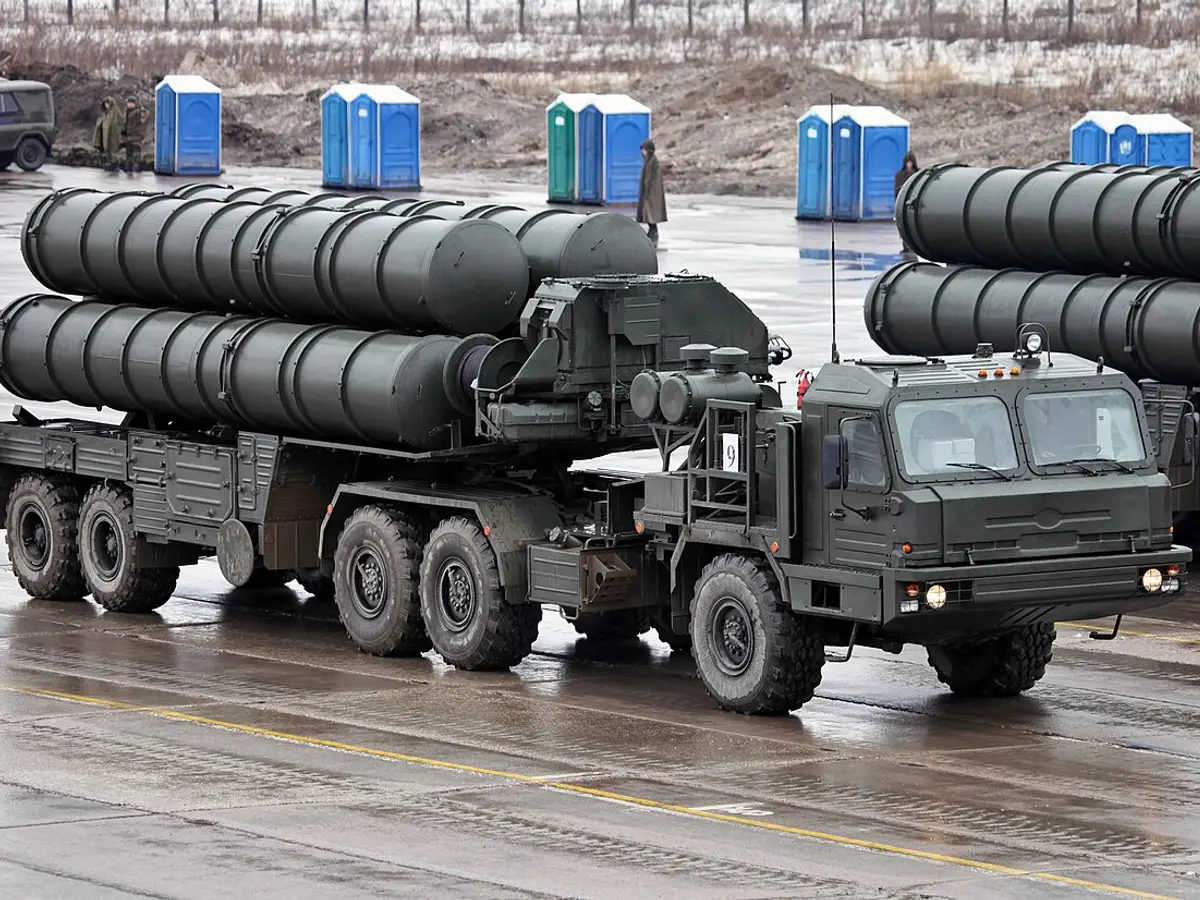
The S-400 Triumf, designated as “Sudarshan Chakra” in India, represents one of the most sophisticated long-range surface-to-air missile (SAM) systems globally. Developed by Russia’s Almaz-Antey, this system provides a multi-layered air defense shield capable of engaging a wide spectrum of aerial threats, from stealth aircraft to ballistic missiles.
The S-400 (NATO reporting name: SA-21 Growler) was designed in the late 1980s as an upgrade to the S-300 series. It entered service in Russia in 2007. India formalized a $5.4 billion deal for five regiments of the S-400 in October 2018, marking a strategic milestone in India-Russia defense cooperation
The “Sudarshan Chakra” Designation
In Indian service, the system is named after Lord Vishnu’s mythological weapon. This signifies its role as a divine protector capable of swift and precise destruction of enemy assets. Its deployment during Operation Sindoor in May 2025 demonstrated this capability when it successfully intercepted a coordinated drone and missile strike targeting cities like Jammu, Amritsar, and Bhuj.
Technical Features and Capabilities
The S-400 is distinguished by its ability to integrate various radar systems and missile types to create a “no-fly zone” for adversaries.
1. Speed and Altitude
- Maximum Speed: Up to 17,000 km/h (approx. Mach 14).
- Operational Altitude: Intercepts targets as low as 10 meters and as high as 30 kilometers.
2. Multi-Layered Range
The system uses four different types of missiles to ensure a tiered defense:
- 40N6E (Very Long Range): Up to 400 km.
- 48N6E3 (Long Range): 250 km.
- 9M96E2 (Medium Range): Up to 120 km.
- 9M96E (Short Range): Up to 40 km.
3. Detection and Tracking
- Radar Range: Detects targets up to 600 km
- Capacity: Can track 300 targets simultaneously and engage 36 threats at once.
- Stealth Detection: Its phased array radars are designed to track stealth aircraft by using multiple frequency bands.
Comparative Analysis
The S-400 is often compared to the American Patriot and THAAD systems, but it offers broader versatility.
| Feature | S-400 Triumf (Russia) | MIM-104 Patriot (USA) | THAAD (USA) |
| Max Range | 400 km | 160 km | 200 km |
| Max Altitude | 30 km | 24 km | 150 km |
| Target Type | Aircraft, Missiles, Drones | Aircraft & Missiles | Ballistic Missiles Only |
| Set-up Time | 5–10 Minutes | 25+ Minutes | 30+ Minutes |
Strategic Significance for India
The acquisition of the S-400 shifts the balance of power in South Asia through:
- Two-Front Deterrence: Effectively counters the J-20 stealth fighters of China and limits Pakistani air activity over border regions.
- Airspace Denial: Its 400 km range allows India to track and engage enemy aircraft even while they are still within their own territory.
- Naval Support: Long-range surveillance can monitor enemy naval movements, including carriers, from hundreds of kilometers inland.
- Protection of Critical Cities: Creates a protective umbrella over 30+ major cities including Delhi and Mumbai.
Limitations and Way Forward
Despite its prowess, the S-400 is not a standalone solution:
- Defensive Nature: It cannot be used for offensive ground attacks.
- Hypersonic Gap: While advanced, it faces challenges against high-speed hypersonic glide vehicles.
- Geopolitical Risks: Acquisition has previously invited friction regarding the CAATSA (Countering America’s Adversaries Through Sanctions Act) from the US.
WAY FORWARD :
To maximize the “Sudarshan Chakra,” India must focus on:
- Integration: Linking the S-400 with legacy systems like S-125 Pechora and newer systems like MRSAM (Medium Range Surface to Air Missile).
- SHORADS: Deploying Short Range Air Defense Systems to protect the S-400 batteries themselves from saturation attacks by “swarm drones.”
FAQs
Q1. With reference to the S-400 Triumf (Sudarshan Chakra) defense system, consider the following statements:
- It is a long-range surface-to-air missile (SAM) system capable of engaging up to 36 targets simultaneously.
- The system employs only a single type of missile with a fixed range of 400 km.
- It can be deployed and made operational in under 10 minutes.
How many of the statements given above are correct?
A) Only one
B) Only two
C) All three
D) None
Q2. Which of the following missile types is used by the S-400 system for very long-range engagement up to 400 km?
- A) 9M96E
- B) 48N6E3
- C) 40N6E
- D) PAC-3
Q3. Assertion (A): The S-400 system is considered more versatile than the US THAAD system.
Reason (R): While THAAD is primarily optimized for intercepting ballistic missiles, the S-400 can engage aircraft, cruise missiles, and drones across various altitudes.
- A) Both A and R are true, and R is the correct explanation of A.
- B) Both A and R are true, but R is not the correct explanation of A.
- C) A is true, but R is false.
- D) A is false, but R is true.
Q4. Operation Sindoor, mentioned in the context of S-400, refers to which of the following?
- A) A mission to evacuate Indians from a conflict zone.
- B) A defensive deployment to intercept coordinated drone and missile strikes.
- C) A naval exercise in the Indian Ocean.
- D) A cyber-security initiative for critical infrastructure.
Q5. In the context of “Shoot and Scoot” capability of the S-400, what is the primary advantage?
- A) It increases the range of the missiles.
- B) It allows the system to engage targets in space.
- C) It enhances survivability by allowing the unit to relocate immediately after firing.
- D) It reduces the cost of each missile launch.
Solutions:
- B (Only two): Statement 1 and 3 are correct. Statement 2 is false; it uses four different types of missiles.
- C: The 40N6E is the longest-range missile in the arsenal.
- A: Both are true; versatility across target types is a key advantage of S-400 over THAAD.
- B: The S-400 was used to neutralize Pakistani strikes during this 2025 operation.
- C: Rapid relocation prevents the enemy from targeting the S-400’s position after its location is revealed by a launch.