| Important questions for UPSC Pre/ Mains/ Interview:
1. What are bio-based chemicals? 2. How do bio-based chemicals differ from conventional petrochemicals? 3. What are examples of bio-based chemicals? 4. Why has India prioritised bio-based chemicals under BioE3 policy? 5. What are the ecological benefits of bio-based chemicals? 6. What economic advantages can bio-based chemicals generate? 7. What are the technological and infrastructure requirements? 8. What are the key challenges in scaling bio-based chemicals? 9. What are the regulatory and policy dimensions involved? 10.What risks must policymakers address? 11.What safeguards and oversight mechanisms are necessary? |
Context
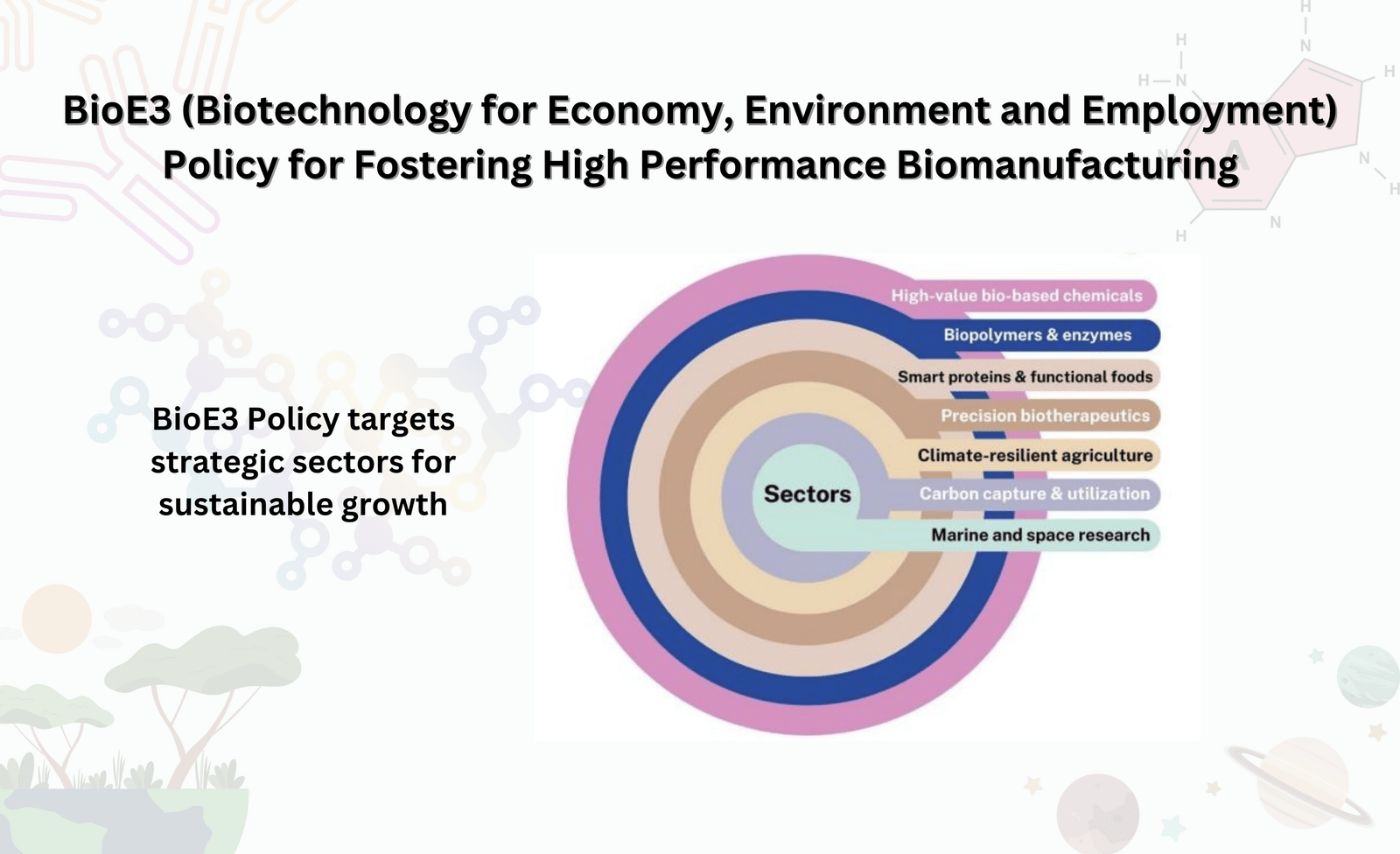
India has identified bio-based chemicals and enzymes as a priority sector under the BioE3 (Biotechnology for Economy, Environment and Employment) policy of the Department of Biotechnology. The move aligns with climate commitments, circular economy goals, and the need to reduce dependence on fossil-fuel-based petrochemicals.
Q1. What are bio-based chemicals?
- Industrial chemicals derived from biological feedstocks.
- Produced using renewable raw materials such as:
- Sugarcane
- Corn
- Starch
- Agricultural residues
- Biomass waste
- Manufactured through:
- Fermentation
- Enzymatic conversion
- Biotechnological processing
- Serve as alternatives to petrochemical-based products.
Q2. How do bio-based chemicals differ from conventional petrochemicals?
| Basis | Bio-Based Chemicals | Petrochemical-Based Chemicals |
| Feedstock | Renewable biomass | Fossil fuels |
| Production Process | Biological/enzymatic | Chemical refining |
| Carbon Intensity | Lower lifecycle emissions | High carbon footprint |
| Waste Generation | Lower hazardous waste | Higher toxic byproducts |
| Sustainability | Renewable & circular | Extractive & finite |
Q3. What are examples of bio-based chemicals?
- Organic acids (e.g., lactic acid).
- Bio-alcohols (e.g., bio-ethanol).
- Bio-based solvents and surfactants.
- Intermediates for:
- Bioplastics
- Cosmetics
- Pharmaceuticals
- Specialty chemicals.
Q4. Why has India prioritised bio-based chemicals under BioE3 policy?
- Reduce fossil fuel dependence.
- Promote green industrialisation.
- Support climate mitigation targets.
- Create biotechnology-driven employment.
- Enhance value addition in agriculture through biomass utilisation.
Q5. What are the ecological benefits of bio-based chemicals?
- How do they reduce fossil fuel dependence?
- Use renewable agricultural and biomass feedstocks.
- Lower exposure to volatile global crude oil prices.
- How do they minimise harmful waste?
- Biological processes generate fewer toxic byproducts.
- Reduced hazardous effluents compared to petroleum refining.
- How do they lower carbon footprint?
- Typically require lower process energy.
- Biomass absorbs CO₂ during growth, offsetting emissions.
- How do they promote circular economy?
- Utilize agricultural residues and organic waste.
- Encourage recycling and efficient resource utilisation.
Q6. What economic advantages can bio-based chemicals generate?
- Diversification of rural income sources.
- Development of bio-refineries.
- Reduction of chemical import dependence.
- Export potential in green chemicals sector.
- Integration with ethanol-blending and bioenergy policies.
Q7. What are the technological and infrastructure requirements?
- Large-scale bio-refinery infrastructure.
- Stable biomass supply chains.
- Advanced fermentation and enzyme technologies.
- Skilled biotechnology workforce.
- R&D investment for process optimisation.
Q8. What are the key challenges in scaling bio-based chemicals?
- Why is cost a constraint?
- Higher production costs compared to petrochemicals.
- Limited economies of scale.
- Capital-intensive bioprocess facilities.
- What are feedstock-related constraints?
- Seasonal variability of agricultural residues.
- Competing uses of biomass (fodder, fuel).
- Need for reliable logistics infrastructure.
- What are the market adoption barriers?
- Industry hesitation to switch from established petrochemical inputs.
- Certification and quality assurance concerns.
- Consumer price sensitivity.
Q9. What are the regulatory and policy dimensions involved?
- Alignment with climate policies and net-zero commitments.
- Need for standards and certification of bio-based products.
- Incentives under green industrial policy.
- Coordination between biotechnology, agriculture, and industry ministries.
Q10. What risks must policymakers address?
- Risk of monocropping for industrial feedstock.
- Food vs fuel debate if crop diversion increases.
- Overestimation of lifecycle carbon neutrality.
- Environmental trade-offs in land-use change.
Q11. What safeguards and oversight mechanisms are necessary?
- Lifecycle carbon assessment standards.
- Sustainable biomass sourcing guidelines.
- Transparent certification frameworks.
- Incentives tied to environmental performance.
- Continuous R&D monitoring and technological upgrades.
Conclusion
Bio-based chemicals represent a strategic pivot toward sustainable industrialisation under the BioE3 policy. By leveraging renewable feedstocks and biotechnology innovation, India can reduce fossil dependence and enhance green manufacturing. However, success depends on cost competitiveness, feedstock sustainability, and strong regulatory safeguards to ensure environmental and economic balance.