

23-01-2026 Mains Question Answer
Aravalli Mountain acts as a physical barrier between the Thar Desert and Grasslands of N-W India. Discuss the ecological importance of Aravalli Mountains.
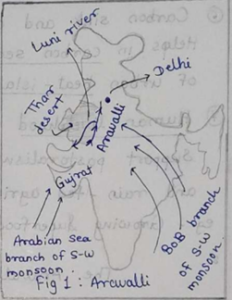
The Aravalli Range, one of the oldest fold mountain Range in the world, stretches approximately 692 km from Gujarat to Delhi across Rajasthan, Haryana. Acting as a natural barrier between the Thar Desert and the fertile plains of North-West India, the Aravallis play a crucial role in maintaining ecological balance and environmental sustainability in the region.
Ecological Importance of Aravalli Mountains
1. Barrier Against Desertification
○ Prevents the eastward spread of the Thar Desert into the fertile plains of Haryana, Delhi, and Western Uttar Pradesh.
○ Supports grasslands and semi-arid ecosystems by regulating wind and sand movement.
2. Watershed Function
○ Source of several rivers such as Banas, Luni, and Sabarmati.
○ Facilitates groundwater recharge through natural catchments and forested slopes.
3. Biodiversity Hotspot
○ Home to diverse flora and fauna including leopards, hyenas, jackals, and migratory birds.
○ Provides critical wildlife corridors linking Sariska, Ranthambore, and other sanctuaries.
4. Climate Regulation
○ Forest cover helps in carbon sequestration and moderates local climate.
○ Acts as a green lung for Delhi-NCR, reducing air pollution and heat island effects.
○ Monsoon Guidance: Though not high enough to trap all moisture like the Himalayas, the range still guides the Arabian Sea branch of the monsoon towards the Himalayas, aiding precipitation in Northwest India.
5. Soil Conservation
○ Vegetation cover prevents soil erosion and maintains fertility in adjoining agricultural lands.
6. Cultural and Historical Significance
○ Contains ancient sites like Dilwara Temples, forts, and stepwells, reflecting human–nature interaction.
○ Sacred groves and traditional conservation practices enhance ecological resilience.
7. Livelihood Support
○ Provides resources such as fuelwood, fodder, medicinal plants, and minor forest produce to local communities.
○ Supports eco-tourism and traditional crafts.
Challenges to Aravalli Ecology
- Illegal mining and deforestation.
- Urban expansion in Delhi-NCR and Gurgaon.
- Encroachment and habitat fragmentation.
- Declining groundwater and loss of forest cover.
Way Forward
- Strict enforcement of Aravalli Notification (1992) and mining bans.
- Aravalli Green Wall Project: Inspired by Africa’s Great Green Wall, India has launched this initiative to create a 1,400 km long and 5 km wide green belt around the range to restore 1.15 million hectares of degraded land.
- Afforestation and eco-restoration projects.
- Community-led conservation and eco-tourism initiatives.
- Integrated watershed management and groundwater recharge.
- Strengthening wildlife corridors and biodiversity monitoring.
Conclusion
The Aravalli Mountains are not just a geological formation but an ecological lifeline for North-West India. Protecting them is essential to prevent desertification, sustain biodiversity, and ensure environmental security for millions. Their conservation is vital for India’s ecological resilience and sustainable development.