Wular Lake
Why in the News?
- Kashmir’s Wular Lake is in the news because lotus flowers have bloomed in the lake after a gap of over 30 years.
- The flowers had disappeared following the 1992 floods, which deposited heavy silt across the lakebed.
- Their reappearance signals ecological revival and the return of livelihoods for local communities who traditionally depended on harvesting lotus stems (nadru).
- This revival has been made possible by an ongoing desilting and restoration project launched in 2020 by the Wular Lake Management Authority to restore the lake’s depth and improve water flow.
What are the Key Highlights?
- Geographical Location of Wular Lake:
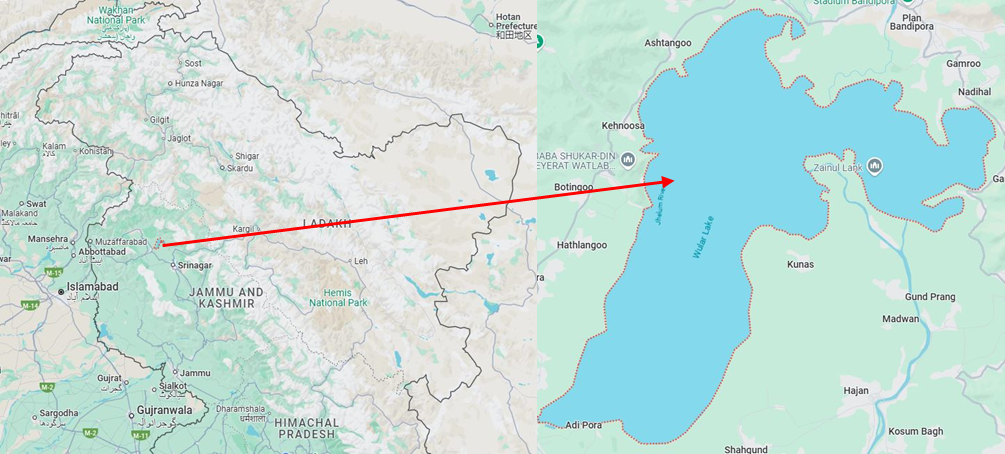
- State/UT: Jammu & Kashmir, India
- District: Bandipora district, North Kashmir
- Coordinates: Approximately 34.35° N latitude and 74.63° E longitude
- River System: Formed by the Jhelum River, which both feeds and drains the lake
- Elevation: Around 1,580 meters above sea level
- Key Features of Wular Lake:
| Feature | Details |
| Type | Freshwater lake |
| Size | Varies seasonally between 30 to 260 square kilometers |
| Formation | Tectonic origin (formed due to tectonic activity) |
| Ecological Significance | One of the largest freshwater lakes in South Asia |
| Ramsar Status | Declared a Ramsar Wetland Site in 1990 under the Ramsar Convention |
| Catchment Area | Includes Jhelum River, Madhumati, Erin, and other small streams |
- Ecological and Economic Importance:
- Biodiversity Hotspot: Supports a rich variety of fish, birds (migratory and resident), and aquatic vegetation.
- Lotus (Nadru): Edible lotus stems are economically important for local communities.
- Fisheries: Major source of freshwater fish; supports the livelihoods of hundreds of families.
- Flood Control: Acts as a natural flood basin for the Jhelum River.
- Tourism Potential: Scenic landscape with snow-covered mountains makes it a potential tourist destination.
4 Threats and Conservation:
-
- Encroachment and Siltation: Urban growth, agriculture, and floods (especially 1992) led to heavy siltation.
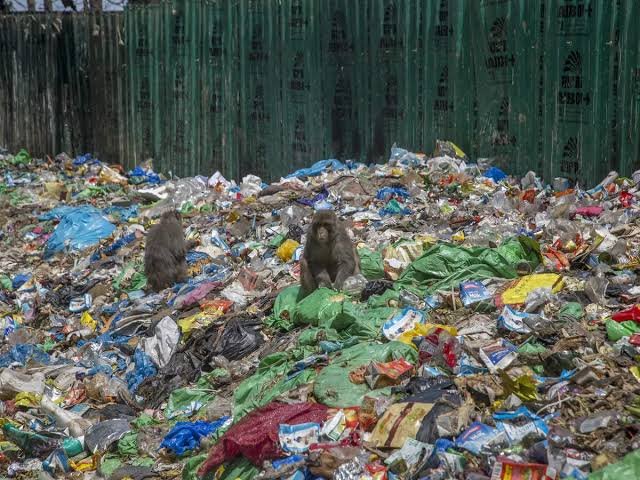
- Pollution: Domestic waste and agricultural runoff degrade water quality.
- Restoration Project: Since 2020, the Wular Conservation and Management Authority (WUCMA) is undertaking a massive desilting and rejuvenation project to restore depth and ecology.
Sariska Tiger Reserve
Why in the News?
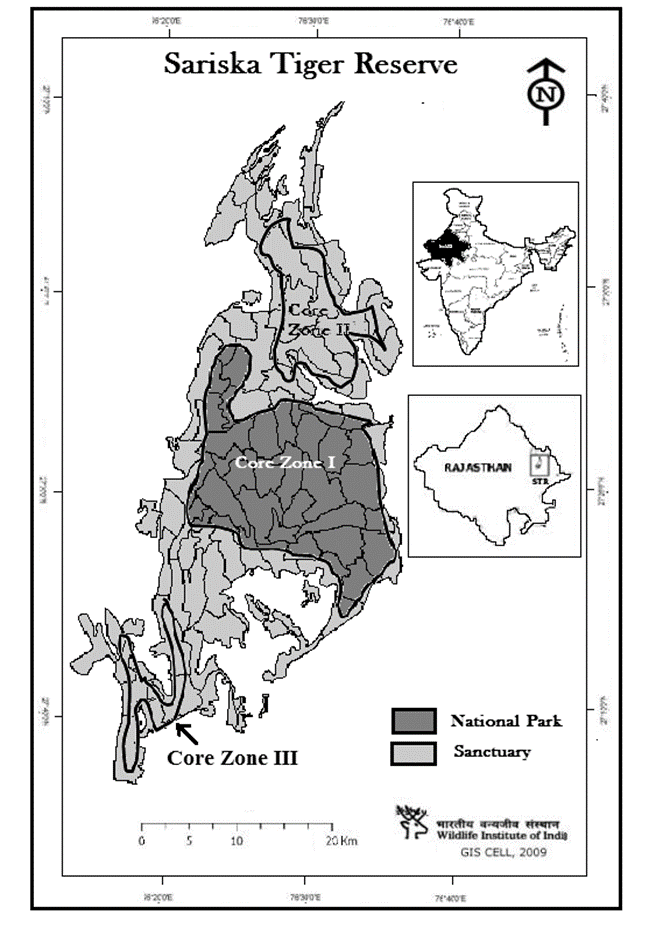
- The Sariska Tiger Reserve is in the news because the Standing Committee of the National Board for Wildlife (SC-NBWL), chaired by Union Environment Minister Bhupender Yadav, has approved a proposal to redraw and rationalise the boundaries of its critical tiger habitat (core area) and buffer zones.
What are the Key Highlights?
- Geographical Location of Sariska Tiger Reserve:
| Attribute | Details |
| State | Rajasthan, India |
| District | Alwar District |
| Coordinates | Approx. 27.33° N latitude and 76.5° E longitude |
| Total Area | Around 1,217 sq. km, including core and buffer |
| Nearest City | Alwar (about 35 km), Jaipur (about 110 km) |
| Eco-region | Northern Aravalli Hills dry deciduous forests |
| Altitude Range | 300–722 meters above sea level |
- Key Features of Sariska Tiger Reserve:
| Feature | Description |
| Established | Declared a wildlife sanctuary in 1955, tiger reserve in 1978 under Project Tiger |
| Tiger Reserve Status | One of the first tiger reserves created under Project Tiger |
| Type of Forest | Dry deciduous and scrub thorn forests; part of Aravalli hills |
| Fauna | Bengal tiger, leopard, striped hyena, wild boar, sambar, nilgai, langur |
| Avifauna | Rich birdlife including peafowl, eagles, and quails |
| Water Bodies | Siliserh Lake, small seasonal streams like Ruparel |
- Historical and Cultural Significance:
- Ancient Temples: Includes Neelkanth Mahadev Temple (8th–10th century), Pandupol Hanuman Temple.
- Medieval Forts: Kankwari Fort, historically associated with Mughal Emperor Aurangzeb.
- Pilgrimage Site: Pandupol is associated with the Pandavas from the Mahabharata.
Conservation and Issues:
| Issue/Concern | Details |
| Tiger Extinction (2004) | Tigers were declared locally extinct in 2004 due to poaching |
| Reintroduction (2008 onward) | Tigers reintroduced via translocation from Ranthambore Tiger Reserve |
| Human Settlements | Villages inside the reserve have led to conflict and degradation |
| Mining Pressure | Illegal mining in buffer and fringe zones of the Aravallis |
| SC Monitoring | The Supreme Court is monitoring issues including boundary rationalisation |