Important Questions for UPSC Prelims / Mains / Interview
|
Context
A research institute under the Department of Science and Technology in North East India has synthesised a novel biosurfactant that shows effective action against Staphylococcus aureus. This development is significant because the bacterium is a common pathogen responsible for a range of infections and is increasingly associated with antibiotic resistance.
Q1. What are the biological characteristics, taxonomy, and structural features of Staphylococcus aureus?
- Staphylococcus aureus belongs to the family Staphylococcaceae.
- It is a Gram-positive bacterium, meaning it retains the crystal violet stain during Gram staining.
- The organism is non-motile and spherical in shape (cocci).
- It typically appears in grape-like clusters under a microscope.
- The bacterium is facultatively anaerobic, meaning it can survive with or without oxygen.
- It produces catalase & coagulase enzymes, which help distinguish it from other bacterial species.
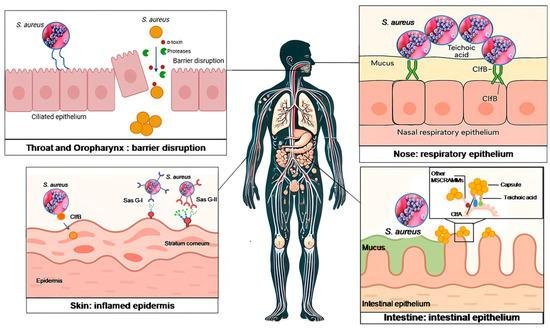
- It can survive on skin and mucous membranes without immediately causing disease.
- The bacterium was first identified in 1880 by Sir Alexander Ogston in surgical abscesses.
Q2. How does Staphylococcus aureus cause disease in humans and animals, and what types of infections are associated with it?
- The bacterium produces toxins and enzymes that damage host tissues.
- It can cause minor skin infections such as pimples, impetigo and superficial wound infections.
- It may lead to deeper infections including boils (furuncles), carbuncles and cellulitis.
- It is responsible for scalded skin syndrome, particularly in infants.
- In severe cases, it can cause pneumonia and bloodstream infections.
- It may also result in abscess formation in internal organs.
- The pathogen can infect multiple mammalian species, including livestock & companion animals.
Q3. What are the modes of transmission of Staphylococcus aureus, and why is it considered highly adaptable across species?
- Transmission occurs through respiratory droplets when infected individuals cough or sneeze.
- Direct skin-to-skin contact is a common route of spread.
- Contaminated surfaces and objects act as fomites.
- Transmission may occur through shared personal items such as towels and medical instruments in healthcare settings.
- The bacterium can spread between humans and animals.
- Colonisation without symptoms allows silent carriage and further dissemination.
- Its ability to survive in diverse environments enhances adaptability.
- Cross-species transmission increases its epidemiological complexity.
Q4. Why is antibiotic resistance in Staphylococcus aureus a major public health concern?
- Some strains have developed resistance to commonly used antibiotics.
- Methicillin–resistant Staphylococcus aureus (MRSA) poses treatment challenges.
- Overuse and misuse of antibiotics accelerate resistance development.
- Resistant strains can spread in hospitals and communities.
- Treatment options become limited and more expensive.
- Prolonged infections increase healthcare burden.
- Resistant infections may lead to higher morbidity and mortality rates.
Q5. What are the standard methods of diagnosis & treatment of Staphylococcus aureus infections?
- Diagnosis involves laboratory culture of samples from infected sites.
- Gram staining confirms Gram-positive cocci in clusters.
- Coagulase testing differentiates S. aureus from other staphylococci.
- Antibiotic susceptibility testing determines appropriate medication.
- Treatment typically involves targeted antibiotic therapy.
- In cases of abscesses, surgical drainage may be required.
- Severe systemic infections may need hospitalisation and intravenous therapy.
- Early intervention reduces complications and transmission risk.
Q6. What is the significance of the recently developed biosurfactant in combating Staphylococcus aureus?
- Biosurfactants are biologically derived surface-active compounds.
- They can disrupt bacterial cell membranes.
- The newly synthesised compound shows effectiveness against S. aureus strains.
- It offers potential as an alternative to conventional antibiotics and a complementary antimicrobial agent.
- Biosurfactants may reduce reliance on synthetic chemical drugs.
- They could be useful in managing antibiotic-resistant infections.
- Environmentally friendly production makes them sustainable.
- Continued research may expand their application in clinical settings.
Q7. What preventive measures can reduce the spread of Staphylococcus aureus in community and healthcare settings?
- Regular hand hygiene reduces bacterial transmission.
- Proper wound care prevents infection entry.
- Sterilisation of medical equipment limits hospital spread.
- Avoiding sharing personal items minimises contact-based transmission.
- Screening and isolation protocols in hospitals control outbreaks.
- Responsible antibiotic use slows resistance development.
- Public awareness campaigns improve hygiene practices.
Conclusion
Staphylococcus aureus is a versatile and potentially dangerous bacterium capable of causing infections ranging from minor skin conditions to life-threatening systemic diseases. Its adaptability and rising antibiotic resistance make it a major public health concern. The development of innovative solutions such as biosurfactants offers promising alternatives to conventional treatments. Strengthening hygiene practices, responsible antibiotic use, and scientific research remain essential to controlling its impact.