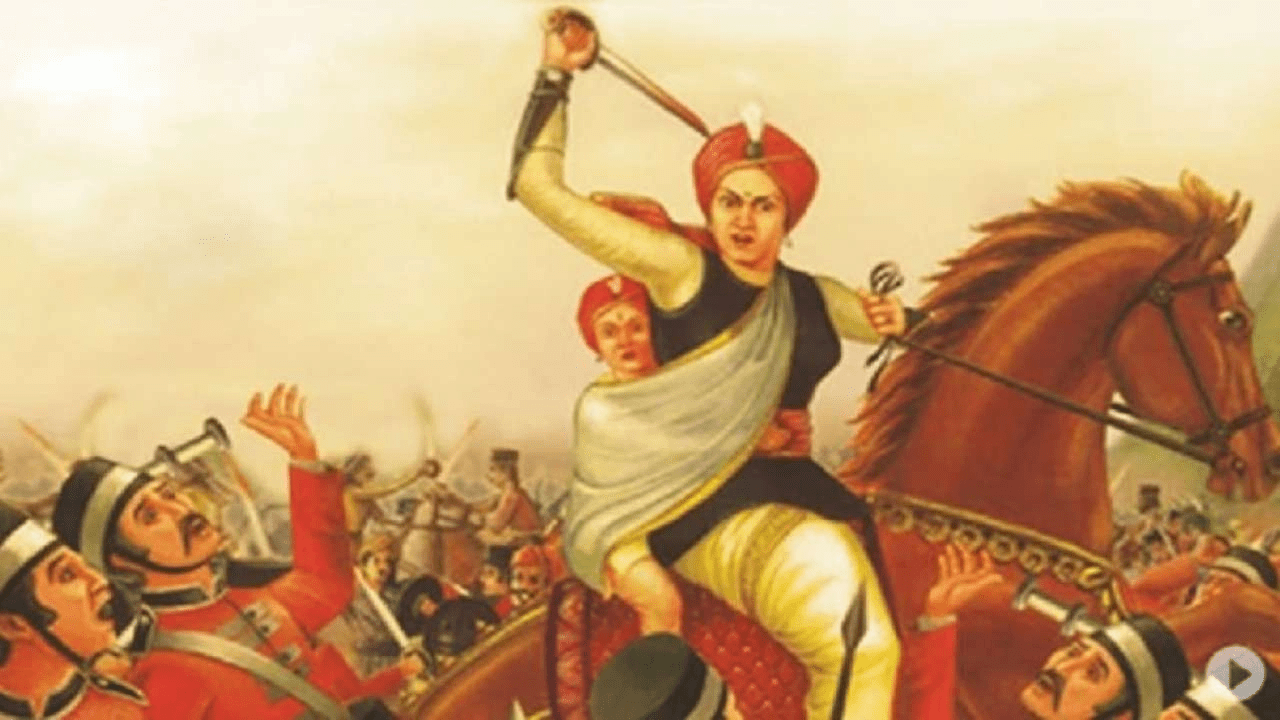
Rani Lakshmibai,the Queen of Jhansi, remains one of the most revered figures in Indian history. A legendary leader of the Revolt of 1857, she serves as an enduring symbol of bravery, patriotism, and resistance against British colonial rule. Her life and ultimate sacrifice paved the way for future generations of freedom fighters in India’s long journey toward independence.
Jhansi Rani Lakshmibai: Early Life and Education
Born on November 19, 1828, in Varanasi, she was named Manikarnika Tambe. Unlike most women of her time, she was raised in a progressive Maratha household under the care of her father, Moropant Tambe, who worked at the court of Peshwa Baji Rao II.
- Training: From a young age, Manikarnika was trained in martial arts, horse riding, and sword fighting—skills that would later define her leadership on the battlefield.
- Marriage: In 1842, she married Maharaja Gangadhar Rao Newalkar of Jhansi, after which she was named Lakshmibai.
- The Heir Crisis: The couple had a son in 1851 who died at four months old. They later adopted Damodar Rao. However, after the Maharaja’s death in 1853, the British East India Company refused to recognize the adopted son as the legal heir.
The Doctrine of Lapse and the Road to Rebellion
The British, under Lord Dalhousie, utilized the controversial Doctrine of Lapse to annex Jhansi, claiming that the lack of a biological heir made the state lapse into British hands.
Refusing to accept this injustice, the Rani famously declared: “Main apni Jhansi nahin doongi” (I shall not give away my Jhansi).This defiance set the stage for her entry into the Great Revolt of 1857.
Role in the Revolt of 1857
When the rebellion broke out across Northern India, Rani Lakshmibai took command of Jhansi. She proved to be an exceptional military strategist and administrator.
- The Siege of Jhansi (March 1858): British forces, led by Sir Hugh Rose, besieged the city. Despite being heavily outnumbered, the Rani organized a fierce defense with an army that included both men and women. She held off the British for two weeks before the city was finally breached.
- The Escape: Realizing the city was lost, she famously escaped from the fort by jumping from its walls on horseback with her young son strapped to her back.
- Continued Resistance: She retreated to Kalpi and eventually captured Gwalior alongside rebel leaders Tantia Tope and Nana Sahib.
Death in Battle
Rani Lakshmibai’s journey came to a heroic end during the Battle of Gwalior. On June 18, 1858, while fighting in the Kotah-ki-Serai region, she was mortally wounded by British hussars. In line with her indomitable spirit, she refused to be captured alive and died as a martyr at the age of 29.
Her death marked the conclusion of one of the most formidable challenges to British authority during the uprising.
Legacy and Impact
Rani Lakshmibai’s legacy is defined by her courage and the high regard even her enemies held for her. Sir Hugh Rose later described her in his reports as “the most dangerous of all Indian leaders.”
- Icon of Empowerment: She remains a national hero and a pioneer of women’s empowerment in India.
- Cultural Symbol: Her life has been immortalized in poetry, most notably by Subhadra Kumari Chauhan, and in numerous films and literature.
- Military Inspiration: The women’s regiment of the Indian National Army (INA) formed by Subhas Chandra Bose was named the Rani of Jhansi Regiment in her honor.
FAQs on Jhansi Rani Lakshmibai
What was Rani Lakshmibai’s birth name?
She was born as Manikarnika Tambe and was affectionately called Manu.
When and where was Rani Lakshmibai born?
She was born on November 19, 1828, in Varanasi, India.
Why did the British annex Jhansi?
The British annexed Jhansi under the Doctrine of Lapse because they refused to recognize her adopted son, Damodar Rao, as the legal heir.
Who was the British officer that led the attack on Jhansi?
Hugh Rose led the British forces during the siege of Jhansi in 1858.
What was Rani Lakshmibai’s famous slogan?
Her famous slogan was “Main apni Jhansi nahin doongi” (I shall not give away my Jhansi).
Who were the prominent rebel leaders she fought alongside?
She collaborated with leaders like Tantia Tope and Nana Sahib during the revolt.
How did Rani Lakshmibai die?
She was mortally wounded while fighting British forces during the Battle of Gwalior on June 18, 1858.
How did Sir Hugh Rose describe the Rani in his military accounts?
He described her as “the most dangerous of all Indian leaders” and “the only man among the rebels.”
What was the name of her adopted son?
Her adopted son was named Damodar Rao.
Which women’s military unit was named after her in the 20th century?
The Rani of Jhansi Regiment of the Indian National Army (INA) was named in her honor by Subhas Chandra Bose.