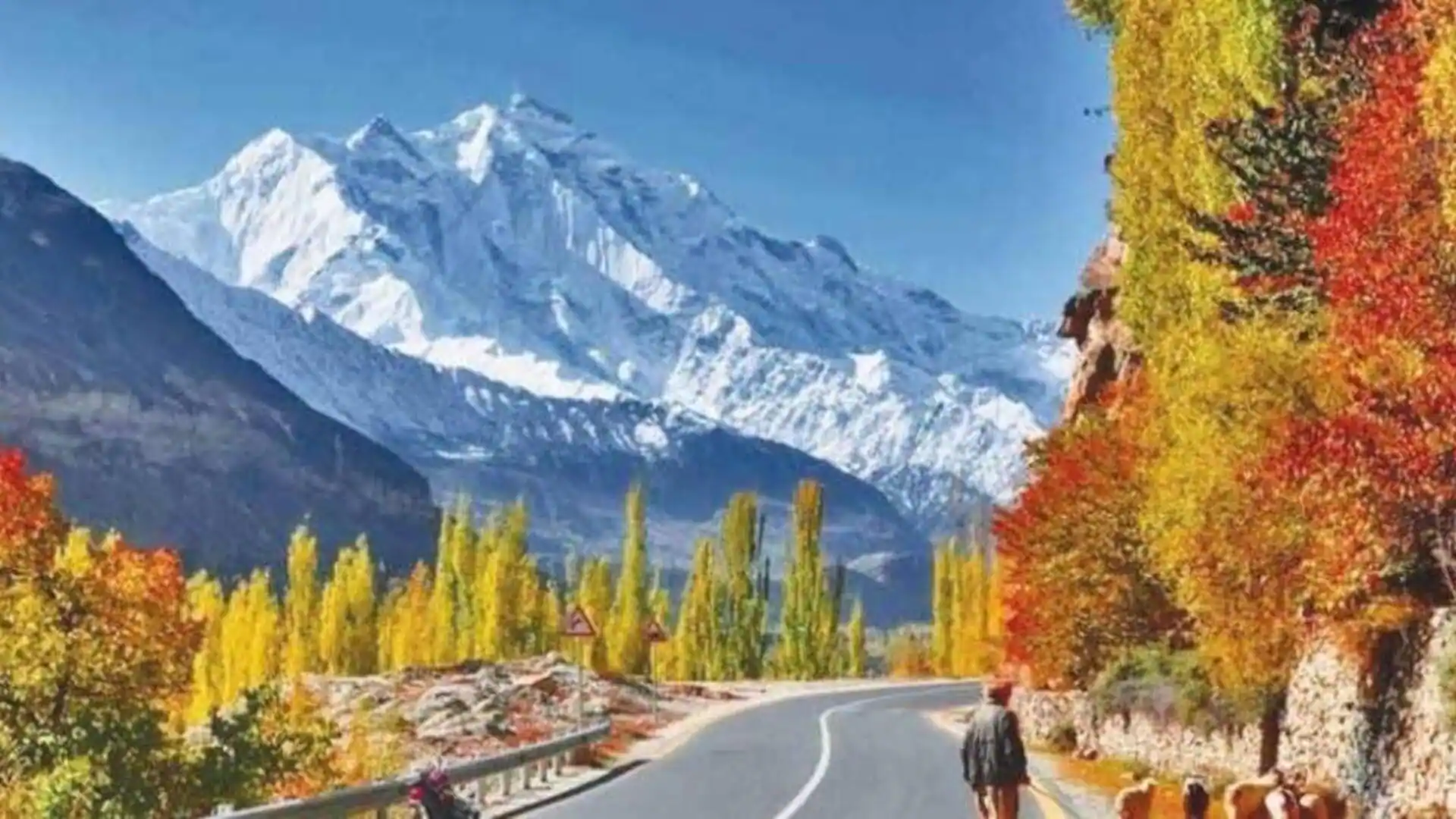
Gilgit-Baltistan, formerly known as the Northern Areas, is an integral part of the Indian Union, being a territory of the erstwhile princely state of Jammu and Kashmir. Situated at the northernmost tip of the subcontinent, it is a region of immense strategic and geopolitical importance that has been under illegal Pakistani occupation since April 1949.
India maintains its consistent and principled position that the entire Union Territories of Jammu & Kashmir and Ladakh, including the regions of Gilgit-Baltistan, are inseparable parts of India.
I. Geographical Context and Borders
Gilgit-Baltistan occupies a unique position at the crossroads of South, Central, and East Asia.
- Strategic Frontiers: It provides the only territorial land route between Pakistan and China, meeting the Xinjiang Autonomous Region. This geography is the cornerstone of the China-Pakistan Economic Corridor (CPEC).
- Immediate Neighbors:
- West: Afghanistan (specifically the Wakhan Corridor).
- South: Pakistan-occupied Kashmir (PoK).
- East: The Union Territory of Ladakh and Jammu and Kashmir (India).
- International Status: The United Nations refers to Gilgit-Baltistan and the neighboring PoK collectively as “Pakistan-administered Kashmir.”
- Historical Background: From Lease to Occupation
The history of Gilgit-Baltistan is inextricably linked to the broader Kashmir dispute and the events of 1935 and 1947.
The British Lease (1935)
While Gilgit was legally a part of the princely state of Jammu and Kashmir, the British Empire took the region on a 60-year lease from Maharaja Hari Singh in 1935. This was done to monitor Soviet and Chinese influence in the “Great Game” of Central Asia.
Operation Gulmarg and Accession (1947)
- The Invasion: On October 22, 1947, as Maharaja Hari Singh debated the future of his state, Pakistani forces and Pashtun tribal militiamen launched Operation Gulmarg, invading the Kashmir Valley and committing atrocities in places like Baramulla.
- The Accession: To protect his people, Maharaja Hari Singh signed the Instrument of Accession with India on October 26, 1947. Legally, this made the entire state of Jammu and Kashmir, including Gilgit, an integral part of India.
- Indian Military Response: The Indian Army was airlifted into Srinagar and successfully pushed back the invaders from much of the valley.
The Karachi Agreement (April 1949)
Gilgit-Baltistan came under the direct control of Pakistan in April 1949. The leadership of the so-called “Azad Jammu and Kashmir” (AJK) was coerced into signing the Karachi Agreement, which ceded the administration of Gilgit-Baltistan to the Central Government of Pakistan.
III. Governance and Political Status
Despite being under Pakistani control for over seven decades, the region occupies a legal vacuum within Pakistan’s own constitutional framework.
- Constitutional Exclusion: Gilgit-Baltistan is not recognized as a province in the Pakistani Constitution. It has been maintained under the tight control of the federal government in Islamabad, often through “Advisory Councils” or “orders.”
- Lack of Representation: For decades, the local population was denied the basic rights and political representation afforded to residents of Pakistan’s four provinces.
- Indian Position: India has consistently lodged protests against any attempt by Pakistan to change the status of the region or to carry out elections, asserting that such actions have no legal basis in an occupied territory.
IV. Ten FAQs on Gilgit-Baltistan
What was Gilgit-Baltistan formerly called?
It was previously known as the “Northern Areas.”
Is Gilgit-Baltistan an integral part of India?
Yes, it is legally part of India as it was a territory of the princely state of Jammu and Kashmir that acceded to India in 1947.
Which countries share a border with Gilgit-Baltistan?
It shares borders with China (Xinjiang), Afghanistan (Wakhan Corridor), and India.
When did Pakistan take control of this region?
Pakistan gained administrative control in April 1949 through the Karachi Agreement.
What was the “1935 Lease”?
The British took the Gilgit region on lease from Maharaja Hari Singh in 1935 for 60 years to secure their northern frontier.
Does Gilgit-Baltistan have provincial status in Pakistan?
No, it remains outside Pakistan’s formal constitutional framework and is not one of its provinces.
What was “Operation Gulmarg”?
It was the codename for the Pakistani tribal and military invasion of Jammu and Kashmir in October 1947.
Who signed the Instrument of Accession for Jammu and Kashmir?
Maharaja Hari Singh signed the document on October 26, 1947, merging the state with India.
What is the strategic significance of the region?
It is the only land gateway between Pakistan and China and is a critical part of the CPEC project.
How does the UN refer to this region?
The UN refers to it and PoK together as “Pakistan-administered Kashmir.”