Why was 2025 a turning point in global and Indian diplomacy?
- The post‑World War II global order saw its biggest rupture in decades.
- US President Trump’s second‑term policies reshaped trade and alliances.
- Conflicts in Pakistan, Ukraine, and Gaza added instability.
- India faced both setbacks (US tariffs, Pakistan tensions) and openings (Europe, Canada, China re‑engagement).
How did India’s ties with major powers evolve in 2025?
| Country/ Region | What happened in 2025 | Implication for 2026 | What India can do to maintain good relations |
| United States | Imposition of very high tariffs (50%) on India. Ceasefire claims on India‑Pakistan conflict. Pressure to stop oil imports from Russia. | In 2026, relations are expected to remain turbulent. Trade negotiations may move forward, but strategic trust between the two countries is weak. | India should work towards a pragmatic trade deal, diversify supply chains to reduce dependence, and keep defense and technology cooperation steady despite disagreements. |
| Pakistan | Both had a brief but lethal conflict. Terror attacks in Pahalgam and near Red Fort tested India’s redlines. Pakistan’s Army Chief Asim Munir declared himself Field Marshal, consolidating power. | In 2026, ties will remain tense. There is a high risk of new terror incidents, and India will need to use military, political, and diplomatic resources to respond. | India should strengthen border security, improve intelligence cooperation, and keep backchannels open while responding proportionately to provocations. |
| China | India re‑engaged with China by restoring visas and flights, and leaders met at the SCO summit. However, about 50,000 troops remain deployed on each side of the Line of Actual Control. | In 2026, relations may improve economically, but security distrust will continue due to the unresolved border situation. | India should push for confidence‑building measures at the border, selectively open economic ties in non‑sensitive sectors, and use forums like SCO and BRICS to keep dialogue alive. |
| Russia | India hosted President Putin and continued energy and defense ties, though US tariffs on Russian oil imports created pressure. | In 2026, Russia will remain important for India’s energy and defense needs, but balancing ties with the West will be tricky. | India should deepen defense co‑production, balance energy security with global compliance, and engage in the Ukraine peace process to protect its global image. |
| European Union | Relations improved in 2025, with trade talks advancing. EU leaders are invited as chief guests for Republic Day in 2026. | In 2026, India has an opportunity to expand market access and strengthen technology partnerships with Europe. | India should conclude a balanced free trade agreement, cooperate on climate and digital issues, and align standards to boost exports. |
| United Kingdom | India signed a trade deal with the UK in 2025. | In 2026, this deal will open opportunities for investment and services expansion. | India should implement the agreement quickly, resolve standards issues, and boost collaboration in education, fintech, and clean energy. |
| Canada | Relations reset under new PM Mark Carney. Both sides restored visas, staffed missions, and separated political disputes from trade. | In 2026, ties are expected to stabilize, with economic and people‑to‑people engagement improving. | India should institutionalize this separation, expand student and work mobility, and protect investments. |
| Nepal | Gen Z protests led to regime change in 2025, with an interim government under Sushila Karki. Elections are due in early 2026. | In 2026, Nepal’s politics will remain fluid, and foreign policy may shift depending on election results. | India should respect Nepal’s democratic process, fast‑track connectivity and power trade projects, and focus on people‑centric initiatives. |
| Bangladesh | After Sheikh Hasina’s ouster, unrest continued under interim leader Muhammad Yunus. Communal tensions and legitimacy issues persisted. Elections are scheduled for February 2026. | In 2026, ties may be volatile, with risks of migration and security challenges. | India should cooperate on border management, counter radicalization, and expand trade and connectivity to stabilize Bangladesh’s economy. |
| Turkey | Relations worsened in 2025 after Turkish drones were found in Pakistan’s arsenal and President Erdogan openly backed Islamabad. | In 2026, ties are likely to remain strained. | India should limit defense exposure, engage economically where possible, and use multilateral forums to manage disputes. |
| Afghanistan (Taliban‑ ruled) | India deepened engagement with the Taliban in 2025, hosting ministers and handing over the Afghan embassy. Kabul was reframed as “the enemy’s enemy” amid Pakistan tensions. | In 2026, cooperation will remain transactional, focused on security and connectivity. | India should provide humanitarian aid and capacity building without formal recognition, while securing trade corridors via Chabahar and Central Asia. |
| West Asia (Israel, Arab states, Iran, Qatar) | The Gaza war paused after a Trump‑brokered ceasefire. US‑Israel strikes weakened Iran’s nuclear sites. Israel’s strike inside Qatar created diplomatic tensions. | In 2026, peace remains fragile, and the revival of the India‑Middle East‑Europe Corridor (IMEC) depends on regional stability. | India should support IMEC with balanced diplomacy, expand energy and tech ties with GCC and Israel, and maintain neutrality to keep channels open with Iran. |
| Ukraine/ Russia war | The war entered its fourth year in 2025. Trump pushed for a ceasefire, but disagreements over territory and security guarantees remained. India became more involved in peace efforts while facing pressure on Russian oil imports. | In 2026, India will continue walking a diplomatic tightrope between autonomy and Western expectations. | India should support a credible peace framework, diversify energy sources, and offer mediation venues without taking sides. |
| Africa | After including the African Union in the G20 in 2023, India prepared for deeper engagement in 2025. | In 2026, Africa offers opportunities for markets, minerals, and development partnerships. | India should host the India‑Africa Forum Summit, expand credit lines, and co‑develop value chains in pharma, agriculture, solar, and digital sectors. |
| Quad (US, Japan, Australia, India) | The Quad summit in 2025 depended on Trump’s visit to India, which did not happen. | In 2026, maritime and technology cooperation could advance, but progress depends on US ties. | India should keep working‑level initiatives moving in maritime domain awareness, critical tech, and infrastructure, while decoupling Quad progress from bilateral turbulence with the US. |
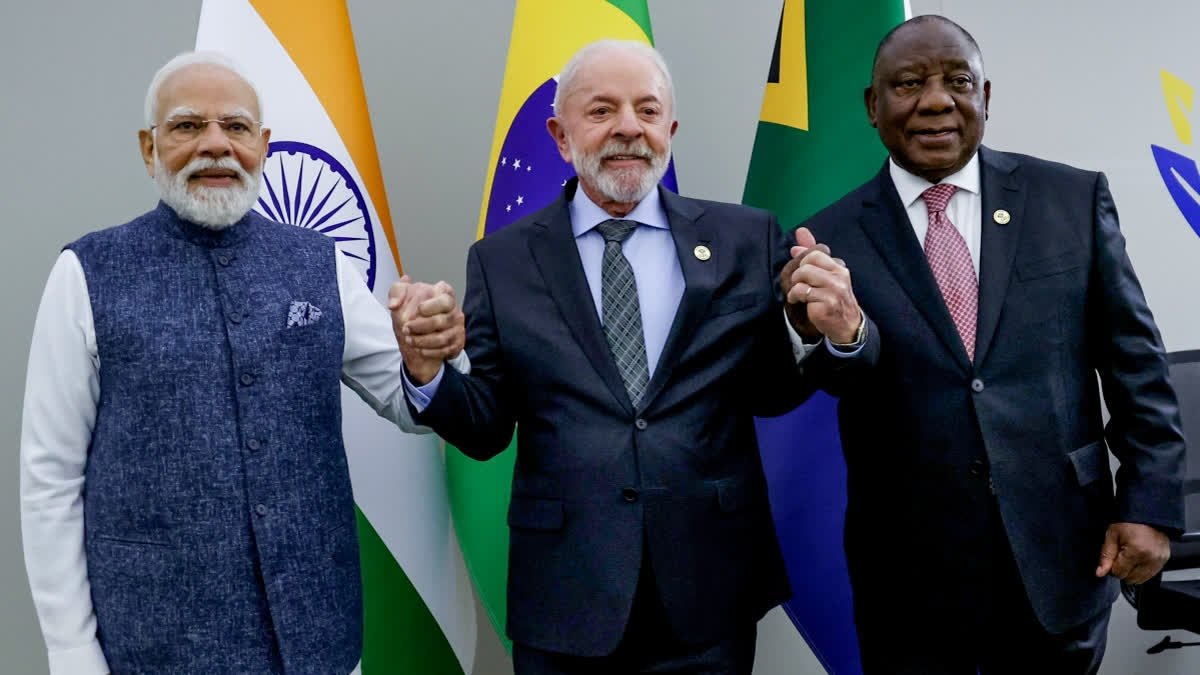
| BRICS | India prepared to host the BRICS summit in 2026, with Putin and Xi expected to attend. | In 2026, BRICS will test India’s convening power and ability to balance autonomy with global leadership. | India should use the summit to highlight Global South priorities like finance, health, and energy, and seek pragmatic outcomes without bloc politics. |
What is the overall outlook for India’s diplomacy in 2026?
- India enters 2026 with autonomy, alignment, and ambition, but little room for missteps.
- Balancing ties with the US, China, Russia, and Europe will be crucial.
- Regional stability in Pakistan, Nepal, and Bangladesh will demand constant attention.
- Hosting major summits (BRICS, Quad, AI, Africa) offers India a chance to showcase leadership.
- The fractured global order means India must act with strategic caution, economic resilience, and diplomatic agility.
Conclusion
For India, 2025 was a year of rupture; 2026 will test its ability to balance great‑power ties, manage neighbourhood volatility, and project global leadership without compromising autonomy.
| Ensure IAS Mains Question
Q. 2025 marked a turning point in global geopolitics. Examine how India’s diplomatic choices in 2026 will shape its strategic autonomy, neighbourhood stability, and global role. (250 words) |
| Ensure IAS Prelims Question
Q. With reference to India’s diplomacy in 2025-26, consider the following statements:
Which of the statements are correct? a) 1 and 2 only b) 2 and 3 only c) 1 and 3 only d) 1, 2 and 3 Answer: d) 1, 2 and 3 Explanation Statement 1 is correct: In 2025, India faced trade pressure and tariffs from the United States while simultaneously dealing with security challenges such as terrorism and instability in neighbouring countries like Pakistan, Nepal, and Bangladesh. Statement 2 is correct: India’s participation in both BRICS and the Quad shows its strategy of maintaining strategic autonomy by engaging with multiple power groupings without aligning exclusively with any single bloc. Statement 3 is correct: IMEC requires long-term stability in West Asia, as ongoing conflicts in Gaza and regional tensions directly affect connectivity, trade routes, and infrastructure cooperation. |