Context
China has completed an 11.18 km underwater high-speed tunnel beneath the Yangtze River, enabling bullet trains to operate at speeds of up to 350 km/h.
About Yangtze River
- Also called Chang Jiang, it is the longest river in Asia and China and the third-longest in the world after the Nile and Amazon, with a length of about 6,300 km.
- It is unique as the longest river that flows entirely within a single country, playing a central role in China’s geography and economy.
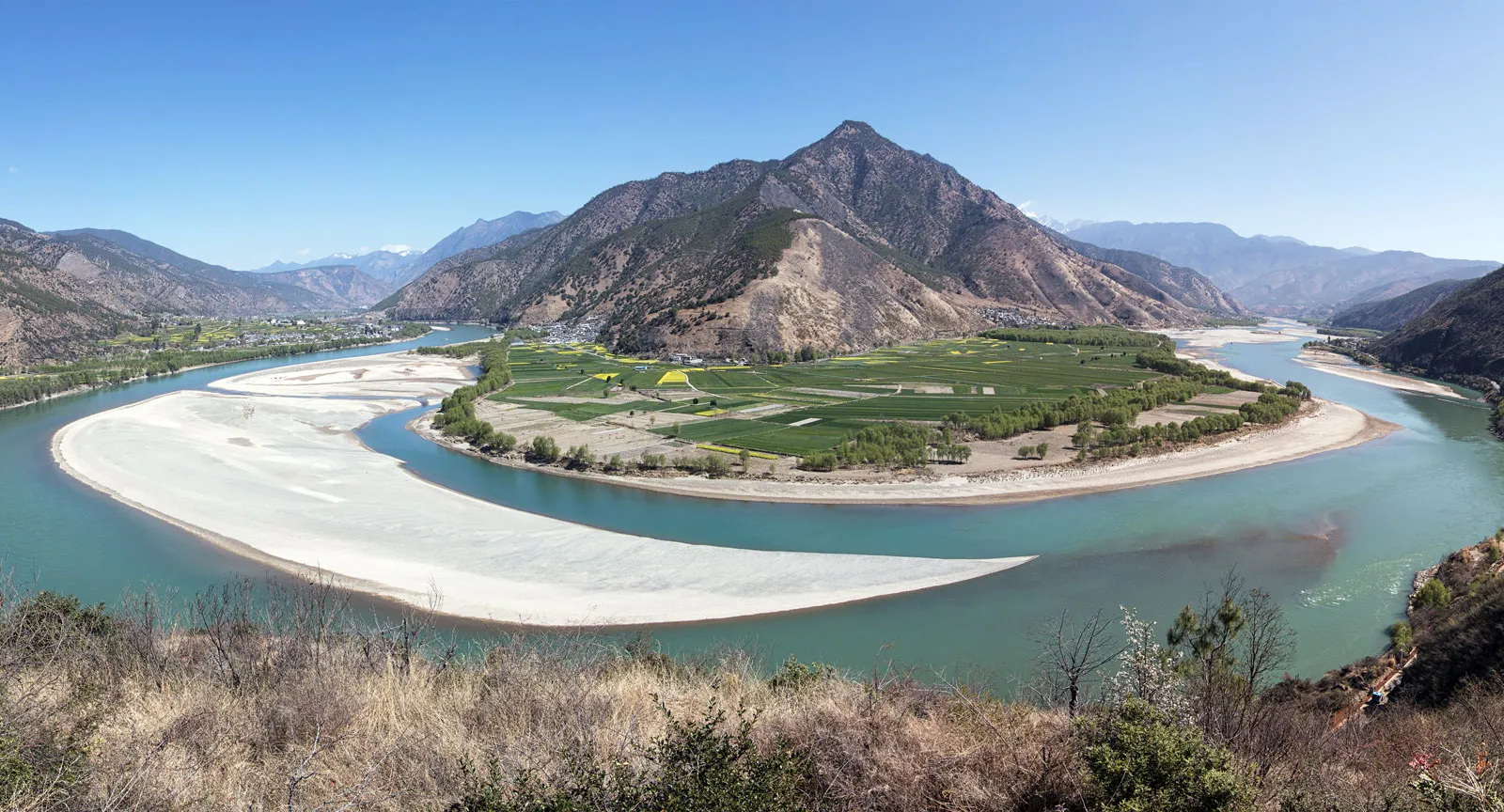
- The river originates in the Tibetan Plateau, flows through mountainous regions for most of its course, and later enters broad plains before reaching its mouth.
- It is joined by over 700 tributaries, including major ones such as Yalung, Min, Jialing, Han (left bank) and Wu, Yuan, Xiang, Gan (right bank).
- The Yangtze finally drains into the East China Sea near Shanghai, forming an important delta region.
- Historically, it has served as a major transportation corridor, linking inland regions with coastal ports and cities like Nanjing, Wuhan and Chongqing.
- The river basin is an economic and agricultural hub, producing nearly half of China’s crops, supplying about half of its fish, supporting around 400 million people and contributing nearly 40% of the country’s economy.