Important questions for UPSC Pre/ Mains/ Interview:
|
Context
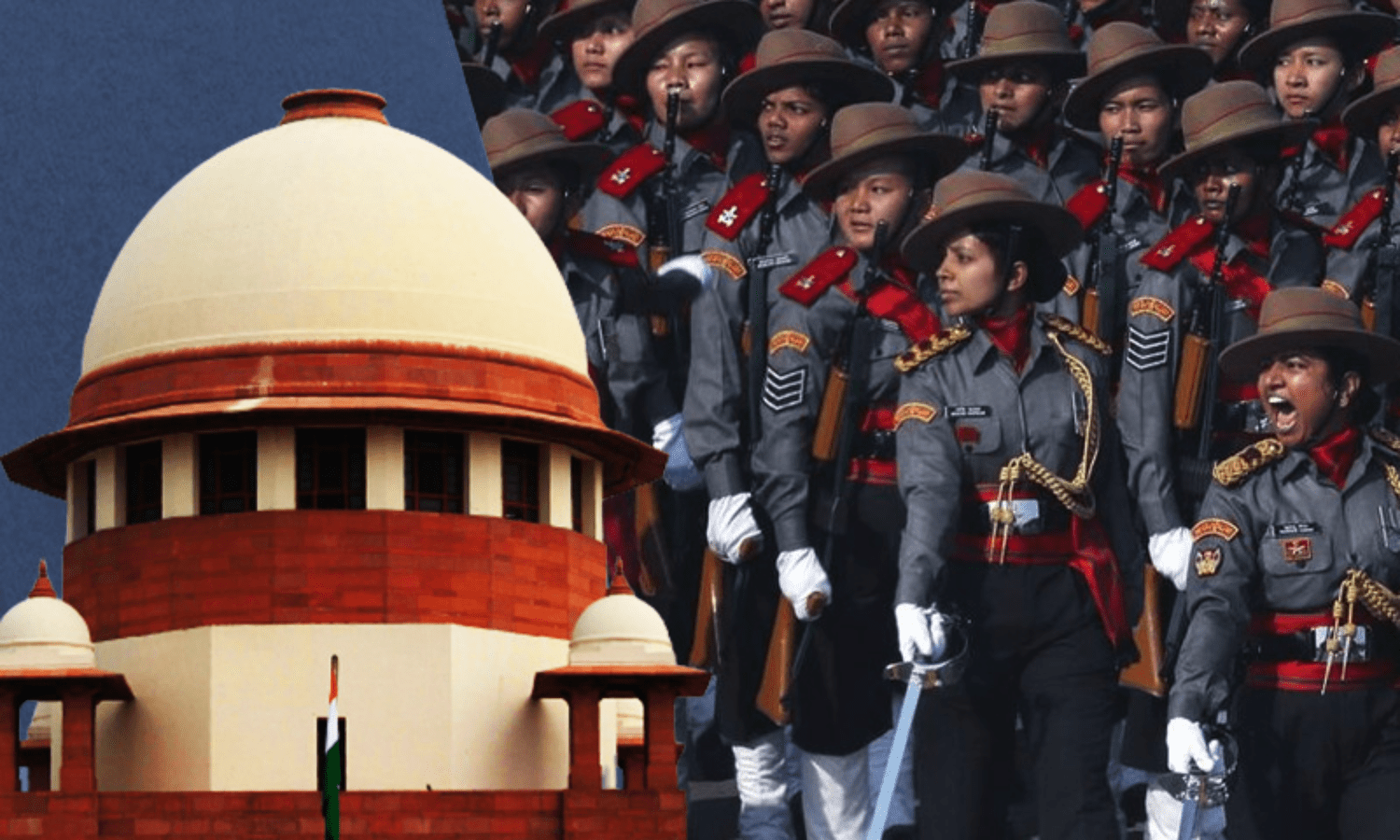
The Supreme Court has upheld Permanent Commission (PC) and pensionary benefits for women officers in the Armed Forces, highlighting entrenched systemic gender bias. The judgment reinforces constitutional guarantees of equality and mandates institutional reform.
Q1. What is the issue of the Permanent Commission for women officers?
- Women inducted mainly through Short Service Commission (SSC)
- SSC tenure is limited (10–14 years) and guarantees no assured long-term career.
- Permanent Commission (PC) offers full career till retirement and access to promotions, command roles, and pension.
- Historical issue: Women had restricted or delayed access to PC which led to structural inequality in career progression.
Q2. What systemic challenges did women officers face?
- Career Limitations: Restricted access to command roles and fewer opportunities for promotions.
- Training & Exposure Gaps: Weaker service profiles with denied key courses and assignments.
- Institutional Bias: Presumption that women lack long-term career commitment
- Evaluation Discrimination: Lower grading in performance reports
Q3. What flaws did the Court identify in the evaluation system?
- Annual Confidential Reports (ACRs) Bias: Women are often given average or lower grades and higher grades are informally reserved for male officers.
- Structural Disadvantage: Women are assessed using weaker service records (due to fewer opportunities).
- Result: Reduced chances of selection for Permanent Commission
Q4. What were the key directions of the Supreme Court?
- Grant of Permanent Commission: Eligible women officers must be considered for PC as inclusion in the consideration zone is a constitutional obligation.
- Pensionary Benefits: Women denied PC but released will be deemed to have completed 20 years of service and will be eligible for pension and benefits.
- No Vacancy-Based Denial: Vacancy caps cannot justify discrimination. Equality overrides administrative constraints.
- Uniform Application: Applies across Army, Navy and Air Force.
Q5. What constitutional principles were reinforced?
- Article 14 (Equality before Law): Gender-based discrimination is invalid.
- Article 16 (Equal Opportunity in Employment): Equal access to career advancement
- Substantive Equality: Focus on removing structural disadvantages, not just formal equality.
Q6. What are the broader implications of the judgment?
- Institutional Reform: Need to reform ACR evaluation systems and ensure fair promotions & postings.
- Gender Inclusion: It expands the role of women in the Armed Forces and encourages participation in leadership positions.
- Governance Impact: Promotes merit-based system and reduces institutional bias.
- Precedential Value: Strengthens jurisprudence on gender equality and workplace discrimination.
Q7. What challenges remain?
- Cultural Resistance: Deep-rooted gender stereotypes
- Operational Concerns: Debate on combat roles and logistics
- Implementation Issues: Translating judgment into ground-level reform
Conclusion
The Supreme Court’s ruling marks a significant step toward substantive gender equality in the Armed Forces. By addressing structural bias and ensuring equal opportunities, it aligns institutional practices with constitutional values, though effective implementation remains crucial.