| Important questions for UPSC Pre/ Mains/ Interview:
1. What is VoicERA? 2. What is BHASHINI and how does VoicERA build upon it? 3. What are the technical features of VoicERA? 4. How does VoicERA function as Digital Public Infrastructure (DPI)? 5. What sectors can benefit from VoicERA deployment? 6. What administrative and governance dimensions are involved? 7. How does VoicERA advance sovereign AI capabilities? 8. What are the benefits of VoicERA in public service delivery? 9. What concerns and risks must be considered? 10.What safeguards and oversight mechanisms are necessary? 11.How does VoicERA strengthen India’s DPI ecosystem? |
Context
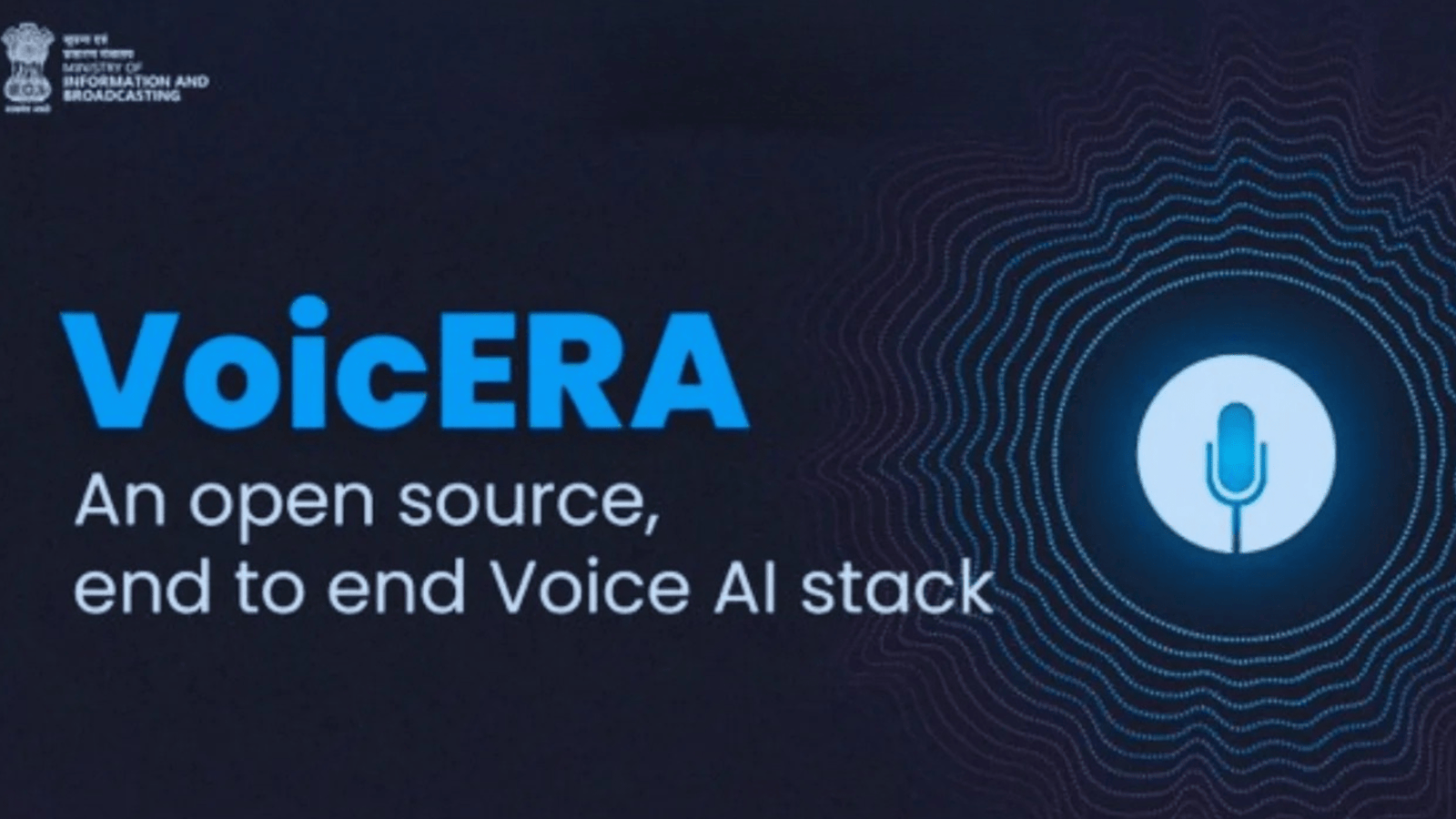
At the India AI Impact Summit 2026, the Digital India BHASHINI Division under the Ministry of Electronics and IT launched VoicERA, an open-source end-to-end Voice AI stack. Built on the BHASHINI National Language Infrastructure, VoicERA expands India’s Digital Public Infrastructure (DPI) into real-time, multilingual voice systems for population-scale public service delivery.
Q1. What is VoicERA?
- An open-source, end-to-end Voice AI execution stack.
- Designed for multilingual speech systems.
- Deployed on the BHASHINI.
- Built in collaboration with EkStep Foundation, COSS, IIIT Bengaluru, and AI4Bharat.
- Designed as a digital public good.
Q2. What is BHASHINI and how does VoicERA build upon it?
- BHASHINI is India’s National Language Translation Mission platform.
- Functions as language-based Digital Public Infrastructure.
- Earlier focus:
- Translation tools
- Language processing technologies
- With VoicERA integration, BHASHINI now supports:
- Real-time speech systems
- Conversational AI
- Multilingual telephony
- Voice-based citizen services
- Thus, BHASHINI evolves from language translation infrastructure to full voice-enabled public interface.
Q3. What are the technical features of VoicERA?
- Open, modular architecture.
- Interoperable and pluggable system design.
- Cloud deployable and on-premise compatible.
- Secure and scalable for government use.
- Reduces duplication of AI stack development.
- Prevents vendor lock-in.
It creates a national execution layer for Voice AI.
Q4. How does VoicERA function as Digital Public Infrastructure (DPI)?
- Provides foundational voice infrastructure rather than end-user apps.
- Allows departments and innovators to build applications on top.
- Ensures interoperability across sectors.
- Enables sovereign control over language AI systems.
- Supports population-scale multilingual deployment.
Like UPI in payments, VoicERA acts as base infrastructure for voice-based governance.
Q5. What sectors can benefit from VoicERA deployment?
- Government departments can onboard voice-enabled services in:
- Agriculture advisories
- Education support
- Livelihood services
- Grievance redressal
- Citizen feedback systems
- Welfare scheme discovery
- This enables natural-language interaction between citizens and the State.
Q6. What administrative and governance dimensions are involved?
- Anchored under Digital India Corporation.
- Operates under Ministry of Electronics & IT (MeitY).
- Requires inter-departmental integration.
- Supports digital governance reform.
- Strengthens DPI architecture beyond payments and identity.
Q7. How does VoicERA advance sovereign AI capabilities?
- Uses indigenous language datasets.
- Reduces reliance on global Big Tech voice platforms.
- Encourages domestic research institutions.
- Builds national AI capacity in speech and conversational systems.
- Aligns with broader AI self-reliance goals.
Q8. What are the benefits of VoicERA in public service delivery?
- Improves accessibility for non-literate citizens.
- Supports India’s linguistic diversity.
- Reduces digital exclusion.
- Enables natural interface in rural governance.
- Enhances inclusive AI adoption.
Voice becomes the primary digital interface for “Bharat”.
Q9. What concerns and risks must be considered?
- Data privacy of voice recordings.
- Cybersecurity vulnerabilities in telephony systems.
- Algorithmic bias in speech recognition.
- Infrastructure gaps in rural connectivity.
- Long-term sustainability and maintenance costs.
Voice AI systems process sensitive personal data and require strong oversight.
Q10. What safeguards and oversight mechanisms are necessary?
- Compliance with digital data protection frameworks.
- Secure encryption standards for voice data.
- Independent audits of AI models for bias and accuracy.
- Transparent API governance structure.
- Clear accountability for misuse or data breaches.
Q11. How does VoicERA strengthen India’s DPI ecosystem?
- Expands DPI beyond identity (Aadhaar) and payments (UPI).
- Establishes language and voice as public infrastructure.
- Integrates innovation ecosystems into governance platforms.
- Positions India as leader in multilingual population-scale AI.
Conclusion
The launch of VoicERA marks the evolution of India’s Digital Public Infrastructure into voice-enabled governance. By combining open architecture with multilingual capability, India seeks to democratise AI access and strengthen sovereign digital capacity. Its success will depend on secure deployment, inclusive access, and robust institutional safeguards to balance innovation with citizen rights.