Why in the News?
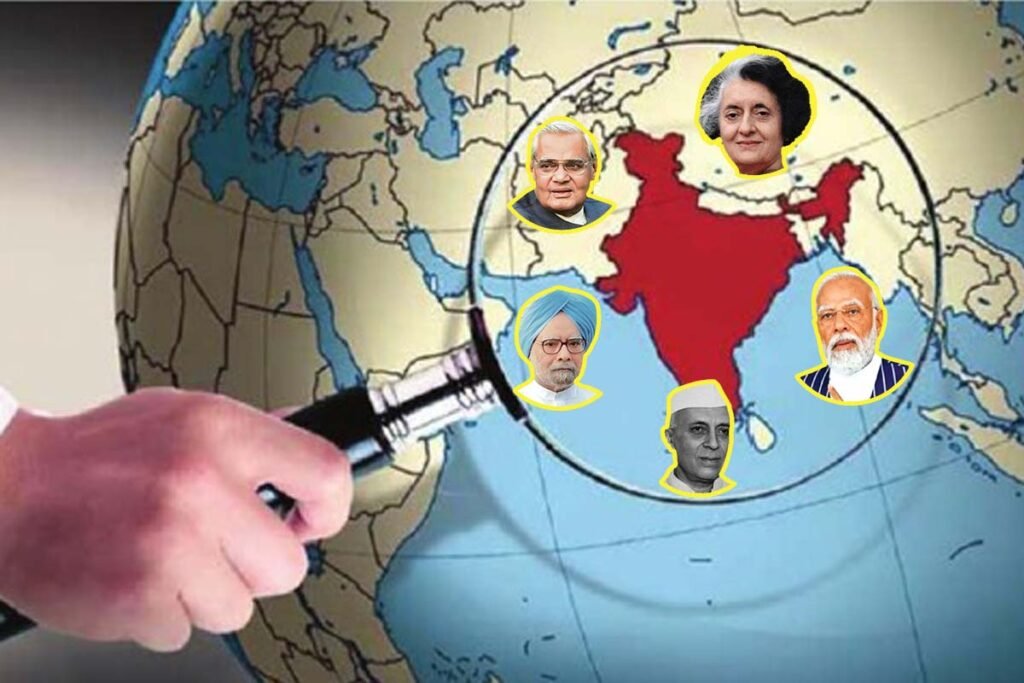
- The idea of strategic autonomy has gained renewed focus amidst India’s balancing act between the S., Russia, and China in a shifting multipolar world order.
- Current global tensions (Ukraine war, U.S.-China rivalry, technological disruptions) are testing India’s ability to maintain an independent foreign policy stance.
Key Highlights
- Meaning and Evolution of Strategic Autonomy
- Refers to a nation’s ability to make sovereign foreign policy and defence decisions independent of external pressures.
- Rooted in India’s colonial past and Nehru’s Non-Alignment Movement (NAM) during the Cold War.
- Under Modi, redefined as “multi-alignment” — engaging with multiple powers simultaneously.
- Global Context
- World shifting from unipolar U.S. dominance to a multipolar order.
- Rise of China, Russia’s assertiveness, and Western divisions create uncertainties.
- India must safeguard territorial integrity, economic growth, tech advancement, and regional stability.
- India-U.S. Relations
- Deepened ties: defence cooperation, Quad, Indo-Pacific dialogues, IMEC corridor.
- Frictions: trade disputes, U.S. pressure to cut ties with Russia.
- India’s stance: engagement with independence, not anti-Americanism.
- India-China Relations
- Border clashes (Galwan 2020) worsened ties.
- Despite rivalry, China remains a top trading partner and key in BRICS & SCO.
- India pursues deterrence + diplomacy
- India-Russia Relations
- Historical Cold War partnership; major defence supplier.
- Continued oil and arms imports despite Western criticism post-Ukraine war.
- Strategy: diversify partnerships but retain ties with Moscow.
- India as Voice of Global South
- Assertive leadership during G20 presidency.
- Seeks to be “non-West” but not “anti-West”.
- Advocates agency and pluralism in global politics.
Implications for India
- Greater global agency and leadership in the Global South.
- Flexibility to build diverse partnerships while avoiding entanglement.
- Ability to secure critical technologies, energy, and defence supplies from multiple partners.
Challenges and Way Forward
| Challenges | Way Forward |
| Rising China threat & border tensions | Strengthen defence modernisation, border infrastructure, and Indo-Pacific partnerships |
| U.S. pressure on Russia ties | Maintain independent oil/defence imports while diversifying suppliers |
| Economic dependence on global supply chains | Invest in Atmanirbhar Bharat, critical minerals, and indigenous tech ecosystems |
| Balancing great power rivalries | Continue multi-alignment — engage with U.S., manage China, retain Russia, lead Global South |
| Cyber, AI & digital vulnerabilities | Build data sovereignty, digital infrastructure, and strong cyber defence frameworks |
| Domestic political & economic weaknesses | Ensure policy coherence, strengthen institutions, invest in economic resilience |
Conclusion
India’s pursuit of strategic autonomy is not just a legacy of non-alignment but a dynamic and evolving necessity in a multipolar world. It reflects India’s determination to safeguard sovereignty, balance relations with major powers, and emerge as an independent pole in global politics. However, true autonomy requires not only diplomatic finesse but also economic resilience, technological capability, and domestic political coherence. Going forward, India must transform strategic autonomy from a slogan into a sustainable strategy — one that allows it to engage flexibly, resist external pressures, and stand tall as a confident global leader.
| EnsureIAS Mains Question
Q. Discuss the evolution of the concept of Strategic Autonomy in India’s foreign policy. How is it being redefined in the current multipolar world order? (250 Words) |
| EnsureIAS Prelims Question
Q. Consider the following statements regarding India’s pursuit of Strategic Autonomy: 1. It originated during the Cold War period with India’s policy of Non-Alignment. 2. Strategic Autonomy implies neutrality and complete disengagement from global powers. 3. India’s approach today is often described as “multi-alignment” instead of strict non-alignment. Which of the above statements is/are correct? a. 1 and 3 only Answer: a (1 and 3 only) Statement 1 is correct – Nehru’s Non-Aligned Movement (NAM) was the foundation of India’s strategic autonomy. Statement 2 is incorrect – Strategic Autonomy is not neutrality or isolationism; it means flexibility to engage on India’s own terms. Statement 3 is correct – Today’s approach is better described as “multi-alignment,” engaging with multiple powers simultaneously. |
|
Also Read |
|
| UPSC Foundation Course | UPSC Daily Current Affairs |
| UPSC Monthly Magazine | CSAT Foundation Course |
| Free MCQs for UPSC Prelims | UPSC Test Series |
| ENSURE IAS NOTES | Our Booklist |