Context
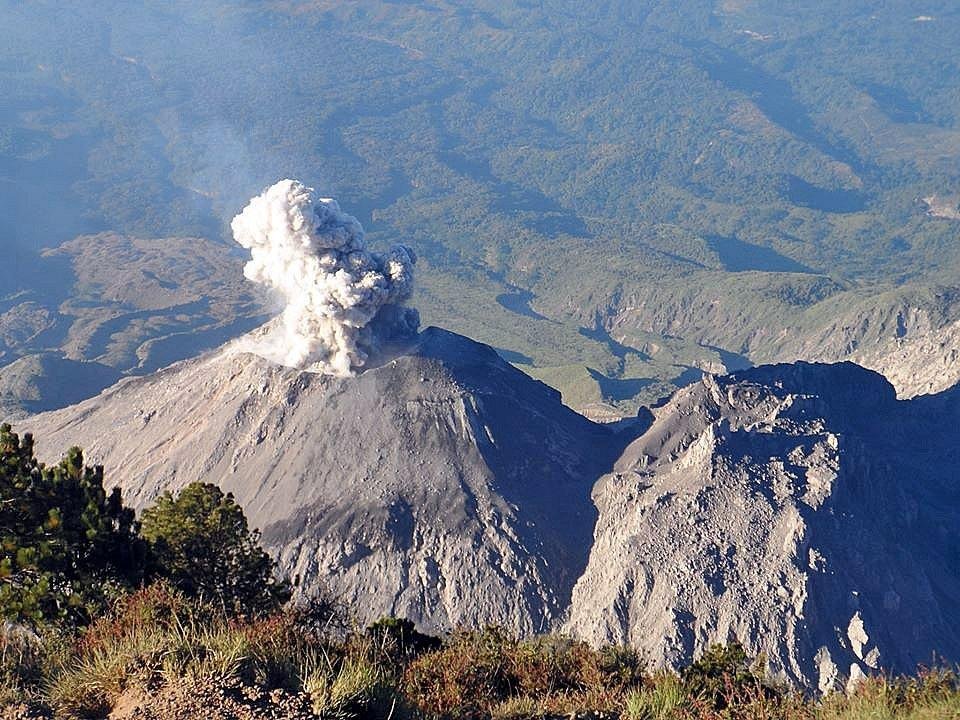
The recent eruption of Santiaguito Volcano forced hikers to flee, highlighting its status as one of the most active volcanic systems globally.
About Santiaguito Volcano
- Location and Physical Setting:
- It is one of the youngest active lava dome systems in the world.
- Located in western Guatemala, near the city of Quetzaltenango.
- Part of a volcanic region along the Pacific Ring of Fire.
- Stands at an elevation of about 2,500 metres (8,202 feet).
- It appears as a multi-peaked rocky dome complex, unlike typical cone-shaped volcanoes.
- Origin and Formation:
- Formed after the massive eruption of Santa María Volcano in 1902.
- The 1902 eruption:
- Destroyed the original summit
- Caused around 5,000 deaths
- Was among the largest eruptions of the 20th century
- The eruption created a large crater, within which new lava domes began forming.
- Santiaguito emerged around 1922 as one of these domes.
- Structural Features:
- It is a lava dome complex, not a single volcanic cone.
- Composed of multiple domes formed by slow lava extrusion.
- Contains four craters, with at least one currently active.
- The structure resembles a cluster of rocky peaks rather than a typical volcano.
- The dome has been continuously growing since its formation.
- Volcanic Activity:
- Characterised by frequent minor explosions.
- Regularly emits ash and smoke plumes.
- Occasionally produces lava flows and pyroclastic flows (hot gas and volcanic debris).
- Considered one of the most persistently active volcanic systems in the world.
- Major Eruption Events:
- 1929 eruption: Deadliest event, causing over 2,500 deaths
- 2010 eruption: Killed 10 people due to falling volcanic rocks
- Recent eruption (2026): Forced evacuation of hikers due to rock ejections and ash activity
Conclusion
Santiaguito Volcano exemplifies a highly active lava dome system with persistent hazards. Continuous monitoring and preparedness are essential to minimise risks in such dynamic volcanic regions.