| Important questions for UPSC Pre/ Mains/ Interview:
1. What is the present status of India’s waste sector? 2. What are the key challenges identified by the report? 3. What transformation levers are proposed for solid waste management? 4. What strategies are suggested for wastewater management? 5. What behavioural and institutional reforms does the report recommend? 6. What is the overall vision of the report? |
Context
- NITI Aayog released a report assessing India’s waste sector in relation to the Net Zero 2070 target.
- The report highlights:
- Major infrastructure gaps
- Rising urban waste pressures
- Social and behavioural barriers
- It also outlines strategic pathways to transform waste management while supporting India’s climate commitments and development goals under Viksit Bharat.
Q1. What is the present status of India’s waste sector?
- Emission Contribution: Waste sector contributed 56% of India’s total greenhouse gas emissions (2020).
- Infrastructure Gaps
- Only 39% of India is covered by sewer networks.
- Merely 9% of sewage is collected and treated.
- Just 39% of municipal solid waste is scientifically processed.
- Rising Urban Pressure: Urban population projected to reach 53% by 2050, increasing waste volumes significantly.
- Waste Generation (2020)
- Municipal solid waste: 9 million tonnes
- Domestic wastewater: 221,173 million litres per day (MLD)
- Other Structural Challenges
- Poor waste segregation at source
- Unmanaged plastic waste
- Social stigma around sanitation and waste handling
- Fragmented and unreliable data systems
- Limited integration of informal waste workers
- Together, these factors weaken climate mitigation and resource recovery efforts.
Q2. What are the key challenges identified by the report?
- Low sewage and waste treatment capacity
- Rapid urbanisation increasing waste load
- Inadequate scientific processing infrastructure
- Behavioural resistance to segregation
- Weak institutional coordination
- Financial constraints in scaling waste solutions
Q3. What transformation levers are proposed for solid waste management?
- Bio-methanation
- Transition from basic composting to scientific treatment.
- Converts organic waste into biogas (mainly methane) under anaerobic conditions using microorganisms.
- Helps reduce landfill emissions while generating clean energy.
- Source Segregation
- Achieve 100% door-to-door segregation aligned with Swachh Bharat Mission 2.0.
- Essential for efficient recycling and treatment.
- Bio-remediation
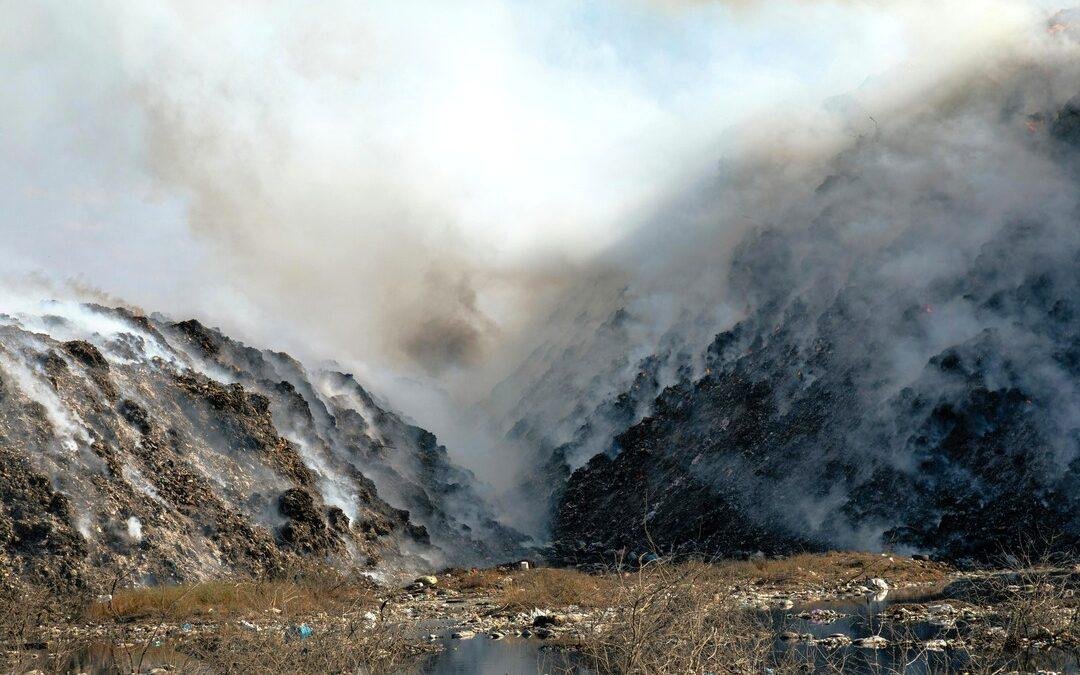
- Treatment of legacy waste at old dump sites.
- Uses microorganisms in open environments to reduce hazardous material and reclaim land.
Q4. What strategies are suggested for wastewater management?
- Domestic Wastewater
- Expand sewer network coverage to 85% by 2070.
- Ensure 100% faecal sludge treatment through:
- Faecal Sludge Treatment Plants (FSTPs)
- Co-treatment with sewage systems.
- Industrial Wastewater
- Upgrade aerobic treatment systems to achieve near-zero Methane Correction Factor (MCF) by 2035.
- Focus sectors:
- Fertilisers
- Petroleum
- Fish processing
- This directly targets methane reduction.
Q5. What behavioural and institutional reforms does the report recommend?
- Mission LiFE
- Promote sustainable consumption patterns under Mission LiFE.
- Encourages citizens to reduce waste generation through lifestyle changes.
- Integration of Informal Sector
- Formal inclusion of waste pickers into the waste value chain.
- Improves livelihoods and increases recycling efficiency.
- Green Financing
- Mobilise resources via:
- Public–Private Partnerships (PPP)
- Carbon credits
- Mobilise resources via:
- Green bonds
- Aims to bridge funding gaps in waste infrastructure.
Q6. What is the overall vision of the report?
- Align India’s waste sector with:
- Net Zero by 2070
- Circular economy principles
- Sustainable urbanisation
- Shift from dumping-based systems to resource recovery models.
- Combine infrastructure expansion with behavioural change and financial innovation.
Conclusion
The NITI Aayog report presents a roadmap to transform India’s waste sector through scientific processing, expanded wastewater treatment, behavioural reform, and green financing. While infrastructure gaps and social barriers remain significant, coordinated action across governance, technology, and citizen participation can enable India to simultaneously achieve environmental sustainability, urban resilience, and its Net Zero 2070 commitment.