Context
Scientists have recently identified three new species of dragonflies in Northeast India, with discoveries reported from Assam and Arunachal Pradesh.
About Dragonflies
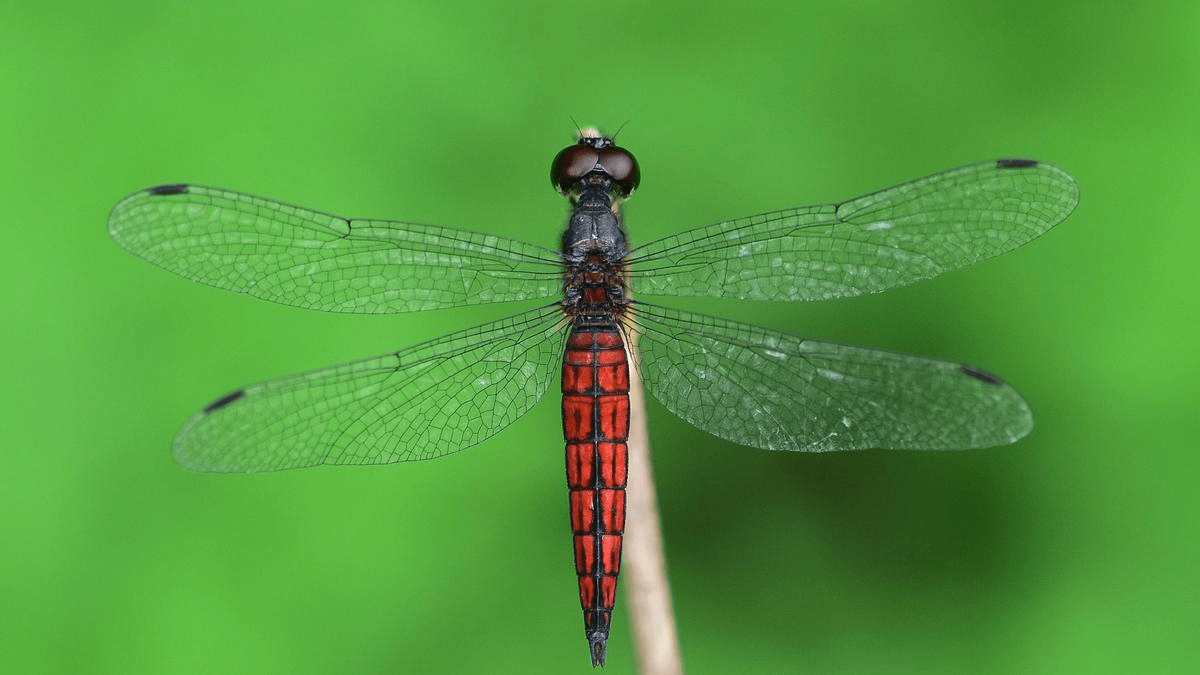
- Dragonflies belong to the order Odonata and are known for their elongated bodies, two pairs of wings, and large compound eyes.
- They are ancient insects, with origins tracing back over 100 million years before the time of dinosaurs, and are typically found near freshwater habitats across the world.
- Their compound eyes contain thousands of tiny visual units (facets), enabling nearly 360-degree vision, which helps them efficiently detect and capture prey.
- They are fast-flying predators that feed on insects like mosquitoes and flies, playing an important role in controlling pest populations.
- Damselflies, their close relatives, can be distinguished as they are smaller and more delicate, and unlike dragonflies – which keep their wings spread horizontally at rest – damselflies hold their wings folded vertically above their bodies.
About the Newly Discovered Species
- Two species—Clouded Boghawker (Sarasaeschna nuboides) and Siang Boghawker (Sarasaeschna sigotaayo)—were recorded in a forest pond ecosystem in Arunachal Pradesh’s Siang Valley, where they were observed flying close to water bodies.
- The third species, Long-tailed Boghawker (Sarasaeschna dosdewaensis), was discovered in Karimganj district of Assam, a region emerging as a rich hotspot for odonate diversity.