Important questions for UPSC Pre/ Mains/ Interview:
|
Context
The ongoing West Asia conflict and disruptions in shipping through the Strait of Hormuz have threatened India’s supply of Liquefied Petroleum Gas (LPG). Since a large share of India’s LPG imports passes through this route, the government has invoked emergency provisions under the Essential Commodities Act, 1955 to protect domestic cooking gas supply.
Q1. What is Liquefied Petroleum Gas (LPG) and why is it important for India?
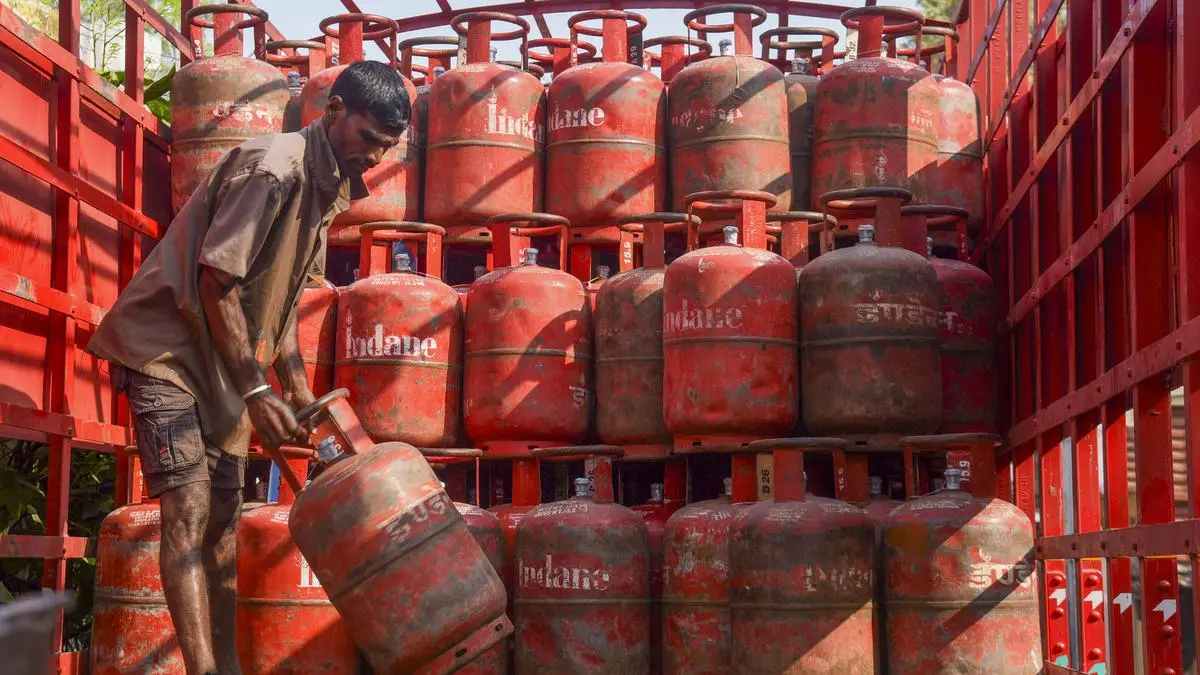
- LPG is a clean-burning fuel mainly composed of propane and butane.
- It is widely used in household cooking, heating, and some industrial applications.
- In India, LPG is the primary cooking fuel for over 33 crore households, especially under the Pradhan Mantri Ujjwala Yojana (PMUY).
- Compared to traditional fuels such as firewood and coal, LPG reduces indoor air pollution and health risks.
- Ensuring uninterrupted LPG supply is therefore critical for public health, household welfare, and energy security.
Q2. Why has the government invoked emergency provisions under the Essential Commodities Act?
- The government invoked Section 3 of the Essential Commodities Act, 1955.
- It also used provisions of the Petroleum Products (Maintenance of Production, Storage and Supply) Order, 1999.
- These laws allow the government to regulate production, supply, and distribution of essential commodities during emergencies.
- The aim is to prevent shortages and ensure stable supply of cooking gas to households.
- Such intervention is used when national supply chains face disruptions due to geopolitical events or natural crises.
Q3. What measures has the government directed oil refiners to take?
- Oil refineries must maximise LPG production.
- Propane and butane streams must be used exclusively for LPG production.
- Refineries are prohibited from diverting these inputs to petrochemical manufacturing.
- All LPG produced must be supplied to public sector Oil Marketing Companies (OMCs).
- This ensures that domestic LPG demand receives priority during supply disruptions.
Q4. What role do Oil Marketing Companies (OMCs) play in LPG distribution?
- Three major public sector OMCs handle most of India’s LPG distribution:
- Indian Oil Corporation (IOC)
- Bharat Petroleum Corporation Limited (BPCL)
- Hindustan Petroleum Corporation Limited (HPCL)
- These companies manage LPG procurement, storage, and distribution networks across the country.
- They supply LPG cylinders through millions of distributors and delivery centres.
- Their operations are central to ensuring last-mile delivery of cooking gas to households.
Q5. Why is the Strait of Hormuz crucial for India’s LPG imports?
- The Strait of Hormuz connects the Persian Gulf with the Arabian Sea.
- It is one of the world’s most important energy transit chokepoints.
- For India:
- Around 80% of LPG imports pass through this route.
- About 40% of crude oil imports use this corridor.
- Over 50% of LNG imports also transit through it.
- Any disruption in this region can create major energy supply risks for India.
Q6. What challenges does India face in securing LPG supply?
- Structural supply challenges
- India’s LPG consumption in 2024–25 was around 31 million tonnes.
- Domestic production is only about 13 million tonnes, creating high import dependence.
- Imports mainly come from Saudi Arabia, UAE, Qatar, and Kuwait.
- Infrastructure constraints
- LPG production depends on propane and butane output from refineries.
- Limited domestic natural gas production restricts supply expansion.
- Global market risks
- Geopolitical conflicts can disrupt shipping routes.
- Energy price volatility may increase subsidy burdens on the government.
Q7. What long-term strategies can strengthen India’s LPG and energy security?
- Diversify LPG import sources to regions such as the United States, Africa, and Latin America.
- Expand Strategic Petroleum Reserves (SPR) and explore LPG storage infrastructure.
- Increase domestic gas exploration and refining efficiency.
- Promote alternative cooking fuels such as:
- Biogas and compressed biogas (CBG)
- Electric cooking solutions
- Green hydrogen in the long term
- Strengthen maritime security and international cooperation to safeguard sea lanes.
These steps can reduce dependence on vulnerable energy chokepoints.
Conclusion
India’s decision to invoke emergency provisions under the Essential Commodities Act reflects a proactive effort to secure LPG supplies during geopolitical disruptions. While short-term measures such as maximising refinery production can stabilise supply, long-term resilience will depend on diversifying energy imports, expanding strategic reserves, and accelerating the transition toward alternative energy sources. Strengthening these measures is essential for safeguarding India’s energy security and household welfare.