Context
A recent scientific survey conducted in Kole Wetlands documented 12 species of pygmy grasshoppers.
About Kole Wetlands
- Location: It is a Ramsar listed wetland system in Central Kerala, spread across Thrissur and Malappuram districts and composed of low-lying floodplains. The region has a long, narrow central stretch, with multiple pockets extending into cultivated agricultural land on both sides.
- Origin of the Name: The word “Kole” in Malayalam means “bumper crop.” This name reflects the high agricultural productivity of the region and its long-standing association with rice cultivation. Paddy farming in this region has been practiced for nearly 300 years.
- Agricultural and Hydrological Features
- The area is naturally prone to saltwater intrusion, especially during certain seasons.
- During the monsoon, the entire wetland becomes submerged under water.
- After the monsoon, farmers drain the water and construct bunds (embankments) to enable cultivation.
- Because it is a large wetland surrounded by human settlements, the region also includes coconut plantations, arecanut plantations, gardens and other cultivated crops.
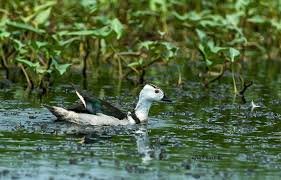
- Ecological Importance: Kole Wetlands are one of the largest wetlands in Kerala, highly productive and ecologically threatened. It lies along the Central Asian Flyway, a major migratory bird route. In terms of bird population, it ranks third in India, after Chilika Lake (Odisha) and Amipur Tank (Gujarat).
- It has been recognised as an Important Bird Area (IBA) by BirdLife International.
About Pygmy Grasshoppers
- Pygmy grasshoppers are small insects belonging to the order Orthoptera.
- Key characteristics:
- Around 15 mm long
- Usually brown, grey, or moss-green in colour
- Closely related to true grasshoppers
- Structural Differences from True Grasshoppers
- Their forewings are either very small (reduced to pads) or completely absent.
- They lack sound-producing and hearing organs, unlike many other grasshoppers.
- Reproductive Behaviour – A major distinguishing feature:
- Pygmy grasshoppers lay eggs individually in small grooves in soil.
- In contrast, short-horned grasshoppers deposit eggs in underground chambers.
- Habitat and Adaptation: Commonly found in fields with short grasses. Also abundant along muddy shores
- Many species show dimorphism, meaning:
- One form has reduced hindwings (short form)
- Another form has fully functional hindwings (long form)
FAQs
Q1. Where are the Kole Wetlands located?
They are in Thrissur and Malappuram districts of central Kerala, spread across low-lying floodplains.
Q2. Why are the Kole Wetlands called “Kole”?
“Kole” in Malayalam means “bumper crop,” reflecting the wetlands’ high rice productivity, cultivated here for nearly 300 years.
Q3. What is the ecological importance of the Kole Wetlands?
They are a Ramsar site and an Important Bird Area, lying along the Central Asian Flyway. They rank third in India for bird populations, after Chilika Lake and Amipur Tank.
Q4. How do farmers use the Kole Wetlands?
During the monsoon, the wetlands flood. Afterward, farmers drain water and build bunds for paddy cultivation, alongside coconut and arecanut plantations.
Q5. What are the main threats to the Kole Wetlands?
Saltwater intrusion, seasonal flooding, and human pressures from agriculture and settlements.
Q6. What are pygmy grasshoppers?
Tiny insects (~15 mm long) of the order Orthoptera, closely related to true grasshoppers.
Q7. How do pygmy grasshoppers differ from true grasshoppers?
They have reduced or absent forewings, lack sound-producing organs, and lay eggs individually in soil grooves (not underground chambers).
Q8. What colours do pygmy grasshoppers show?
Usually brown, grey, or moss-green, blending into muddy shores and short-grass fields.
Q9. What is dimorphism in pygmy grasshoppers?
Some forms have reduced hindwings (short form), while others have fully functional hindwings (long form).
Q10. Why is the discovery of pygmy grasshoppers in Kole Wetlands significant?
The survey documented 12 species, highlighting the wetlands’ rich but fragile biodiversity.