Why in the News?
- China announced at a UN General Assembly event that it will no longer seek Special and Differential Treatment (SDT) in future WTO negotiations, while retaining its developing country status and existing benefits.
- This decision comes amidst escalating US tariff pressures and long-standing US objections to the way China uses SDT to gain trade advantages.
- Following this, the United States imposed new tariffs on India, including 100% tariffs on branded pharmaceutical products and additional duties on furniture, kitchen cabinets, and trucks, thereby putting India’s own reliance on SDT under global scrutiny.
Key Highlights
- China’s Announcement at the UN
- At the UN General Assembly, China declared that it will not claim SDT in future WTO talks.
- This was seen as a tactical retreat in response to US trade pressures and criticism of its “developing ountry” tag despite being the world’s second-largest economy.
- While the WTO hailed it as reform progress, many experts view it as symbolic window-dressing, since China will still retain its existing benefits like subsidy flexibility and phased implementation rights.
- Focus Shifts to India
- After China’s move, attention has shifted to India, which has been a consistent beneficiary of SDT since its WTO accession in 1995.
- As India is now the fifth-largest economy, many developed nations argue that it should graduate from developing country privileges.
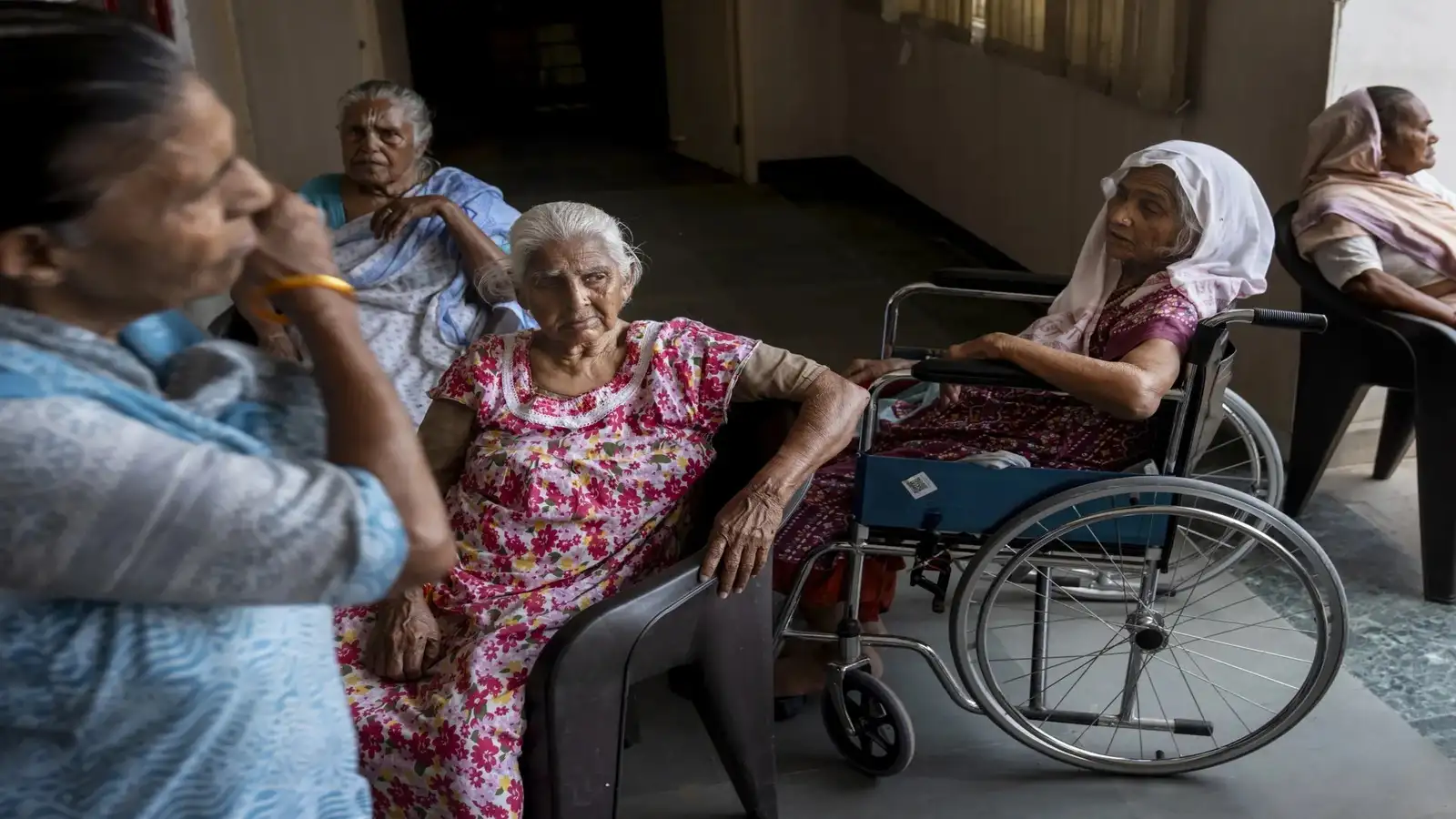
- However, India highlights its low per capita income (136th globally) and large vulnerable population, which still require special trade flexibilities.
- The Central Role of Agriculture
- Agriculture remains at the heart of India’s trade policy, employing nearly half of the workforce and ensuring food security for 1.4 billion people.
- Under the Agreement on Agriculture (AoA), developing nations can provide Amber Box subsidies up to 10% of production value, compared to only 5% for developed nations.
- India spends over $40 billion annually on programmes like Minimum Support Prices (MSP) and the Public Distribution System (PDS), which supports 800 million beneficiaries.
- However, due to outdated 1986–88 reference prices used for calculating subsidies, India often appears to breach the 10% subsidy cap, drawing criticism from the US and Cairns Group.
- The Double Standards of Developed Nations
- While pointing fingers at India, developed nations themselves gave out $850 billion in farm subsidies in 2023, according to OECD estimates.
- They often channel support through the Green Box, which includes subsidies for research, environmental protection, and rural development.
- This allows them to bypass subsidy caps, exposing the asymmetry in global trade rules where developing nations like India are penalised for programmes essential to food security.
- Consequences of Losing SDT
- If India is compelled to give up SDT, the consequences could be severe:
- A 20–30% reduction in subsidies over the next decade.
- A 10–15% fall in rural household incomes.
- If India is compelled to give up SDT, the consequences could be severe:
- Greater food price volatility.
- Worsening malnutrition, which already affects 35% of children under five.
- Recent WTO disputes, such as the 2023 sugar subsidy case, show that SDT protections shield India from heavy penalties. Losing them would leave India far more exposed.
| United Nations General Assembly (UNGA)
The United Nations General Assembly, serves as the UN’s primary decision-making body. Established in 1945 under the UN Charter, it offers a vital forum for multilateral discussions on a broad spectrum of global issues. The Assembly convened its first session on January 10, 1946, with 51 founding member nations. India is one of the founding members of the United Nations General Assembly (UNGA). 1. Origin: The UNGA was created in response to the shortcomings of the League of Nations, emerging as a central organ of the newly formed United Nations to foster international peace and collaboration. 2. Purpose: It upholds the principle of sovereign equality, enabling all member states to engage in collective dialogue and action on global challenges. 3. Location: headquarters in New York City from 1951. 4. Growth in Membership: As countries around the world gained independence, the UNGA saw a significant rise in membership, mirroring shifts in the global political landscape. Structure of the UN General Assembly (UNGA) 1. Presidency: The role of President rotates annually among five regional groups—African, Asian, Eastern European, Latin American and Caribbean, and Western European and Others. 2. Observers: Entities like the Holy See, Palestine, and various international organizations may attend and participate in discussions but do not possess voting rights. 3. Voting and Decision-Making: a. Each member state has one vote. b. Critical matters—such as international peace and security, elections to the UN Security Council (UNSC) and Economic and Social Council (ECOSOC), and budgetary issues—require a two-thirds majority. c. Less significant issues are resolved by a simple majority. 4. Subsidiary Organs: The UNGA operates through various committees and commissions tasked with research, analysis, and reporting. 5. General Committee: Composed of the UNGA President, 21 Vice Presidents, and the chairs of the six main committees, this body coordinates the Assembly’s agenda and proceedings. 6. Six Principal Committees: a. Disarmament and International Security b. Economic and Financial c. Social, Humanitarian, and Cultural d. Special Political and Decolonization e. Administrative and Budgetary f. Legal 7. Other Prominent Bodies: a. United Nations Disarmament Commission: Advises on disarmament strategies. b. International Law Commission: Focuses on the development and codification of international law. c. United Nations Peacebuilding Commission: Supports post-conflict recovery and peacebuilding efforts. d. Human Rights Council: Works to uphold and advance human rights worldwide. e. Additional Commissions: Include the UN Environment Assembly, the Commission on the Status of Women, and the Commission on Population and Development. India’s Role in the UN General Assembly (UNGA) Since the UNGA’s inception in 1945, India has been a steadfast champion of multilateralism and fair representation. It has played a pivotal role in advancing global causes such as decolonization, anti-apartheid, gender equality, climate justice, and nuclear disarmament. Key reforms and contributions led by India in collaboration with the UNGA include: 1. Decolonization & Anti-Apartheid Advocacy: India actively supported the global decolonization movement, co-sponsoring the landmark 1960 Declaration on the Granting of Independence to Colonial Countries and Peoples. It also brought the issue of apartheid to the UN’s attention as early as 1946, helping galvanize international opposition. 2. Trailblazing Leadership: In 1953, Vijaya Lakshmi Pandit made history as the first woman to preside over the UNGA, symbolizing India’s commitment to gender equality on the world stage. 3. Robust Engagement: India has served eight terms on the UN Security Council, most recently in 2021–2022. During its presidency in August 2021, India led critical discussions on maritime security and the role of technology in peacekeeping. It is currently campaigning for a non-permanent seat for the 2028–2029 term. 4. Institutional Reform Advocacy: India has consistently called for reforms to the UN Security Council to better reflect contemporary geopolitical realities, advocating for permanent seats for nations like India, Brazil, Germany, and Japan. 5. Counterterrorism Leadership: Since 1996, India has championed the Comprehensive Convention on International Terrorism (CCIT), aiming to establish a unified global framework to combat terrorism. 6. Peacekeeping Contributions: As one of the largest troop contributors to UN peacekeeping missions, India has pushed for enhanced accountability and ethical standards in peacekeeping operations. 7. Climate Action & Justice: India emphasizes shared but differentiated responsibilities in addressing climate change and has spearheaded initiatives like the International Solar Alliance (ISA) to promote sustainable energy solutions. 8. Support for Nuclear Disarmament: India advocates for a world free of nuclear weapons while adhering to a policy of minimum deterrence. |
Key Terms
- Special and Differential Treatment (SDT)
- A principle under GATT/WTO that provides flexibilities to developing countries.
- Includes longer timelines, relaxed subsidy caps, and tariff flexibility.
- Aims to safeguard nations with low per capita income and vulnerable populations.
- Central to debates on equity in global trade rules.
- Agreement on Agriculture (AoA)
- A WTO pact that regulates farm subsidies and market access.
- Divides subsidies into Amber Box (trade-distorting), Blue Box (production-limiting), and Green Box (non-trade-distorting).
- Amber Box caps are 10% for developing nations and 5% for developed ones.
- Reference prices are based on 1986–88 averages, which often distort subsidy calculations.
- Peace Clause (2013 Bali Agreement)
- The Peace Clause was introduced at the 2013 WTO Bali Ministerial Conference.
- It provides temporary protection to developing countries like India for their public food stockholding programmes (such as MSP and PDS).
- Under this clause, other WTO members cannot challenge these programmes at the Dispute Settlement Body, even if they breach subsidy limits set under the Agreement on Agriculture.
- It applies only to programmes aimed at food security for the poor and vulnerable populations.
- However, this clause was meant as an interim solution, not a permanent exemption. It needs to be extended periodically.
- India has been pushing to make the Peace Clause permanent or at least extend it beyond 2023 to safeguard its food security schemes.
- Cairns Group
- A coalition of agriculture-exporting nations such as Australia, Brazil, and Canada.
- Advocates for reducing global agricultural subsidies.
- Often critical of India’s subsidy policies, arguing they distort markets.
- Green Box Subsidies
- WTO classification of subsidies that are considered non-trade-distorting.
- Includes spending on research, infrastructure, environmental protection, and food security.
- Not subject to subsidy caps, making them widely used by developed countries.
6. Implications
- Food Security Concerns
- Losing SDT could weaken the National Food Security Act that supports 800 million people with subsidised food grains.
- This would worsen malnutrition and threaten poverty alleviation efforts.
- Economic and Trade Vulnerabilities
- Removal of tariff protections could expose farmers and MSMEs to global competition prematurely.
- This may harm domestic industries and reduce export competitiveness.
- Geopolitical and Strategic Positioning
- India risks being treated on par with China in WTO talks, despite having different developmental challenges.
- This could weaken India’s ability to negotiate safeguards for its vulnerable sectors.
- Sectoral Leverage
- India’s services sector, which makes up 55% of GDP, provides strong bargaining power.
- By offering concessions in e-commerce and digital trade, India can demand agricultural protections.
- Need for Domestic Reforms
- India must expand Direct Benefit Transfers (DBT) in subsidies (already covering 90% of fertiliser subsidies).
- Investments in cold storage, food processing, and climate-resilient agriculture will reduce reliance on trade-distorting subsidies.
Challenges and Way Forward
| Challenges | Way Forward |
| Global pressure on India to shed SDT status as its economy grows | Propose a tiered SDT framework based on per capita GDP and sectoral competitiveness |
| Heavy dependence on Amber Box subsidies | Shift gradually towards Green Box measures such as R&D, climate-resilient crops, and extension services |
| Outdated 1986–88 reference prices inflate subsidy figures | Push for updated reference prices to reflect current global markets |
| Rising WTO disputes over MSP and PDS | Lead the G33 coalition to extend the 2013 Bali “peace clause” until 2030 |
| US tariffs targeting pharma and exports | Diversify export destinations and leverage strength in services and e-commerce for reciprocal market access |
Conclusion
China’s decision to stop claiming SDT has increased pressure on India to reconsider its stance at the WTO. While India cannot afford to abandon SDT abruptly due to its agricultural dependence and food security obligations, it must strategically recalibrate its policies. By shifting subsidies, strengthening coalitions, leveraging its services sector, and proposing reforms, India can safeguard its vulnerable populations while also projecting itself as a responsible middle power in global trade governance.
| EnsureIAS Mains Question
Q. Critically analyse the challenges India faces in retaining Special and Differential Treatment (SDT) at the WTO. How can India balance its food security concerns, developmental priorities, and obligations in global trade governance? (250 Words) |
| EnsureIAS Prelims Question
Q. Consider the following statements regarding India and Special and Differential Treatment (SDT): 1. Under the WTO’s Agreement on Agriculture, developing countries are allowed up to 10% of production value in Amber Box subsidies. 2. India spends more than $40 billion annually on agricultural subsidies, including Minimum Support Prices (MSP) and Public Distribution System (PDS). 3. Developed nations have eliminated all forms of agricultural subsidies under the Green Box. Which of the above statements is/are correct? (a) 1 and 2 only Answer: (a) 1 and 2 only Explanation: Statement 1 is correct: Developing nations can provide Amber Box subsidies up to 10% of production value. Statement 2 is correct: India spends more than $40 billion on MSP and PDS subsidies annually. Statement 3 is incorrect: Developed nations continue to provide subsidies under Green Box categories, which are exempt from caps. |
|
Also Read |
|
| UPSC Foundation Course | UPSC Daily Current Affairs |
| UPSC Monthly Magazine | CSAT Foundation Course |
| Free MCQs for UPSC Prelims | UPSC Test Series |
| ENSURE IAS NOTES | Our Booklist |