Context
Climate change is increasingly affecting Indian agriculture through unpredictable rainfall, rising temperatures, soil degradation, and water stress. To ensure food security for a growing population, India needs a coherent national roadmap for climate-resilient agriculture, aligned with biotechnology and digital innovations.
What is Climate-Resilient Agriculture?
- Climate-resilient agriculture (CRA) refers to farming systems and technologies that help agriculture adapt to climate change while maintaining or increasing productivity.
- It includes:
- Use of biofertilizers and biopesticides to reduce dependence on chemical inputs
- Soil microbiome analysis to improve soil health and nutrient availability
- Development of genome-edited crops that can tolerate drought, heat, salinity, and pests
- Use of AI-based tools that combine weather, soil, and crop data to give location-specific farming advice
- The aim is to produce more food sustainably, with lower environmental damage and greater resilience to climate shocks.
Why Does India Need Climate-Resilient Agriculture?
- India’s agriculture is highly vulnerable to climate change due to its structural features.
- India has a rapidly growing population, which increases demand for food.
- About 51% of India’s net sown area is rainfed, meaning it depends entirely on rainfall.
- This rainfed land contributes nearly 40% of India’s total food production.
- Climate change has increased rainfall variability, heat stress, and extreme weather events, making conventional farming risky.
- Traditional farming methods alone are no longer sufficient.
- CRA provides tools that can stabilise yields, protect soil and water, and reduce climate-related losses.
Where Does India Stand Today? (Existing Initiatives)
- ICAR’s Climate-Resilient Agriculture Programme
- In 2011, Indian Council of Agricultural Research (ICAR) launched the National Innovations in Climate Resilient Agriculture (NICRA)
- Under this project, climate-resilient technologies were demonstrated in 448 villages.
- Practices included:
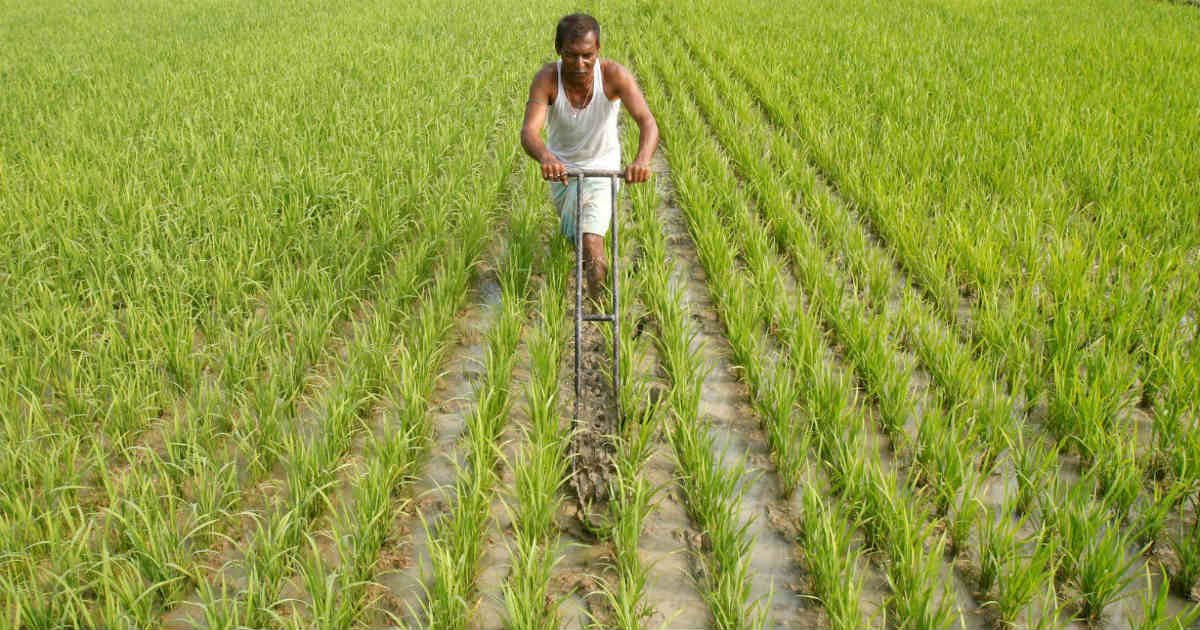
- System of Rice Intensification
- Aerobic rice cultivation
- Direct seeding of rice
- Zero-tillage wheat sowing
- Use of climate-tolerant crop varieties
- In-situ management of crop residues
- National Mission for Sustainable Agriculture (NMSA): The NMSA focuses on:
- Improving productivity in rainfed areas
- Promoting integrated farming systems
- Enhancing water-use efficiency
- Improving soil health management
- Encouraging resource conservation
- BioE3 Policy and Emerging Technologies: The BioE3 Policy identifies climate-resilient agriculture as a key biotechnology priority.
- Several CRA-related technologies are already commercialised.
- Companies supply bio-inputs that improve soil health.
- India has a growing agritech ecosystem, offering:
- AI-based crop advisories
- Precision irrigation tools
- Crop health monitoring
- Yield prediction systems
Implications
- CRA can stabilize food production despite climate uncertainty.
- It can reduce environmental damage from excessive chemical use.
- Farmers’ incomes can become more secure and predictable.
- India’s long-term food security and rural livelihoods will be strengthened.
Challenges and Way Forward
| Challenges | Way Forward |
| Low adoption of climate- resilient practices among small and marginal farmers due to limited awareness, affordability, and access | The government should expand farmer awareness programmes, provide targeted subsidies, improve access to credit and extension services, and ensure that CRA technologies are affordable for small landholders. |
| Quality inconsistencies in biofertilizers and biopesticides, which reduce farmer trust in biological alternatives | India must strengthen quality standards, certification mechanisms, and supply chains for biofertilizers and biopesticides to ensure reliability and build farmer confidence. |
| Slow rollout and limited availability of climate-resilient and genome-edited seeds | The government should accelerate research, approval, and large-scale deployment of climate-tolerant and genome-edited crop varieties through public–private partnerships. |
| Uneven State-wise distribution of new technologies and climate-resilient practices | A coordinated national rollout strategy should be adopted to ensure equitable access across States, with special support for climate-vulnerable and lagging regions. |
| Digital divide limiting farmers’ access to AI-based advisories, precision agriculture tools, and climate information | The government should expand rural digital connectivity, provide farmer training, and ensure wide access to digital tools and real-time climate advisories, especially for small and marginal farmers. |
| Ongoing soil degradation and increasing water scarcity reducing long-term farm productivity | Promote soil health management, water-use efficiency, integrated farming systems, and sustainable resource conservation practices under climate-resilient agriculture programmes. |
| Rising climate volatility that may outpace current adaptation efforts | Introduce financial incentives, climate insurance, risk-sharing mechanisms, and affordable institutional credit to help farmers manage climate-related risks during the transition. |
| Fragmented policy coordination across ministries and agricultural programmes | Develop a coherent national CRA roadmap under the BioE3 framework, aligning biotechnology, climate adaptation, digital agriculture, and farm policies for large-scale impact. |
Conclusion
Climate-resilient agriculture is no longer optional for India. A nationally coordinated, technology-enabled CRA strategy, centred on farmers, is essential to secure food systems in a warming and uncertain climate.
| Ensure IAS Mains Question
Q. Why is climate-resilient agriculture essential for India’s food security? Discuss India’s current initiatives and the need for a coherent national roadmap. (250 words) |
| Ensure IAS Prelims Question
Q. With reference to climate-resilient agriculture in India, consider the following statements: 1. Climate-resilient agriculture aims to maintain productivity while adapting to climate change. 2. More than half of India’s net sown area is rainfed, making agriculture vulnerable to climate variability. 3. Genome-edited crops and AI-based advisories are part of climate-resilient agriculture approaches. Which of the statements are correct? a) 1 and 2 only b) 2 and 3 only c) 1, 2 and 3 d) 1 and 3 only Answer: c) 1, 2 and 3 Explanation: Statement 1 is correct: Climate-resilient agriculture focuses on helping farming systems adapt to climate change while maintaining or improving productivity, so that food production remains stable despite rising climate risks. Statement 2 is correct: About 51% of India’s net sown area is rainfed, and this land produces nearly 40% of the country’s food, making Indian agriculture highly vulnerable to rainfall variability and climate uncertainty. Statement 3 is correct: Climate-resilient agriculture includes genome-edited crops that tolerate drought, heat, or pests, and AI-based advisories that use weather, soil, and crop data to guide farmers’ decisions. |