Context
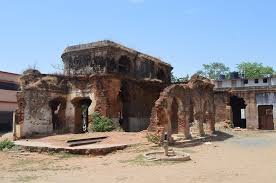
Ichak, located about 15 km from Hazaribag town, was once the capital of a powerful dynasty and is now a fading symbol of Jharkhand’s historical and cultural heritage.
About Ichak
- It is widely referred to as the “temple town” of Hazaribagh district due to its large number of religious structures.
- The settlement has historical roots going back more than 200 years to the Ramgarh Raj under the Singh dynasty.
- Once, Ichak served as one of the key capitals of the Ramgarh rulers before the capital was later shifted closer to the Padma River.
- The rulers developed the area by constructing temples, ponds, gardens, akharas (traditional centres), and public spaces.
- At its centre stands the Singh Dwar, a large domed gateway that once marked entry to the royal palace complex.
- The village houses several significant temples such as Baba Banshidhar, Bhairavnath, Lakshmi Narayan (Bada Akhara), and Shri Ram Janaki (Chota Akhara).
- A unique tradition continues at the Budhiya Mata Temple, where devotees worship a formless deity, a practice sustained for over 300 years.
- The Bhagwati Math Temple reflects design influences similar to the Mahabodhi Temple, showing strong artistic heritage.
- The temple structures display a mix of Nagara and Bengal architectural styles, along with elements influenced by Mughal dome designs.
- This combination reflects the region’s diverse cultural and artistic influences over time.