Context
A recent study has found that most mangrove ecosystems are already experiencing mild to severe hypercapnic hypoxia, raising concerns about marine biodiversity and coastal livelihoods.
Q1. What is Hypercapnic Hypoxia?
- It refers to a condition of high carbon dioxide (CO₂) levels and low oxygen levels in water.
- This creates a stressful chemical environment in coastal ecosystems like estuaries.
- It commonly occurs during low tide, in low-salinity areas and in warm tropical regions.
Q2. What are the causes of Hypercapnic Hypoxia?
- Rising CO₂ levels due to climate change
- Increasing temperatures, which reduce oxygen availability in water
- These factors together disturb the natural chemical balance of mangrove ecosystems
Q3. What are mangroves and why are they important?
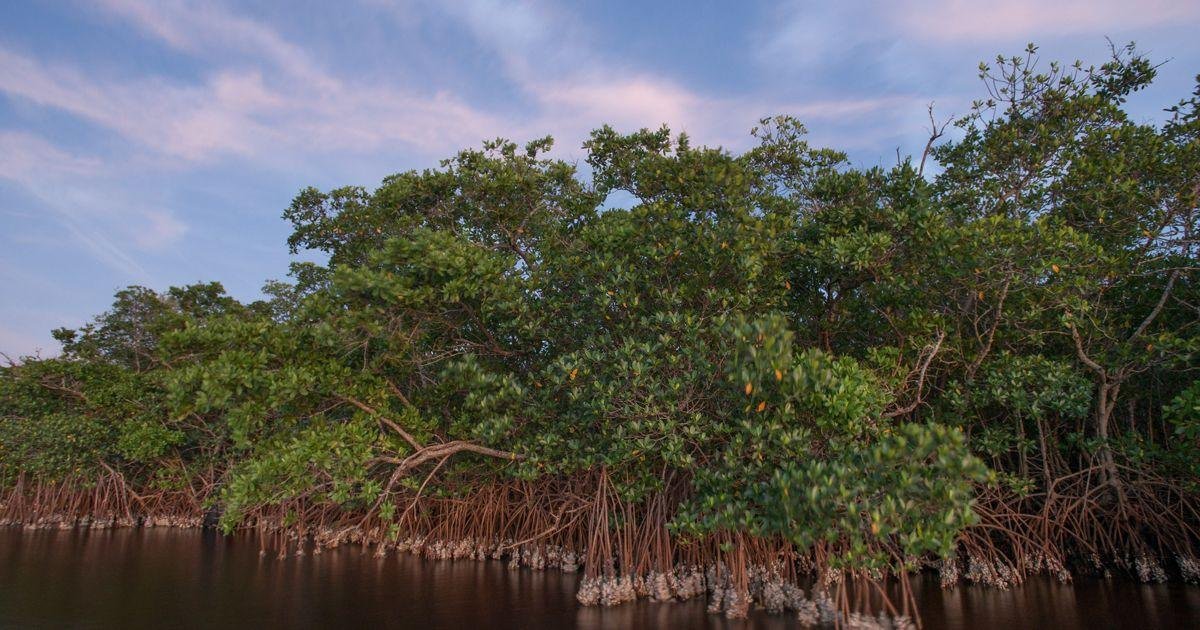
- Mangroves are salt-tolerant trees and shrubs found in coastal intertidal zones of tropical and subtropical regions.
- They grow in saline or brackish water and can survive in low-oxygen soil conditions.
- Key importance:
- Act as a buffer between land and sea
- Provide nursery grounds for fish and marine species
- Support rich biodiversity and coastal ecosystems
Q4. What is the impact of Hypercapnic Hypoxia on mangrove ecosystems?
- Threatens fish nurseries, affecting early life stages of marine species
- Reduces biodiversity and degrades habitat quality
- Leads to decline in fisheries, impacting livelihoods of millions
- Causes a shift in species composition, reducing large reef-associated species
Q5. What can be done to address this issue?
- Reduce carbon emissions to control rising CO₂ levels
- Strengthen climate change mitigation and adaptation strategies
- Protect and restore mangrove ecosystems
- Promote sustainable coastal and fisheries management
Conclusion
Hypercapnic hypoxia is an emerging threat that can disrupt mangrove ecosystems and fisheries, making it essential to combine climate action with ecosystem conservation.