Context
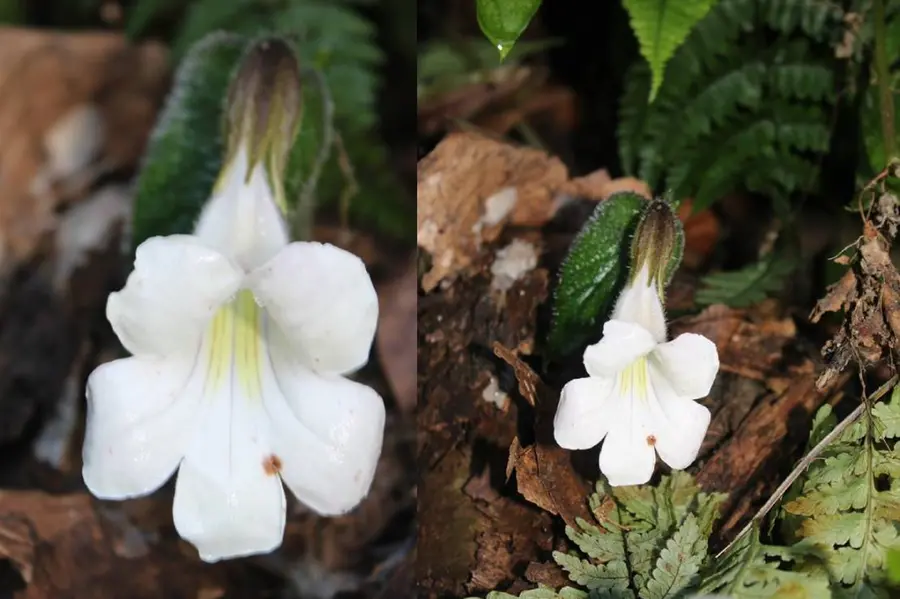
Scientists from the Botanical Survey of India have rediscovered the rare plant Henckelia monophylla after nearly 189 years in Arunachal Pradesh.
Q1. What is Henckelia monophylla?
- It belongs to the Gesneriaceae family, a group of flowering plants commonly found in tropical regions and is a rare perennial plant species endemic to Arunachal Pradesh.
- The species was first collected in 1836 by British botanist William Griffith in the Mishmi Hills.
- It typically grows in moist forest environments.
Q2. What are the key characteristics of Henckelia monophylla?
Plants belonging to the Henckelia genus generally show the following features:
- Growth pattern: Upright or slightly trailing stems.
- Leaves: Simple leaves that are usually ovate or lance-shaped.
- Flowers: Axillary inflorescences that bear tubular or funnel-shaped flowers, often with delicate colours.
- Fruits: The plant produces elongated capsule-shaped fruits containing numerous tiny seeds, enabling effective reproduction in suitable habitats.
Q3. What are the key facts about the Botanical Survey of India (BSI)?
- An apex taxonomic research organization of India.
- Works under the Ministry of Environment, Forest and Climate Change.
- It was established on 13 February 1890 under the leadership of Sir George King.
- Headquarters: Kolkata.
- Mandate of BSI: Conduct biosystematics research, carry out floristic surveys, documentation, maintain National Botanical Collection database and digitize herbarium specimens and botanical records.