Why in the News?
- Goa MLAs have asked for bull fighting (dhirio) to be made legal again, saying it is an important part of the state’s culture.
- Bull fighting is currently banned under the Prevention of Cruelty to Animals Act, 1960, and a 1996 High Court order, but events are still held secretly in some areas.
- The Chief Minister has said the government will look into the issue and decide what can be done.
Prevention of Cruelty to Animals Act, 19601. About: The Prevention of Cruelty to Animals Act, 1960 (PCA Act, 1960) is the first law in India aimed at protecting animals from pain and suffering caused by human actions. Main features 1. Definition of animals: The Act defines an animal as any living creature other than a human being, covering all forms of animal life. 2. Offences and punishments: a. To safeguard animals from long-term pain and suffering, the Act prescribes penalties for anyone who inflicts unnecessary cruelty on them. b. It also explains the different types of cruelty, the situations where exceptions apply, and the procedure for humanely euthanising a suffering animal to prevent further distress. 3. Guidelines for animal experimentation: The Act sets rules for conducting experiments on animals for scientific purposes and for using animals in performances, along with the offences related to such activities. 4. Animal Welfare Board of India: The Act provides for the creation of the Animal Welfare Board of India (AWBI) to oversee and promote animal welfare measures across the country. Constitutional Protection for AnimalsThe Constitution of India places a responsibility on both the State and the citizens to ensure the safety, well-being, and conservation of animals. 1. Article 48A: Directs the State to protect and improve the population and health of animals, safeguard the country’s wildlife, and shield them from harm. 2. Article 51A(g): Lists it as a Fundamental Duty of every citizen to protect and improve forests and wildlife and to show compassion towards all living creatures. 3. Article 21: a. Through a broad interpretation by the courts, the right to life under Article 21 has been extended to animals. b. Every species has the right to live and be secure under the law, and this right applies not only to humans but also to animals and birds. |
Key Highlights
- What is dhirio and how a bout unfolds
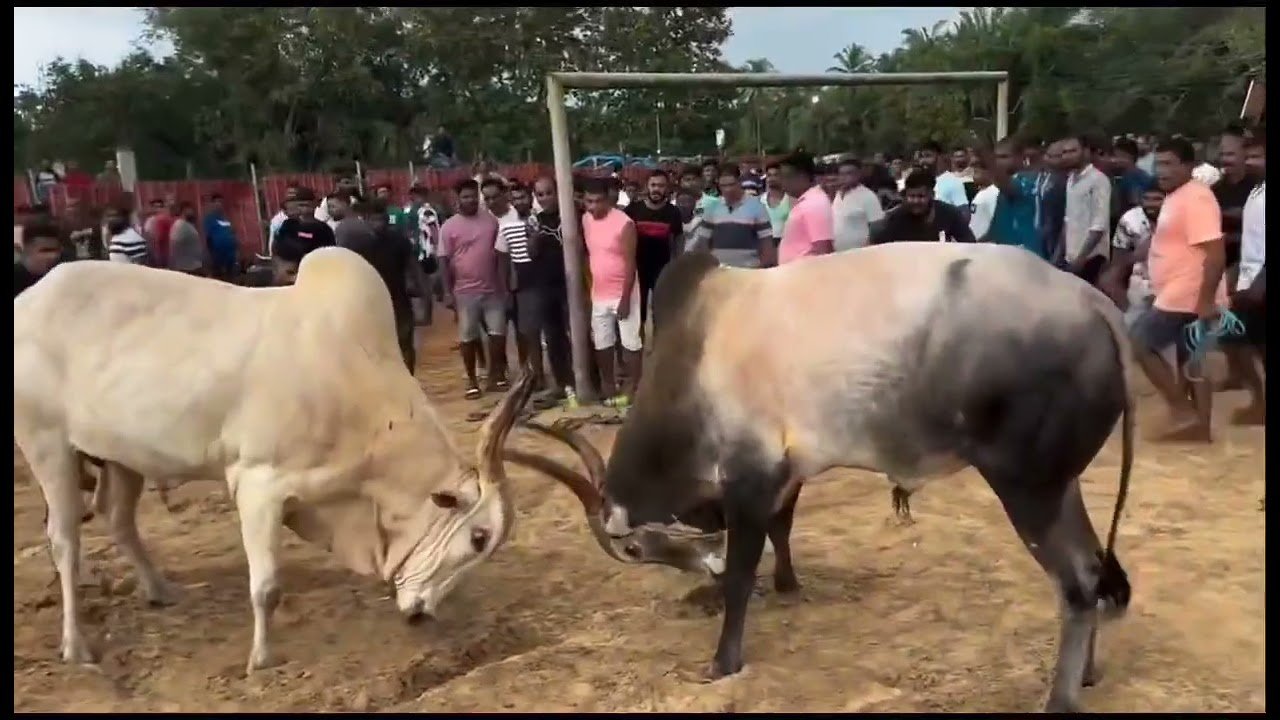
- Format: Two trained bulls face each other, lock horns, and push until one flees or is pushed out of the arena; the fight ends without a mandated kill (unlike Spanish bullfighting).
- Setting: Traditionally held in paddy fields and football grounds, often during local feasts and post-harvest gatherings.
- Conduct: Handlers provoke and guide bulls from behind; bouts may last minutes to over an hour.
- Risk profile: Serious injuries to bulls are common; agitated bulls can charge spectators
- Cultural roots and social significance
- The practice dates back to Portuguese–era Goa and was part of village and church feasts.
- Events drew large crowds, sometimes over 5,000 spectators, and were seen as social gatherings.
- Bulls were often given popular names and enjoyed a local following.
- Legal ban and incidents
- In 1996, a spectator died during a fight in Fatorda, prompting legal action by an animal welfare group.
- The High Court ruled bull fights illegal and directed an immediate ban on all animal fights.
- Despite the ban, clandestine fights continue, often organised secretly via social media.
- Recent cases include the death of a bull in April 2025 and a spectator fatality in January 2025; police registered six cases under the PCA Act till June 30, 2025.
- Arguments for legalisation
- Seen by supporters as a traditional sport that can be regulated rather than banned.
- Suggestions include capping horns and formalising rules to ensure safety.
- Advocates believe legalisation could boost tourism and benefit farmers who raise such bulls.
- Comparisons have been drawn with Tamil Nadu’s legislative exemption for jallikattu.
- Opposition from animal welfare groups
- Concerns focus on physical harm (injuries, fractures, puncture wounds) and stress caused to bulls.
- Criticism includes the risk of bulls charging at spectators and the association with betting.
- Opponents highlight that the events encourage violence between animals for entertainment.
Implications
- Governance & legal architecture
- State–Centre interface: A Goa-specific law may need to coexist with or carve exceptions within the PCA Act framework.
- Judicial scrutiny: Any legalisation must survive High Court/Supreme Court review given past prohibitions.
- Precedent effects: A carve-out (on lines of jallikattu) may invite similar demands for other animal-based sports.
- Public order & safety
- Crowd risk: Past deaths/injuries underline the need for barriers, evacuation protocols, and well-checked venues.
- Emergency readiness: Mandatory ambulance, veterinary, and policing presence would be essential for sanctioned events.
- Liability regime: Clear insurance and compensation mechanisms for victims and property damage are required.
- Economy, tourism & livelihoods
- Monetisation path: Selling tickets, holding approved bull fights, and linking events to rural tourism could earn money.
- Costs of compliance: Organisers would bear costs of venues, vet checks, monitoring, and insurance, impacting viability.
- Reputation calculus: Tourism gains could be offset by welfare backlash and negative international publicity.
- Culture, politics and community dynamics
- Identity assertion: Legalisation is read as cultural protection for coastal communities with agrarian roots.
- Electoral incentives: Cross-party support suggests constituency appeal, especially where events are popular.
- Social compact: A regulated model would need community buy-in to replace clandestine networks.
- Animal welfare and ethics
- Baseline safeguards: If allowed, there must be clear rules to prevent cruelty, check the bulls’ health before fights, and provide care after the fights.
- Data-led oversight: Recording injury rates, stress indicators, and outcomes is key to evidence-based regulation.
- Enforcement parity: Without proper inspections and strict penalties, secret and more harmful bull fights may continue.
Challenges and Way Forward
| Challenge | Why it Matters | Way Forward |
| Existing legal prohibitions | The High Court ban and PCA Act provisions prohibit animal fights. | Draft specific legislation with clear welfare safeguards and seek legal validation. |
| Ensuring animal welfare | Risk of injury and stress to bulls remains a major concern. | Implement veterinary checks, horn protection, and limits on fight duration. |
| Public safety | Past fatalities highlight dangers to spectators. | Mandate secure venues, barriers, and medical support on site. |
| Preventing illegal betting | Unregulated betting is linked to secret events. | Establish a regulated betting framework or enforce a complete ban. |
| Enforcement capacity | Without strong monitoring, illegal fights could continue alongside legal events. | Create a dedicated monitoring body with authority to inspect events. |
Conclusion
Goa’s push to legalize dhirio sits at a fraught intersection of culture, law, welfare, and tourism. The persistence of clandestine fights shows that a blanket ban has not eliminated the practice; it has pushed it underground and arguably made it riskier. If the state proceeds, only a tightly drafted, welfare-first law with verifiable safeguards and strong enforcement stands a chance—both legally and socially. Otherwise, the costs in animal suffering, public safety, and reputation could outweigh perceived cultural and economic gains.
| Ensure IAS Mains Question
Q. Discuss the debate around legalising bull fighting (dhirio) in Goa. Highlight the cultural, legal, ethical, and economic dimensions, and suggest a way forward for the state government. (250 words) |
| Ensure IAS Prelims Question
Q. With reference to India, consider the following statements about bull fighting (dhirio) in Goa: 1. Bull fighting is currently legal in Goa under the Prevention of Cruelty to Animals Act, 1960. 2. The practice has historical roots and continues secretly despite legal prohibition. 3. Animal welfare groups oppose legalisation due to risk of injuries to bulls and spectators. Which of the statements given above is/are correct? a) 1 only b) 2 and 3 only c) 1 and 3 only d) 1, 2 and 3 Answer: b) 2 and 3 only Explanation: Statement 1 is incorrect: Bull fighting (dhirio) is currently banned under the PCA Act, 1960 and a 1996 High Court order. It is not legal in Goa. Statement 2 is correct: The practice has historical roots dating back to Portuguese-era Goa and continues secretly in some villages. Statement 3 is correct: Animal welfare groups oppose legalisation due to injuries to bulls and spectators, stress on animals, and ethical concerns. |