| You will learn important aspects for the following UPSC Prelims / Mains / Interview questions:
1. What are the First Advance Estimates and why are they important? 2. What does the recent GDP growth trend indicate about India’s economy? 3. How can India’s FY26 GDP growth be explained using economic theory? 4. What are US tariffs and how do they affect the Indian economy? 5. Why is India relatively less affected by US tariff-related trade tensions? 6. Which components are driving India’s GDP growth in FY26? 7. How do different sectors contribute to India’s growth structure? 8. What is the role of inflation and monetary policy in sustaining growth? 9. What are the key risks to India’s FY26 growth outlook, and how resilient is the economy? |
Context
The First Advance Estimates project India’s GDP growth at 7.4% in FY26, even though the global economy is facing uncertainty due to US tariff-related trade tensions. This estimate is important because it provides an early macroeconomic assessment based on partial but reliable data from major sectors of the economy.
1. What are the First Advance Estimates and why are they important?
- First Advance Estimates are early projections of GDP released before the end of the financial year.
- Key Points:
- Prepared using data from:
- Agriculture
- Industry
- Prepared using data from:
- Services
- Government expenditure
- External trade
- Indicate the direction of economic growth
- Help policymakers and analysts take early decisions
- They do not give final figures, but offer a credible early picture of the economy.
2. What does the recent GDP growth trend indicate about India’s economy?
India’s Recent GDP Growth Trend
| Financial Year | GDP Growth Rate | Key Explanation |
| FY24 | 7.2% | Post-pandemic recovery and strong consumption |
| FY25 | 7.0% | Global slowdown and inflation pressures |
| FY26 (AE) | 7.4% | Domestic demand resilience and capex push |
Interpretation: The table shows that India’s growth has remained consistently above 7%, indicating:
- Macroeconomic stability
- Structural strength
- Strong domestic demand
3. How can India’s FY26 GDP growth be explained using economic theory?
- India’s growth can be explained using the Aggregate Demand (AD) framework.
- GDP Identity: GDP = C + I + G + (X − M)
- Where:
- C (Consumption): Household spending
- I (Investment): Spending on factories, machines, infrastructure
- Where:
- G (Government Spending): Public expenditure
- X − M (Net Exports): Exports minus imports
- India’s FY26 growth is mainly supported by C, I, and G, while net exports play a limited role.
4. What are US tariffs and how do they affect the Indian economy?
A tariff is a tax imposed on imported goods to protect domestic industries.
Transmission Channels of US Tariffs
| Channel | Impact on India |
| Trade Channel | Reduced export competitiveness |
| Supply Chain Channel | Disruption in global value chains |
| Investment Channel | Uncertainty in global capital flows |
US tariffs mainly affect trade-linked sectors, but their overall impact on India is limited.
5. Why is India relatively less affected by US tariff-related trade tensions?
- India is less affected because:
- Exports form a smaller share of GDP
- Growth is driven mainly by domestic consumption
- Large internal market absorbs external shocks
- Strong services sector provides stability
- This gives India relative insulation, though not complete isolation, from global trade tensions.
6. Which components are driving India’s GDP growth in FY26?
- Private Consumption (C)
- Meaning: Spending by households on goods and services.
- Drivers:
- Rising urban incomes
- Gradual rural recovery
- Expansion of retail credit
- According to Keynesian theory, higher consumption increases demand, output, and employment.
- Investment / Gross Fixed Capital Formation (I)
- Meaning: Spending on long-term assets like factories, machinery, and infrastructure.
- Supporting Factors:
- PLI schemes
- Healthier banking sector
- Infrastructure expansion
- As per the Harrod–Domar model, investment raises productive capacity and long-term growth.
- Government Capital Expenditure (G)
| Area of Spending | Growth Impact |
| Roads & Railways | Employment and logistics efficiency |
| Urban Infrastructure | Productivity improvement |
| Renewable Energy | Sustainable growth |
- Multiplier Effect: One rupee of capital expenditure generates more than one rupee of GDP by creating jobs and demand.
7. How do different sectors contribute to India’s growth structure?
Sector-wise Contribution
| Sector | Growth Nature | Explanation |
| Agriculture | Stable | Irrigation and diversification |
| Industry | Improving | Construction and manufacturing |
| Services | Strong | IT, finance, logistics |
The services sector remains the largest contributor to GDP and acts as a growth stabiliser.
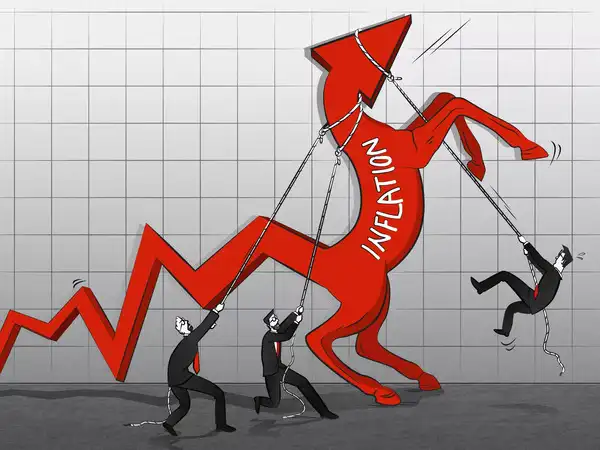
8. What is the role of inflation and monetary policy in sustaining growth?
Inflation means a rise in prices.
| Inflation Level | Growth Impact |
| High | Reduces purchasing power |
| Moderate | Supports stable growth |
Moderate inflation allows the central bank to support growth without tightening credit excessively, ensuring financial stability.
9. What are the key risks to India’s FY26 growth outlook, and how resilient is the economy?
Major Risks
| Risk | Economic Effect |
| Global slowdown | Lower exports |
| Climate shocks | Supply disruptions |
| Geopolitical tensions | Capital flow volatility |
Despite these risks, strong domestic demand, stable external sector, and policy support make India’s growth outlook largely resilient.
Conclusion
The projected 7.4% GDP growth in FY26 reflects India’s transition towards a domestically driven, investment-led growth model. Data trends and economic theory show that strong consumption, government capital expenditure, and structural reforms have reduced India’s vulnerability to external shocks such as US tariff actions.