Context
The G7 Foreign Ministers’ meeting in Paris is focusing on global challenges like geopolitical conflicts, economic stability, and climate change.
Q1. What is the G7 and what is its nature?
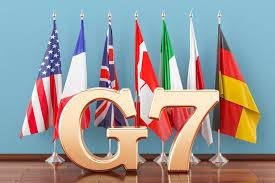
- The G7 (Group of Seven) is an informal grouping of the world’s most advanced economies.
- It serves as a platform for policy coordination on major global issues.
- It is not a formal organisation – there is no treaty, legal status, or binding authority.
- Its decisions are non-binding and based on consensus among members.
Q2. How did the G7 evolve over time?
- In 1975, six countries formed the G6 in response to the 1973 Oil Crisis and economic instability.
- In 1976, Canada joined, forming the G7. In 1997, Russia was included, creating the G8.
- In 2014, Russia was removed after the annexation of Crimea, reverting the group back to G7.
Q3. Who are the members of the G7?
- The G7 consists of seven developed countries:
- United States, Canada (North America)
- United Kingdom, France, Germany, Italy (Europe)
- Japan (only Asian member)
- The European Union also participates but is not counted as a formal member.
Q4. What are the key features of the G7’s structure and functioning?
- It has no permanent headquarters or secretariat.
- It operates through a rotating presidency, where each member hosts the summit.
- It is flexible and informal, allowing quick coordination among members.
- Decisions are based on mutual agreement rather than legal enforcement.
Q5. What are the main areas of discussion in the G7?
- Global economic governance and financial stability
- Climate change and environmental protection
- Geopolitical conflicts and international security
- Development cooperation and global health issues
- Emerging global challenges affecting advanced economies
Q6. What is India’s position in relation to the G7?
- India is not a member as it is classified as a developing country.
- However, India is frequently invited as an outreach partner or guest country.
- This reflects India’s growing importance in global governance & international decision-making.
Q7. How does the G7 differ from the G20?
- The G7 includes only developed economies, while the G20 includes both developed and developing countries. Countries like India and China are part of G20 but not G7.
- The G20 is more representative (broader and inclusive) of the global economy, whereas G7 (smaller and more cohesive) represents advanced economies.
Conclusion
The G7 remains an influential forum for advanced economies, but its long-term relevance depends on greater inclusivity and adaptation to changing global power dynamics.