Why was there a need for energy storage and green hydrogen when renewable energy (like solar and wind) already existed?
Due to climate change, the world started shifting towards renewable energy like solar and wind. These sources are clean and abundant, but they come with limitations:
- Intermittency – the sun doesn’t shine at night, and the wind doesn’t always blow.
- Storage gaps – Without storage, excess electricity generated during peak hours is wasted.
- Grid balancing issues – sudden surges or drops in renewable supply make it hard to maintain a stable power grid.
To overcome these challenges, scientists and policymakers began focusing on energy storage technologies (like batteries, pumped hydro, and thermal storage) and green hydrogen.
How does Energy Storage and Green Hydrogen complement Renewable Energy?
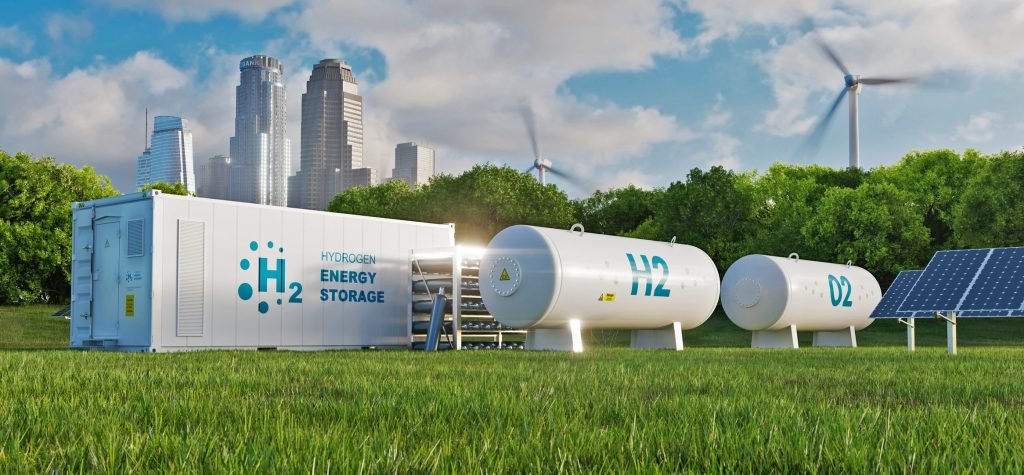
- Energy storage allows renewable power to be saved when it is produced and used later when demand is high, ensuring stable power supply.
| Additional Information
The Main Types of Energy Storage Technologies include:
|
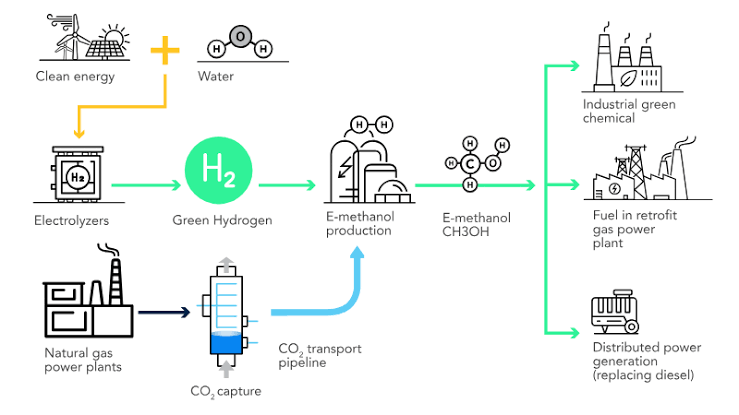
- Green hydrogen is hydrogen produced by splitting water (electrolysis) using renewable electricity.
- It is different from grey or blue hydrogen (made from fossil fuels) as it is carbon-free.
- It can be stored, transported, and used as a fuel for industries, transport, and power generation.
- It can be converted back into electricity through fuel cells or turbines.
- It provides clean fuel for hard-to-decarbonize sectors like steel, cement, shipping, and aviation.
Together, energy storage and green hydrogen are seen as the game-changers that will make renewable energy reliable, scalable, and capable of replacing fossil fuels in the future.
How do energy storage and green hydrogen benefit the future and shape renewable energy?
- Reliable power: Ensure 24/7 supply by balancing variable solar and wind.
- Decarbonization: Cut dependence on coal, oil, and gas, driving net‑zero goals.
- Energy security: Nations can produce and store their own clean fuel.
- Industrial use: Enable clean steel, cement, fertilizers, shipping, and aviation.
- Integrated ecosystem: Electricity, hydrogen, and storage work together for large‑scale adoption.
- Global leadership: Nations investing early in hydrogen and storage can lead the clean energy revolution. Example: India’s National Green Hydrogen Mission, targeting 5 million tonnes of green hydrogen production by 2030, will help reduce hydrogen costs and make renewable power more competitive.
What does shifting focus on energy storage and green hydrogen mean for India?
- Energy storage and green hydrogen are not just technological solutions — they are central to India’s energy roadmap, investment strategy, and global positioning in the clean energy transition.
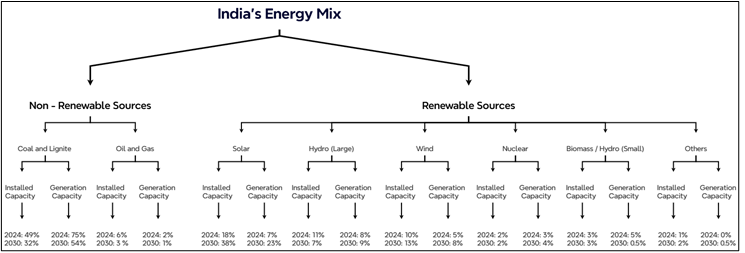
- India has set a target of 500 GW of non‑fossil capacity by 2030, backed by nearly ₹30 lakh crore investment.
- Financing is being mobilized through green bonds (bonds issued to raise money specifically for environmentally friendly projects), blended finance, multilateral institutions, and global investors.
- The growing focus on hybrid and storage‑backed projects is improving their bankability, making them more attractive to investors and ensuring long‑term stability.
| Blended Finance: Financing model that combines public or concessional funds with private investment to reduce risk and attract large-scale private capital for clean energy projects. |
What are the associated challenges and way forward for energy storage and green hydrogen?
| Challenges | Way Forward |
| High costs: Batteries and electrolyzers are still expensive, making projects less competitive. | Promote domestic manufacturing, scale up production, and provide incentives under missions like the National Green Hydrogen Mission. |
| Infrastructure gaps: Hydrogen pipelines, storage tanks, and refueling stations need heavy investment | Develop green energy corridors, build hydrogen hubs, and expand refueling and storage infrastructure. |
| Efficiency losses: Converting electricity to hydrogen and back reduces overall efficiency. | Invest in R&D for advanced electrolyzers, fuel cells, and large‑scale battery storage systems to improve efficiency. |
| Safety concerns: Hydrogen is highly flammable and requires strict handling and safety standards. | Establish strict safety codes, training programs, and international best practices for hydrogen handling. |
| Policy and regulation: Strong frameworks are needed to ensure fair use and prevent misuse. | Introduce clear policies, transmission upgrades, and better grid integration mechanisms to support storage and hydrogen adoption. |