Important Questions for UPSC Prelims, Mains and Interview
|
Context
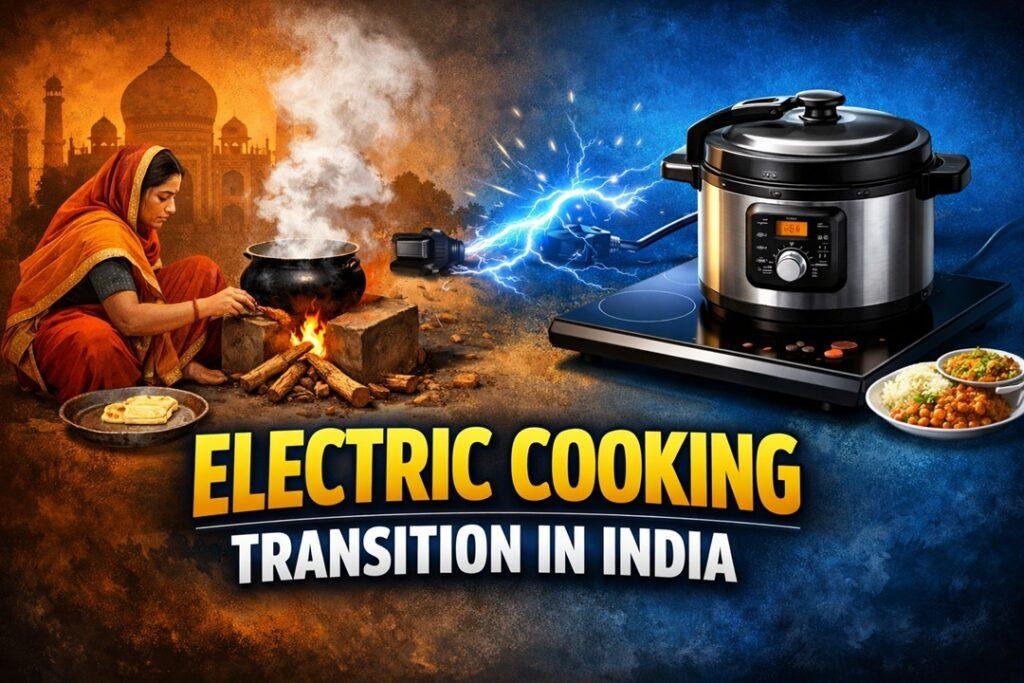
India spends around $26.4 billion annually on LPG imports, with a large share passing through vulnerable routes like the Strait of Hormuz. With electric cooking becoming cheaper than unsubsidised LPG, it is emerging as a key option for reducing import dependence and improving energy sustainability.
Q1. Why is electric cooking emerging as a viable alternative to LPG-based cooking in India, and what factors are driving this transition?
- Rising LPG import dependence is creating economic and geopolitical vulnerabilities.
- Electric cooking has become cost-competitive compared to unsubsidised LPG.
- Increasing electricity access enables wider adoption of electric appliances.
- Growth of renewable energy supports cleaner cooking solutions.
- Government initiatives are promoting electrification of energy use.
- Urban households are better positioned due to reliable electricity supply and smart meter infrastructure. The shift aligns with India’s goals of energy security and decarbonisation.
Q2. What are the limitations of India’s current LPG-based clean cooking model, particularly in terms of affordability and energy security?
- India imports about 60% of LPG and 50% of natural gas. (import of around $26.4 bn)
- LPG prices are vulnerable to global market fluctuations and conflicts.
- Despite wide access, about 37% of households still use traditional fuels.
- Subsidy burdens create fiscal pressure on the government.
- Supply chains depend on strategic chokepoints like the Strait of Hormuz.
- These factors make LPG-based cooking less sustainable in the long term.
Q3. How does electric cooking compare with LPG in terms of cost efficiency and energy performance?
- Electric cooking is about 37% cheaper than non-subsidised LPG and 14% cheaper than piped natural gas (PNG). Induction cooktops have around 85% energy efficiency compared to 40% efficiency of LPG burners.
- Electric pressure cookers are among the most energy-efficient appliances.
- Lower energy loss leads to reduced operating costs over time.
Q4. What are the key challenges in adopting electric cooking in Indian households, especially considering cooking practices and infrastructure?
- Indian cooking often requires multiple dishes simultaneously and high heat control.
- Single-burner induction stoves may be insufficient for traditional cooking styles.
- Lack of awareness about electric cooking technologies.
- Initial cost of appliances may discourage low-income households.
- In rural areas, electricity supply may be unreliable and intermittent.
- Need for improved appliances such as multi-pot systems and flame-like induction technologies.
- Behavioural resistance may slow large-scale adoption.
Q5. How can large-scale adoption of electric cooking impact electricity demand and grid stability in India?
- Electric cooking can significantly increase household electricity consumption.
- Demand is likely to rise during evening peak hours and simultaneous usage of appliances.
- India’s peak demand has already increased to over 240 GW. Sudden demand spikes may lead to grid instability and higher electricity prices. Increased load may strain distribution infrastructure.
- Demand-response systems can help shift usage patterns and balance load.
- Effective planning is required to ensure grid resilience and reliability.
Q6. What role can rooftop solar systems and peer-to-peer energy trading play in supporting electric cooking adoption?
- Rooftop solar allows households to generate their own electricity.
- Battery storage enables use of solar power during evening peak hours.
- Households can become prosumers (producers + consumers).
- Peer-to-peer (P2P) trading allows selling surplus energy and local energy sharing.
- Blockchain-based systems enable efficient energy transactions.
- Local energy exchange reduces grid pressure and dependence on discoms.
- These systems can transform communities into decentralised energy networks.
Q7. What policy measures can accelerate the transition toward electrified kitchens while ensuring energy security and affordability?
- Redirecting LPG subsidies toward electric appliance subsidies.
- Promoting bulk procurement through agencies like Energy Efficiency Services Limited (EESL).
- Introducing time-of-use tariffs to manage peak demand.
- Expanding rooftop solar schemes such as PM-Surya Ghar Yojana.
- Strengthening awareness campaigns like Go Electric initiative.
- Improving appliance standards through BEE star labelling.
- Encouraging urban-first adoption while supporting rural transition gradually.
Conclusion
Electric cooking presents a transformative opportunity for India to reduce import dependence, enhance energy security, and promote clean energy use. However, its success depends on addressing infrastructure challenges, managing electricity demand, and implementing supportive policies for a balanced and sustainable energy transition