| Important questions for UPSC Pre/ Mains/ Interview:
1. What are DISCOMs and why are they critical to India’s power sector? 2. How is the financial health of DISCOMs measured? 3. What explains the legacy of financial stress in DISCOMs? 4. What evidence suggests a turnaround in recent years? 5. What role have policy reforms played in this improvement? 6. Why does State support remain a concern despite reported profits? 7. What structural challenges threaten long-term sustainability? 8. What are the broader implications of DISCOM performance for India’s economy? 9. What should be the way forward for durable reform? |
Context
India’s electricity distribution companies (DISCOMs) have reported profits and sharply lower losses in recent years, signalling improvement, though questions remain about the durability of these gains.
Q1. What are DISCOMs and why are they critical to India’s power sector?
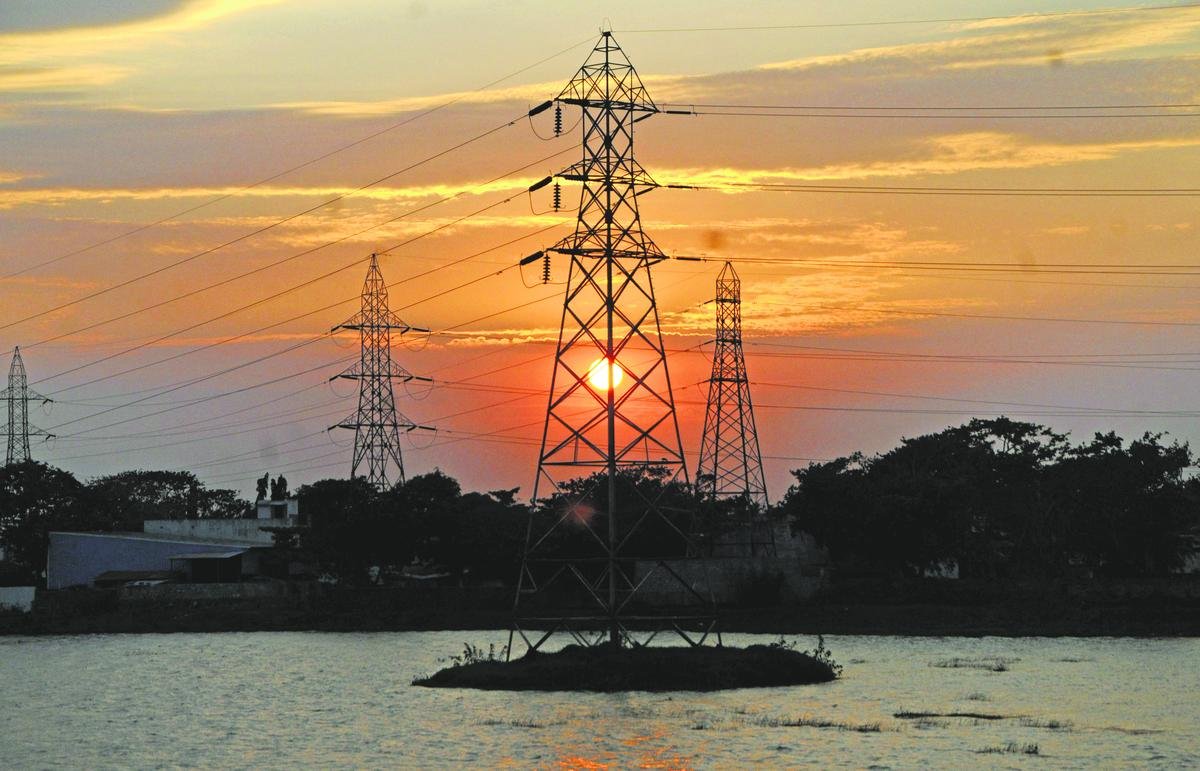
- Power Distribution Companies (DISCOMs) handle the last-mile delivery of electricity to households, agriculture, and industry.
- India has 72 DISCOMs, including State-owned utilities, private companies, and departmental undertakings.
- They are the revenue-collecting arm of the power sector; weak DISCOM finances affect generators, fuel suppliers, and overall power supply.
- Historically, DISCOMs have been the weakest link, constraining sectoral reforms despite generation capacity expansion.
Q2. How is the financial health of DISCOMs measured?
Two key indicators define DISCOM performance:
- Aggregate Technical and Commercial (AT&C) losses
- Capture technical losses, theft, billing inefficiencies, and collection gaps.
- High AT&C losses reflect poor operational efficiency and governance.
- ACS–ARR gap
- The difference between Average Cost of Supply (ACS) and Average Revenue Realised (ARR).
- A positive gap indicates tariffs and collections are insufficient to recover costs.
- Persistent losses under these indicators historically forced State government bailouts.
Q3. What explains the legacy of financial stress in DISCOMs?
- The roots lie in the structure of State Electricity Boards under the Electricity (Supply) Act, 1948, which allowed political interference in tariff setting.
- Key drivers of losses included:
- Subsidised and non-cost-reflective tariffs, especially for agriculture and households.
- Delayed subsidy reimbursements from State governments.
- Weak billing, collection inefficiencies, and non-payment by consumers.
- Between 2020–21 and 2024–25:
- Accumulated losses rose from ₹5.5 lakh crore to ₹6.47 lakh crore.
- Outstanding debt reached ₹7.26 lakh crore.
Q4. What evidence suggests a turnaround in recent years?
- In 2024–25, DISCOMs collectively reported a Profit After Tax of ₹2,701 crore, compared to losses exceeding ₹67,000 crore in 2013–14.
- AT&C losses declined from 62% to 15.04%.
- The ACS–ARR gap narrowed to 06 paise per unit, indicating near cost recovery.
- These improvements reflect:
- Better billing and collection efficiency
- Reduced leakages
- Improved financial discipline
Q5. What role have policy reforms played in this improvement?
- Revamped Distribution Sector Scheme (RDSS)
- Links financial assistance to measurable outcomes such as feeder metering, loss reduction, and system modernisation.
- Electricity Rules and Late Payment Surcharge Rules
- Enabled structured repayment of legacy dues.
- Prevented accumulation of unpaid liabilities across the power supply chain.
- Debt discipline measures (post-2022)
- Nearly ₹1.4 lakh crore of legacy dues reduced through instalment-based clearance.
- These reforms improved confidence among generators and coal suppliers, stabilising electricity supply.
Q6. Why does State support remain a concern despite reported profits?
- Many DISCOMs achieved profitability only after State subsidies and loss takeovers.
- Utilities in States such as Tamil Nadu and Rajasthan relied heavily on direct fiscal support.
- This raises concerns about:
- Artificial profitability
- Exposure to future liabilities, including wage revisions and pension obligations
- Without subsidies, several DISCOMs would still record operational losses.
Q7. What structural challenges threaten long-term sustainability?
- Unmetered agricultural supply
- Absence of accurate consumption data distorts cost recovery and planning.
- Free or highly subsidised electricity
- Universal free power benefits higher-income households disproportionately.
- Weakens financial incentives for efficiency.
- Operational gaps
- Incomplete feeder segregation.
- Slow adoption of smart meters in many States.
- These issues risk reversing recent gains.
Q8. What are the broader implications of DISCOM performance for India’s economy?
- Financially weak DISCOMs constrain:
- Power sector investment
- Renewable energy integration
- Industrial competitiveness
- Sustainable DISCOMs are essential for:
- Reliable electricity supply
- Green energy transition
- Fiscal stability of States
Q9. What should be the way forward for durable reform?
- Expand feeder segregation and agricultural metering.
- Promote solar pumps to reduce farm power subsidies.
- Accelerate smart metering and digital billing.
- Gradually move towards cost-reflective tariffs with targeted subsidies.
- Ensure professional management is insulated from political pressures.
- Align State fiscal support with performance-linked reforms, not blanket bailouts.
Conclusion
India’s DISCOMs have shown a credible turnaround, but sustainability hinges on structural reform. Without tackling subsidies, metering, and efficiency, recent financial gains may remain fragile and reversible.