Context
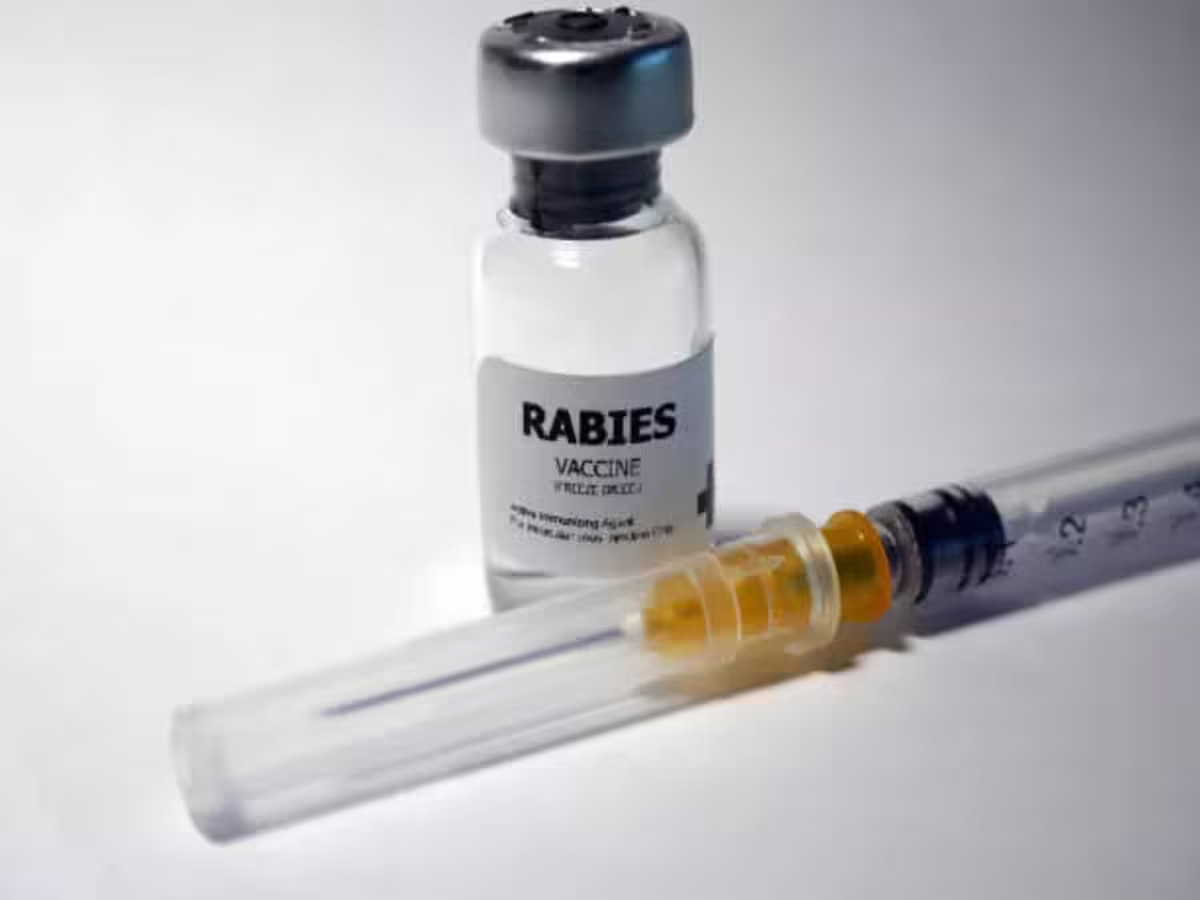
- In November 2023, a counterfeit packaging of the rabies vaccine Abhayrab was found being circulated in India.
- This raised concerns about the ‘fake rabies vaccines’ as rabies is nearly 100% fatal once symptoms appear and vaccination is the only effective preventive measure.
- Also, even a single missed effective dose of vaccine can be fatal and counterfeit vaccines globally are known to reduce efficacy and sometimes contain harmful substances.
- So, many countries (Australia, the UK and the US) raised health advisory warnings to their citizens who received rabies vaccination in India to check whether additional doses are required.
Why is Rabies Such a Serious Concern?
- What is Rabies: Rabies is a viral zoonotic disease transmitted through the saliva of infected animals, most commonly dogs.
- Transmission: Dog, cat, monkey, bat bites or scratches. Saliva entering open wounds or mucous membranes.
- Symptoms:
- Early: fever, headache, nausea
- Advanced: hydrophobia (fear of water), hallucinations, excessive salivation, paralysis
- Outcome: Almost always fatal once clinical symptoms develop
- Why vaccines matter: Rabies can be completely prevented if vaccinations after exposure (post-exposure prophylaxis – PEP) are given correctly and on time.
India’s Rabies Burden (Background)
- According to the World Health Organization, rabies causes 18,000-20,000 deaths annually worldwide
- India accounts for ~36% of global rabies deaths
- Children under 15 years constitute a large proportion
- India reported 6,644 clinically suspected rabies deaths (2012-2022) – likely an under-estimate
- Hence, any doubt about vaccine integrity becomes a global public health concern.
What is Abhayrab and what did investigations find out?
- Abhayrab is a human rabies vaccine manufactured by Indian Immunologicals Limited and holds around 40% of the rabies vaccine market share in India as it is widely used in government and private health facilities.
- Allegation: Counterfeit packaging detected in the market.
- The company clarified that one batch was found with different outer packaging but the inner vial had genuine vaccine.
- Raids were conducted in Delhi, Agra and Mumbai and vaccines were tested at Central Drug Testing Laboratory which also found genuine vaccine content in the vials.
- The problem was possible illegal diversion of government-supplied vaccines to the open market.
- This is a regulatory and supply-chain integrity issue, not vaccine failure.
Have There Been Vaccine Failures in India?
- In 2022, as cases of rabies spiked in Kerala and some vaccinated individuals died of rabies, initial suspicion was raised about vaccine failure.
- But the Union Health Ministry Committee found that the main reasons for deaths were improper wound washing, non-administration of rabies immunoglobulin and poor adherence to protocol for category 3 bites.
- As per M K Sudarshan (APCRI) (expert), India uses multi-dose schedules. So, even if one dose is doubtful, other doses + immunoglobulin usually provide protection.
Understanding Rabies Vaccination Protocol
WHO-recommended Post-Exposure Prophylaxis:
- Immediate wound washing
- Rabies Immunoglobulin (RIG) on Day 0 for Category 3 bites
- Vaccination: 3 intramuscular doses or 2 intradermal doses
- Previously immunised persons: 2 booster doses
- Vaccines alone are not sufficient without immunoglobulin in severe bites.
Implications of the Abhayrab Row
- Public Health Implications: Risk of vaccine hesitancy especially among rural populations and potential loss of trust in India’s vaccination program.
- International Reputation: It may raise concerns over drug regulatory oversight and impact on India’s image as global vaccine supplier.
- Governance & Supply Chain: It highlights vulnerability in packaging security, distribution monitoring and government-to-market leakages.
Challenges and Way Forward
| Challenge | Way Forward |
| Counterfeit packaging is easier to fake than the vaccine formulation | Introduce tamper-proof packaging, QR-code based authentication, and holograms |
| Weak supply chain oversight allows diversion of government vaccine supplies | Implement real-time batch tracking from manufacturer to end-user |
| Shortage of rabies immunoglobulin limits effective post-exposure prophylaxis (PEP) | Ensure universal availability of rabies immunoglobulin, especially for Category-3 bites |
| Public awareness gaps lead to improper wound washing and delayed treatment | Train healthcare workers and run public campaigns on WHO-recommended PEP protocols |
| Slow regulatory enforcement delays detection and recall of compromised batches | Strengthen rapid surveillance, recall mechanisms, and transparent information sharing |
Conclusion
The Abhayrab controversy is not a vaccine failure, but a supply-chain and regulatory lapse. However, because rabies is almost 100% fatal, even a perception of vaccine compromise triggers global alarm. For India, the episode underscores the need to strengthen drug regulation, ensure protocol-based treatment, and maintain public trust, especially as the country remains a cornerstone of global vaccine supply.
| Ensure IAS Mains Question
Q. Recent concerns over fake rabies vaccines in India have raised questions about vaccine regulation and supply chains. Discuss the implications of such incidents for public health and suggest measures to strengthen vaccine governance in India. (150 words) |
| Ensure IAS Prelims Question
Q. With reference to rabies and its prevention, consider the following statements: 1. Rabies is almost always fatal once clinical symptoms appear. 2. Rabies immunoglobulin is recommended for Category-3 animal bites. Which of the statements given above is/are correct? [A] 1 only [B] 2 only [C] Both 1 and 2 [D] Neither 1 nor 2 Answer: [C] Both 1 and 2 Explanation: Statement 1 is correct: Rabies is a viral zoonotic disease with nearly 100% fatality once clinical symptoms such as hydrophobia and paralysis appear, as no curative treatment exists after symptom onset. Statement 2 is correct: As per WHO guidelines, rabies immunoglobulin (RIG) is mandatory for Category-3 bites to neutralise the virus at the wound site, along with timely administration of anti-rabies vaccine. |